Introduction
Proper sample handling is one of the most important aspects of an andrology laboratory. Semen and other reproductive samples can be highly sensitive to changes in temperature, contamination, timing, and environmental conditions. Even small errors during collection, transportation, preparation, analysis, or storage can influence the reliability of laboratory results. Therefore, creating a controlled environment is essential for laboratories that perform semen analysis, sperm preparation, fertility testing, and related procedures.
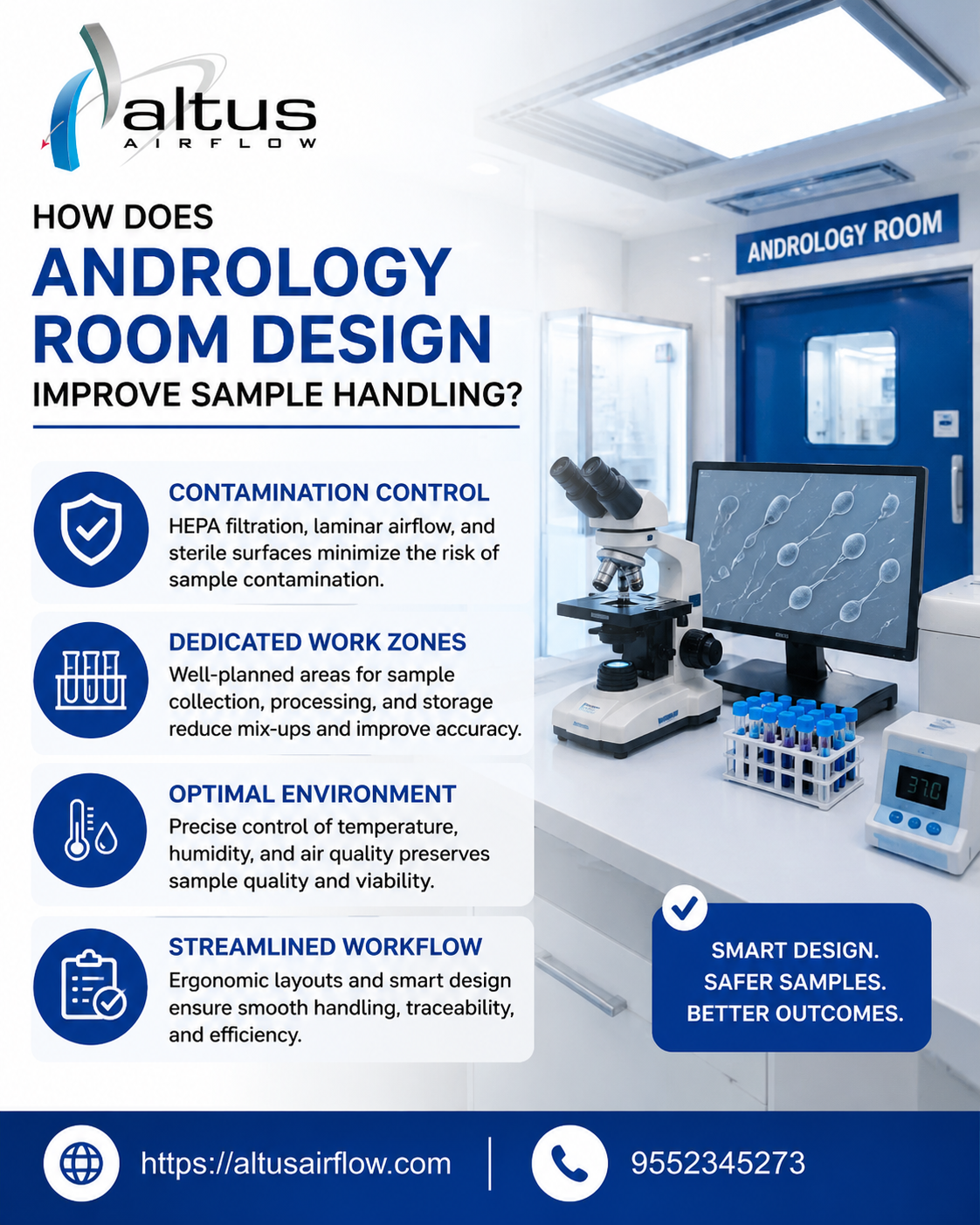
Modern Andrology Room Design focuses on creating a laboratory environment where sample handling can take place in a controlled, hygienic, organized, and efficient manner. Altus Airflow provides specialized healthcare environment solutions that can support laboratories in maintaining appropriate environmental conditions for sensitive procedures.
A well-planned andrology room is not simply a workspace with laboratory equipment. It is a carefully coordinated environment where room layout, airflow, temperature, cleanliness, workstations, storage, and staff movement are considered together. This approach can help laboratories improve workflow while reducing unnecessary risks during sample handling.
Why Sample Handling Matters in Andrology Laboratories?
Sample handling directly influences the quality and reliability of laboratory analysis. Semen samples, for example, can be affected by environmental exposure and delays between collection and examination.
Potential factors that may affect samples include:
- Temperature fluctuations
- Excessive exposure to the surrounding environment
- Contamination
- Improper storage
- Delayed processing
- Incorrect labeling
- Unorganized workflows
- Poor cleaning practices
- Inappropriate handling procedures
A properly planned room helps laboratory personnel follow standardized processes from sample receipt through analysis and disposal or storage.
The goal is to make each step predictable and controlled.
How Room Layout Improves Sample Workflow?
An efficient layout is one of the foundations of good sample handling. Laboratory personnel may need to receive samples, verify patient information, prepare specimens, perform testing, document results, and transfer materials between different work areas.
If these activities are poorly arranged, staff may need to move unnecessarily between different sections of the laboratory. This can increase workflow complexity and create opportunities for errors.
A well-planned layout can establish logical zones such as:
- Sample receiving area
- Sample preparation area
- Examination area
- Equipment area
- Storage area
- Cleaning and waste-handling area
- Staff workspace
The exact configuration depends on the laboratory's activities, equipment, space, and applicable requirements.
By arranging workstations according to the actual workflow, laboratories can reduce unnecessary movement and make sample processing more systematic.
Separation of Different Laboratory Activities
Different stages of sample handling may require different environmental and operational considerations.
For example, sample receiving should be organized so that specimens can be identified and documented before processing. Preparation areas should provide sufficient workspace for laboratory personnel to perform procedures without overcrowding.
Similarly, storage areas should be positioned so that samples and laboratory materials can be accessed efficiently without interfering with active testing.
Functional separation can help establish a clearer workflow and reduce the possibility of cross-contamination between different activities.
Temperature Control for Sensitive Samples
Temperature is an important consideration in reproductive laboratory environments. Biological samples may be sensitive to temperature changes, and inappropriate exposure can affect sample characteristics.
An appropriately designed HVAC system can help maintain stable environmental conditions within the laboratory.
Temperature control may support:
- Consistent working conditions
- Sample handling procedures
- Equipment performance
- Staff comfort
- Controlled laboratory environments
Room temperature should be managed according to the laboratory's procedures, equipment requirements, and applicable guidelines rather than relying on general indoor comfort settings.
Importance of Controlled Air Quality
Air quality is another important consideration when designing an andrology laboratory.
Airborne particles can originate from people, clothing, equipment, packaging materials, and other sources. Proper ventilation and filtration can help control airborne contaminants within the working environment.
A suitable ventilation system can help manage:
- Air cleanliness
- Air movement
- Temperature
- Humidity
- Ventilation rates
- Pressure relationships
The system should be designed around the laboratory's actual requirements and the sensitivity of the procedures being performed.
Controlled Airflow and Sample Protection
Airflow should be carefully considered because uncontrolled air movement can affect the laboratory environment.
Poorly positioned supply diffusers, exhaust points, doors, or equipment may create unwanted airflow patterns around workstations.
A specialized airflow strategy can help direct air appropriately and maintain a more predictable environment.
The design process may consider:
- Location of air supply outlets
- Return-air positions
- Workstation placement
- Equipment location
- Personnel movement
- Door positions
- Room dimensions
These factors should be evaluated together rather than independently.
Hygienic Surfaces Make Cleaning Easier
Surface selection is another important aspect of laboratory design.
Andrology rooms require routine cleaning and disinfection. Therefore, wall panels, ceilings, flooring, worktops, and other surfaces should be selected with hygiene and maintenance in mind.
Suitable surfaces can offer:
- Smooth finishes
- Easy cleaning
- Resistance to routine disinfectants
- Reduced dust accumulation
- Properly sealed joints
- Durable construction
Reducing unnecessary gaps, cracks, and difficult-to-clean areas can make routine environmental maintenance more efficient.
Organized Sample Receiving
Sample receiving is an important stage because it establishes the beginning of the laboratory workflow.
A dedicated receiving area can provide space for:
- Accepting the sample.
- Verifying identification.
- Recording relevant information.
- Checking the condition of the specimen.
- Assigning the sample for processing.
- Moving it to the appropriate workstation.
A clearly defined receiving process helps reduce confusion and supports proper traceability.
Laboratories should also establish appropriate procedures for identifying and handling samples according to their internal quality-management systems.
Better Workstation Planning
Laboratory workstations need to accommodate equipment, consumables, documentation, and staff movements without creating unnecessary clutter.
Poor workstation planning can lead to:
- Restricted movement
- Difficult equipment access
- Increased handling time
- Greater risk of accidental contamination
- Reduced staff efficiency
A well-designed workstation places frequently used equipment and materials within practical reach while maintaining sufficient working space.
The placement of microscopes, analyzers, centrifuges, incubators, refrigerators, and other equipment should be determined according to the laboratory workflow.
Equipment Placement and Sample Handling
Laboratory equipment generates heat, vibration, airflow, or other operational considerations. Therefore, equipment placement should be incorporated into the room design from the beginning.
For example, certain equipment may require:
- Dedicated electrical connections
- Adequate ventilation
- Stable surfaces
- Maintenance access
- Appropriate clearance
- Temperature-controlled surroundings
Large equipment should not obstruct important pathways or interfere with air distribution.
Planning equipment locations before installation can help create a more efficient laboratory environment.
Reducing Unnecessary Sample Movement
Every additional movement of a biological sample creates another handling step.
An efficient laboratory layout can reduce unnecessary transfers by positioning related workstations close to one another.
For example, if sample preparation and analysis occur in separate areas, their relationship should be planned so that samples can be transferred efficiently while maintaining the required handling conditions.
This approach can improve workflow consistency and reduce unnecessary interruptions.
Storage Planning for Laboratory Materials
Storage is often overlooked during laboratory design, but it can have a significant effect on workflow.
Laboratories may need storage for:
- Consumables
- Laboratory glassware
- Sample containers
- Protective equipment
- Cleaning supplies
- Documentation
- Reagents
- Equipment accessories
Storage should be organized according to frequency of use and operational requirements.
Frequently used materials should be accessible without obstructing workstations. Materials requiring specific environmental conditions should be stored using appropriate equipment and procedures.
Improving Sample Identification and Traceability
Good room design can support proper sample identification procedures.
A dedicated and organized sample-handling area provides space for documentation, labeling, barcode systems, computer terminals, and other tools used for laboratory records.
Clear workflows can help staff follow consistent procedures for:
- Sample identification
- Label verification
- Documentation
- Processing
- Testing
- Storage
- Disposal
Although room design alone cannot prevent identification errors, a logical physical workflow can support the laboratory's quality-control procedures.
Humidity and Environmental Stability
Humidity can also be considered during laboratory planning. Excessive or unstable humidity may affect the comfort of personnel and the performance of certain equipment or procedures.
A properly engineered environmental control system can help maintain stable conditions.
The appropriate environmental range should be determined according to the laboratory's processes, equipment specifications, quality requirements, and applicable standards.
Environmental monitoring can provide useful information about whether conditions remain within established limits.
Supporting Infection-Control Practices
Infection prevention is important in any healthcare-related laboratory.
The physical environment should support established cleaning, disinfection, waste management, and personnel hygiene procedures.
Design features that can help include:
- Easy-to-clean surfaces
- Proper zoning
- Controlled airflow
- Appropriate ventilation
- Organized storage
- Clearly defined waste-handling routes
- Adequate workspace
These elements can make it easier for laboratory staff to follow established infection-control practices.
Minimizing Cross-Contamination Risks
Cross-contamination can compromise laboratory processes and affect sample integrity.
A properly planned room can help reduce this risk by establishing suitable separation between different activities.
For example, clean supplies should be stored in appropriate locations, waste should have a defined pathway, and sample processing areas should be organized to minimize unnecessary overlap.
Staff movement should also be considered when designing the room.
Ergonomics and Staff Efficiency
Laboratory personnel may spend several hours performing repetitive tasks, using microscopes, handling samples, recording results, and operating equipment.
Ergonomic planning can therefore contribute to both productivity and staff comfort.
Considerations may include:
- Workbench height
- Seating arrangements
- Equipment positioning
- Lighting
- Screen placement
- Reach distances
- Walking distances
An efficient workspace can reduce unnecessary physical strain while helping staff maintain consistent procedures.
Lighting for Accurate Laboratory Work
Appropriate lighting is another important design consideration.
Laboratory staff may need to work with microscopes, small sample containers, labels, documents, and computer systems. Poor lighting can make these tasks more difficult.
The room should provide suitable general illumination while avoiding unnecessary glare or reflections on computer screens and laboratory equipment.
Task lighting may also be useful in specific work areas.
Electrical and Utility Integration
Modern andrology laboratories can include several pieces of specialized equipment. Therefore, electrical and utility planning should be incorporated into the design.
The room may require:
- Adequate electrical outlets
- Data connections
- Emergency power provisions where required
- Equipment-specific connections
- Medical or laboratory utilities
- Service access
Proper planning helps prevent excessive extension cords, clutter, and difficult-to-access connections.
Monitoring and Quality Control
Environmental monitoring can help laboratories maintain consistency.
Depending on the facility's requirements, monitoring systems may track:
- Temperature
- Humidity
- Pressure
- Air quality
- Equipment conditions
- Other relevant environmental parameters
Data from monitoring systems can help laboratory managers identify deviations and take corrective action.
Regular verification and maintenance of environmental-control systems are also essential.
Benefits of a Well-Planned Andrology Laboratory
A carefully planned laboratory environment can provide several benefits for sample handling.
Improved Workflow
Logical room zoning allows samples to move through different stages more efficiently.
Better Environmental Control
HVAC and filtration systems help maintain stable environmental conditions.
Easier Cleaning
Smooth and hygienic surfaces can simplify routine cleaning and disinfection.
Reduced Unnecessary Movement
Efficient equipment and workstation placement can minimize unnecessary sample transfers.
Improved Traceability
Dedicated areas for receiving, documentation, and processing can support better sample identification.
Better Staff Productivity
An organized and ergonomic workspace can help laboratory professionals perform procedures efficiently.
What to Consider When Planning an Andrology Room?
Before implementing a new laboratory environment, healthcare facilities should evaluate several factors.
These may include:
- Type of testing performed
- Number of samples processed
- Laboratory equipment
- Staff requirements
- Room dimensions
- HVAC requirements
- Filtration needs
- Storage requirements
- Cleaning protocols
- Sample workflow
- Electrical requirements
- Monitoring systems
- Applicable healthcare standards
A design developed around the laboratory's actual workflow is generally more effective than a generic room configuration.
Role of Specialized Design and Engineering
An andrology laboratory combines clinical procedures with specialized environmental requirements. Therefore, coordination between healthcare professionals, architects, HVAC engineers, equipment suppliers, and laboratory planners is important.
Specialized design teams can evaluate the complete workflow and coordinate:
- Room layout
- Modular construction
- HVAC systems
- Air filtration
- Electrical services
- Equipment placement
- Lighting
- Storage
- Maintenance access
This integrated approach helps ensure that environmental systems support the laboratory's operational requirements.
Conclusion
Effective sample handling depends on more than laboratory equipment and staff procedures. The physical environment in which samples are received, prepared, analyzed, and stored can also influence workflow efficiency and environmental control. A carefully planned Andrology Room Design can support organized sample movement, controlled temperature and humidity, suitable airflow, hygienic surfaces, equipment integration, and efficient laboratory workflows.
Altus Airflow focuses on specialized healthcare environments where modular construction and environmental control need to work together. By considering airflow, filtration, room zoning, workstation planning, equipment placement, cleaning requirements, and monitoring systems from the beginning, laboratories can create a more controlled and practical workspace.
Ultimately, the best laboratory design is one that aligns the physical environment with the laboratory's procedures, equipment, staff workflow, quality requirements, and applicable standards. This integrated approach can help create a reliable environment for handling sensitive reproductive samples.
FAQ
1. How does Andrology Room Design improve sample handling?
Andrology Room Design improves sample handling by organizing the laboratory into logical work zones and integrating appropriate environmental controls, hygienic surfaces, equipment placement, storage, and workflow pathways. This can help reduce unnecessary sample movement, support controlled conditions, and make laboratory procedures more systematic.
2. Why is temperature control important for andrology sample handling?
Temperature control is important because sensitive biological samples can be affected by environmental fluctuations. Maintaining stable conditions according to laboratory procedures can support consistent sample handling and help protect sample integrity.
3. How does airflow affect an andrology laboratory?
Properly designed airflow helps manage air movement, ventilation, and airborne contaminants. Air supply and return locations should be coordinated with workstations, equipment, doors, and personnel movement to create an appropriate laboratory environment.
4. What surfaces are suitable for an andrology room?
Surfaces should generally be smooth, durable, hygienic, and compatible with the laboratory's cleaning and disinfection procedures. Properly sealed joints and easy-to-clean finishes can also help reduce areas where contaminants may accumulate.
5. Can laboratory equipment be integrated into the room design?
Yes. Equipment placement should ideally be considered during the design stage. Electrical connections, ventilation, maintenance access, workspace requirements, equipment clearance, and workflow should all be evaluated to create an efficient and practical laboratory environment.




 English
 Arabic
 French
 Portuguese
 Deutsch
 Turkish
 Dutch
Dutch
 Italiano
 Russian
 Romaian
 Portuguese (Brazil)
 Greek
Greek