


What Is SAP MM? Step-by-Step Guide for Beginners
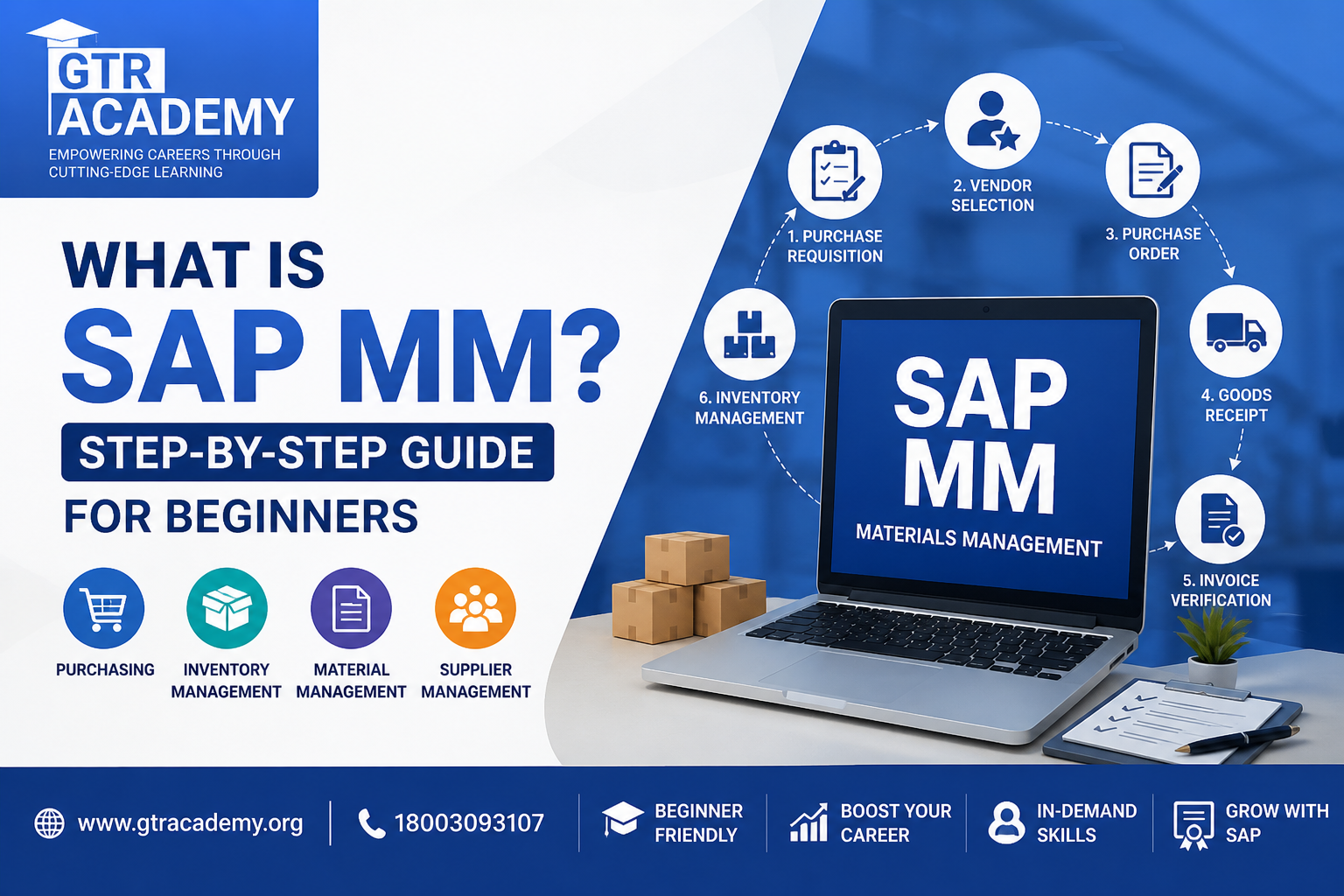
If you are a beginner with SAP, then it is likely that you may have encountered the phrase SAP MM and would be wondering about the meaning of it. SAP MM is one of the most crucial modules in SAP as it assists in managing materials, procurement, inventory, and material flow.
What is SAP MM and why should businesses utilize it?
In essence, SAP MM can be referred to as SAP Material Management. It assists businesses in the management of materials through their procurement, receipt, and management. From the creation of purchase orders to inventory checks, SAP MM helps in many of the routine business processes.
What Is SAP MM?
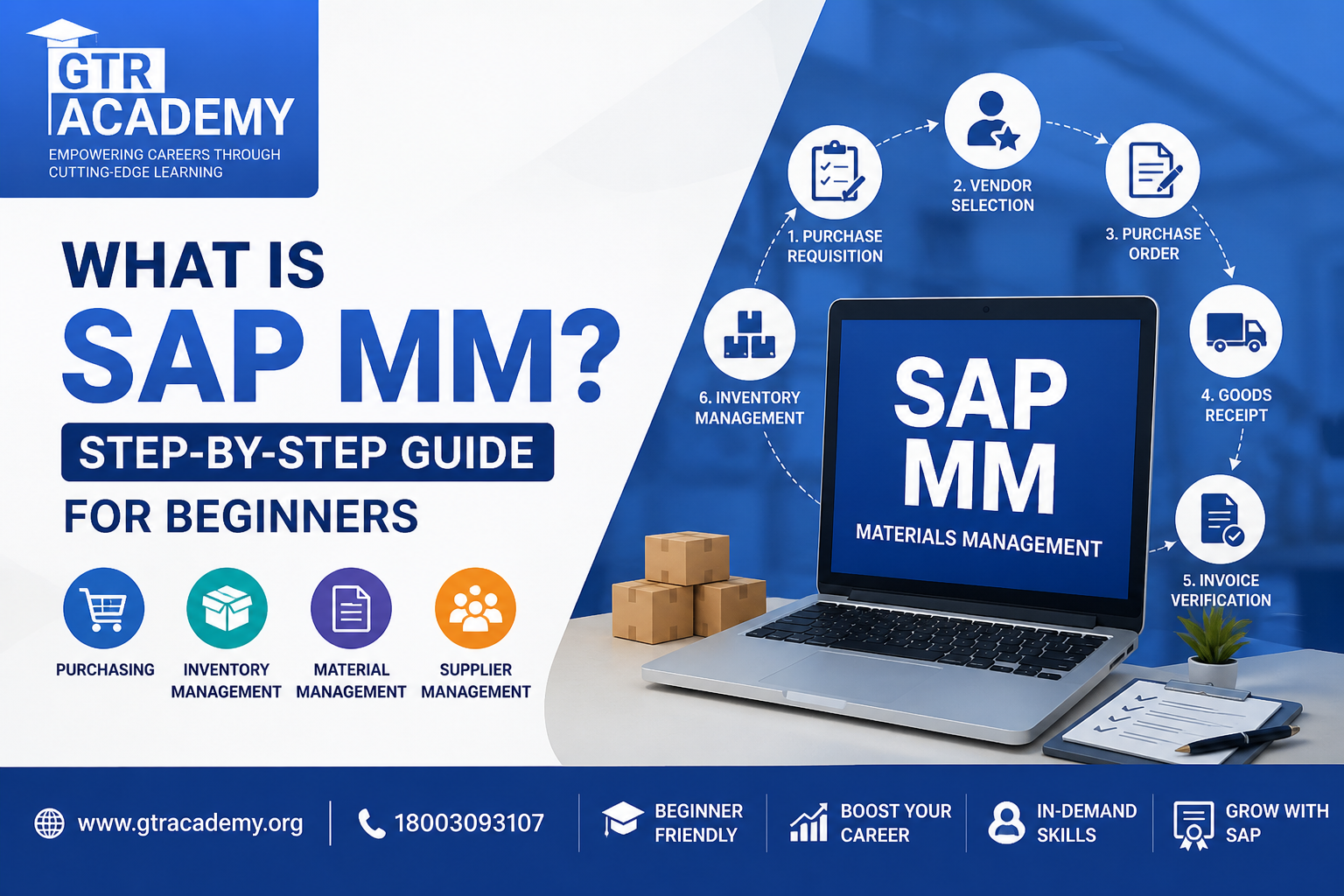
SAP MM (Materials Management) is an SAP ERP module used to manage procurement and inventory-related activities.
It connects purchasing and inventory processes with other areas of a business. For example, when a company needs raw materials, the purchasing team can use SAP MM to create purchasing documents, receive the materials, and update stock information.
The module helps businesses answer important questions such as:
-
What materials do we have?
-
How much stock is available?
-
When should we purchase more materials?
-
Which supplier should provide the materials?
-
How much did the materials cost?
This makes SAP MM useful for manufacturing, retail, logistics, healthcare, construction, and many other industries.
How Does SAP MM Work?
A simple SAP MM process can be understood as a series of steps.
Step 1: Identify the Material Requirement
The process begins when a business needs a material or product. The requirement may come from production, sales, maintenance, or another department.
For example, a manufacturing company may need 500 units of a particular raw material.
Step 2: Create a Purchase Requisition
A Purchase Requisition (PR) can be created to communicate that a material needs to be purchased.
The requisition usually contains information such as the material, quantity, required date, and other purchasing details.
Step 3: Select a Supplier
The purchasing team identifies a suitable vendor or supplier. SAP MM can maintain supplier-related information that helps organizations manage their purchasing activities.
Price, delivery time, quality, and previous supplier performance can all influence the purchasing decision.
Step 4: Create a Purchase Order
After selecting the supplier, a Purchase Order (PO) can be created.
The purchase order formally tells the supplier what the company wants to buy. It can include the material, quantity, price, delivery date, and other terms.
Step 5: Receive the Material
When the supplier delivers the goods, the company performs a Goods Receipt (GR).
The received quantity is checked against the purchase order. If the receipt is posted successfully, SAP updates the relevant inventory information.
Step 6: Check the Invoice
The supplier sends an invoice after delivering the material. The invoice is checked against the purchasing and goods-receipt information.
This process is commonly known as invoice verification and helps identify differences in quantity or price.
Step 7: Update Inventory
Once the material is received and processed, the stock information is updated.
This gives the organization better visibility into available inventory and helps employees make purchasing and planning decisions.
Why Is SAP MM Important?
Businesses handle thousands of materials and purchasing transactions. Managing this information manually can lead to errors, delays, and poor visibility.
SAP MM helps create a more organized process.
Some common benefits include:
-
Better inventory visibility
-
More structured purchasing processes
-
Reduced manual work
-
Improved material tracking
-
Better control over procurement
-
More accurate business information
-
Integration with other SAP business processes
For example, if inventory levels fall below the required level, purchasing teams can use the available information to plan future procurement more effectively.
SAP MM and Other SAP Modules
One reason SAP MM is powerful is its integration with other SAP modules.
For example, SAP MM can work closely with:
-
SAP FI for financial and accounting processes
-
SAP SD for sales and distribution activities
-
SAP PP for production planning
-
SAP QM for quality management
-
SAP PM for plant maintenance
This integration allows information to flow between different business functions instead of keeping each department's information separate.
Is SAP MM a Good Career Option?
If you are interested in procurement, inventory, supply chain, or ERP systems, SAP MM can be a useful career path.
A beginner should first understand basic procurement and inventory concepts. Then, learning SAP MM processes, organizational structures, master data, and common business transactions can provide a strong foundation.
Hands-on practice is especially valuable. Instead of only memorizing transaction codes, try to understand the complete business process—from material requirement to purchasing, goods receipt, and invoice verification.
Final Thoughts
Then, what is SAP MM? SAP MM is an essential module within SAP that helps companies to manage materials, procurement, inventory and purchasing process.
To get a clear understanding of SAP MM, one should follow the entire cycle of the process: identification of the requirement, creation of purchase requisition, selection of a supplier, issue of purchase order, receipt of material, verification of the invoice, and inventory management.
In case you are a beginner and you need to learn about SAP MM, it will be better for you to learn the above-mentioned cycle instead of just learning about SAP terms.
Frequently Asked Questions About SAP MM
What is SAP MM in simple words?
SAP MM is an SAP module that helps businesses manage materials, purchasing, inventory, and related procurement activities.
What does SAP MM stand for?
SAP MM stands for SAP Materials Management.
What are the main processes in SAP MM?
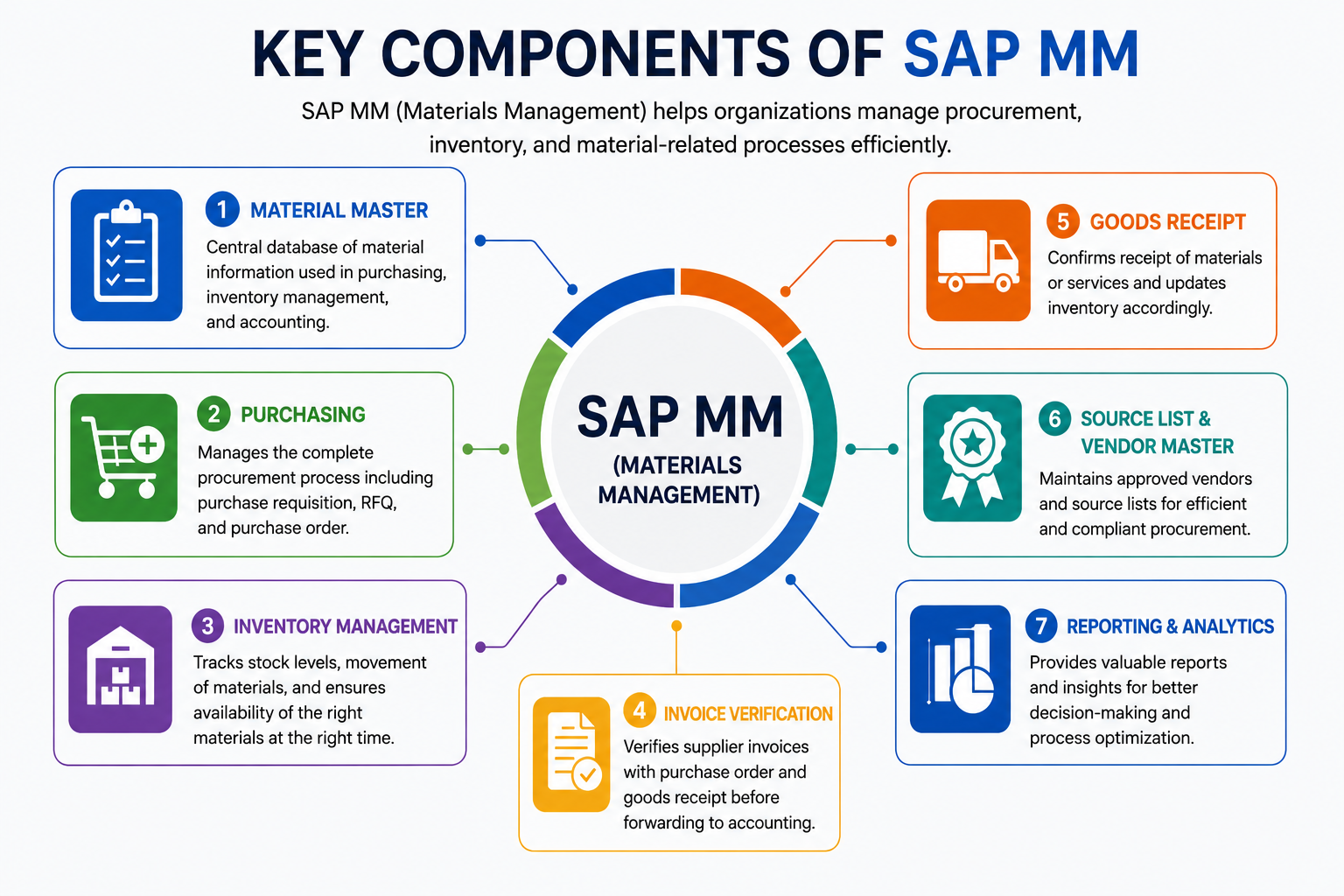
The major processes include purchasing, material master management, inventory management, goods receipt, goods issue, and invoice verification.
Is SAP MM difficult to learn?
SAP MM can be learned by beginners, especially when the concepts are studied through real business examples. Understanding procurement and inventory basics first can make learning easier.
What is the difference between SAP MM and SAP SD?
SAP MM mainly focuses on materials, procurement, and inventory management, while SAP SD focuses on sales and distribution processes. The two areas can work together within an integrated SAP environment.

 English
 Arabic
 French
 Spanish
 Portuguese
 Deutsch
 Turkish
 Dutch
Dutch
 Italiano
 Russian
 Portuguese (Brazil)
 Greek
Greek