


What Happens During P Shot Injections in Dubai From Start to Finish?
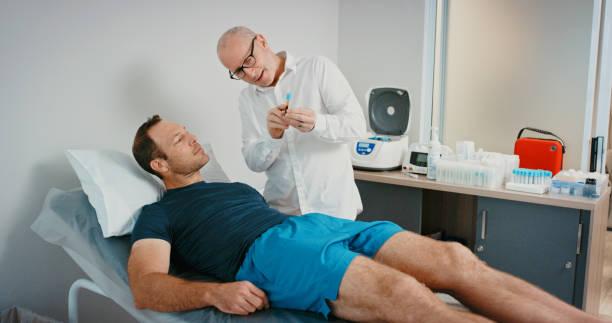
If you are considering P Shot Injections in Dubai, understanding what happens during the appointment can make the process easier to understand and help you ask better questions before treatment. The procedure generally involves a medical assessment, blood collection, preparation of platelet-rich plasma (PRP), administration of the prepared PRP, and post-treatment instructions.
The important point is that the P-Shot is not one universally standardized medical protocol. Research has used different PRP preparation methods, injection volumes, treatment schedules and protocols, and the 2026 European Association of Urology (EAU) guideline states that current evidence remains insufficient to recommend intracavernous PRP routinely for erectile dysfunction.
What Is the P-Shot Procedure?
The P-Shot is a commonly used name for a procedure involving platelet-rich plasma prepared from the patient's own blood and subsequently administered to penile tissue.
PRP contains platelets and various biological signaling factors. Researchers have proposed that these factors may influence processes such as angiogenesis and tissue repair. However, a proposed biological mechanism does not by itself establish that the treatment will improve erectile function in every patient.
The procedure can therefore be understood as a sequence of clinical steps rather than simply an injection.
Step 1: Initial Medical Assessment
The process begins with a clinical assessment.
The clinician may discuss the patient's erectile concerns, medical history, current medications, previous ED treatments, general health and treatment expectations.
This stage is important because erectile dysfunction can have different underlying causes, including vascular, metabolic, hormonal, neurological and psychological factors. Identifying the likely cause helps determine whether PRP is even an appropriate subject for discussion.
A proper assessment also gives the patient an opportunity to discuss established treatment options rather than approaching PRP as the only possible solution.
Step 2: Discussion of Treatment Expectations
Before proceeding, the clinician should explain what is known about the treatment and what remains uncertain.
This is especially important for PRP because clinical evidence remains mixed. The EAU reports that some randomized trials have shown improvements in erectile-function measurements, while another placebo-controlled randomized study found no difference in efficacy between PRP and placebo.
A responsible consultation should therefore avoid promises of guaranteed erections, permanent results or a specific outcome within a fixed number of days.
Step 3: Reviewing Medications and Medical History
The clinician may review medications and relevant medical conditions before treatment.
This can include medications that affect bleeding, cardiovascular health or erectile function, as well as previous procedures and existing medical conditions.
Patients should provide complete and accurate information rather than stopping or changing medication independently.
If medication changes are considered necessary, they should be discussed with the treating clinician.
Step 4: Preparing for Blood Collection
Once the treatment plan has been discussed, the patient is prepared for blood collection.
The P-Shot uses autologous PRP, meaning the platelet-rich plasma is produced from the patient's own blood.
A blood sample is collected using standard clinical techniques and then processed using the PRP preparation system selected for the procedure.
The amount of blood collected can vary depending on the system and treatment protocol.
Step 5: Collecting the Blood Sample
Blood is drawn from a vein, similar to other routine blood-draw procedures.
The patient may feel brief discomfort from the needle, but the collection itself is generally a straightforward part of the appointment.
The sample must then be handled appropriately before it is processed.
This stage is important because the quality and composition of the final PRP depend partly on the preparation system and processing method.
Step 6: Processing the Blood Into PRP
The collected blood is processed to separate its components and produce the platelet-rich fraction.
Whole blood contains red blood cells, white blood cells, platelets and plasma. PRP preparation aims to produce a plasma-based fraction containing a higher concentration of platelets than ordinary circulating blood.
However, different PRP systems can produce different cellular compositions and platelet concentrations.
The EAU specifically notes that there is no consensus regarding the optimal platelet concentration or activation method for PRP injections used in erectile dysfunction.
Step 7: Preparing the PRP for Administration
After processing, the platelet-rich fraction is prepared for administration according to the clinical protocol.
The preparation may differ between treatment systems in terms of volume, platelet concentration, white-cell content and other characteristics.
This is one reason why the term "P-Shot" should not be interpreted as describing one identical procedure performed in exactly the same way everywhere.
Clinical studies themselves have used different PRP protocols, which makes direct comparison between treatments more difficult.
Step 8: Preparing the Treatment Area
Before the injection, the treatment area is prepared according to appropriate clinical and sterile procedures.
The clinician may use measures intended to improve patient comfort during administration.
The exact preparation and comfort measures can vary according to the provider's technique and the patient's needs.
Patients should be able to ask what will be used for comfort and how the injection process will be performed before treatment begins.
Step 9: Administering the PRP
The prepared PRP is then administered according to the clinician's injection protocol.
This is the stage most people associate with the P-Shot, but it is only one part of the overall appointment.
The exact number and location of injection sites can vary depending on the protocol being followed.
Clinical research has also used different treatment schedules. For example, one randomized trial investigated two 10 mL PRP injections, while other research has evaluated different dosing schedules.
Therefore, patients should not assume that every provider will use the same injection volume, number of injections or treatment schedule.
Step 10: Brief Post-Treatment Assessment
After administration, the clinician may assess the patient before discharge.
The purpose is to make sure the patient is comfortable and understands the instructions provided for the next stage of care.
Patients should know who to contact if they experience unexpected symptoms after the procedure.
A clear follow-up plan is particularly important when treatment involves an emerging therapy for which clinical protocols are not yet universally standardized.
What Does the Patient Feel During the Procedure?
Individual experiences vary.
Blood collection may cause brief needle discomfort. The injection stage can also cause temporary discomfort, depending on the injection technique and comfort measures used.
Patients should discuss pain-control options with the clinician before the procedure rather than assuming that every clinic uses the same approach.
If pain becomes severe or unusual symptoms occur, the patient should notify the treating medical team.
How Long Does the Whole P-Shot Appointment Take?
The total appointment is longer than the injection itself because several stages occur before and after administration.
The overall visit may include:
| Stage | Purpose |
|---|---|
| Consultation | Review symptoms, medical history and expectations |
| Preparation | Prepare the patient and treatment area |
| Blood collection | Obtain the sample needed for PRP |
| PRP processing | Separate and prepare the platelet-rich fraction |
| Injection | Administer the prepared PRP |
| Post-treatment review | Provide instructions and address immediate concerns |
The exact duration depends on the clinic's workflow, PRP preparation system, treatment protocol and individual circumstances.
There is therefore no single treatment duration that applies to every patient.
Is the P-Shot Performed in One Session?
A single appointment may include one treatment session, but some research protocols have involved multiple treatment sessions.
For example, an RCT cited in the EAU guideline evaluated two PRP injections, while other studies have used different treatment schedules.
This means patients should distinguish between a single appointment and the complete treatment protocol.
If multiple sessions are proposed, the clinician should explain why they are being recommended and how much evidence supports that particular schedule.
What Happens After the Injection?
The immediate post-treatment period generally involves receiving individualized instructions from the treating clinician.
Patients should understand:
- What activities are permitted
- Whether temporary restrictions apply
- Which symptoms may occur
- Which symptoms require medical attention
- When follow-up is expected
- Whether another session has been proposed
- How progress will be evaluated
Because aftercare can vary according to the actual procedure and the patient's circumstances, personalized instructions should take priority over generic online advice.
Does the P-Shot Immediately Improve Erectile Function?
Patients should not expect an immediate guaranteed improvement.
PRP is being investigated as a regenerative approach, and the studies evaluating erectile function have generally measured outcomes over weeks or months rather than treating the injection as an instant erectile-function solution.
For example, randomized trials cited by the EAU assessed outcomes at one, three and six months after treatment.
Even those studies do not establish that every patient will experience improvement.
What Happens During Follow-Up?
Follow-up can be used to evaluate how the patient is doing and whether the treatment has produced a meaningful change.
Depending on the clinical setting, the clinician may discuss erectile-function symptoms, treatment response, side effects and whether additional management is appropriate.
Follow-up is particularly useful because erectile dysfunction can change over time and may require management of underlying cardiovascular, metabolic, hormonal or psychological factors.
What If the P-Shot Does Not Work?
A lack of improvement does not necessarily mean that the patient has no treatment options.
ED has multiple potential causes, and established therapies may include PDE5 inhibitors, vacuum erection devices, intracavernous vasoactive medication and other treatments depending on the individual's diagnosis.
The 2026 EAU guideline continues to recommend PDE5 inhibitors as first-line therapy for ED and describes other evidence-based options according to patient circumstances.
This is why P-Shot treatment should be considered within a broader medical assessment rather than as a guaranteed replacement for established ED therapies.
How Does the P-Shot Differ From Standard ED Injections?
This distinction can be confusing.
Some intracavernous injections used for ED contain vasoactive medications designed to produce an erection. These include established treatments such as alprostadil.
PRP injections are different because they are intended as a regenerative approach rather than as a medication that directly produces an erection at the time of injection.
The EAU identifies intracavernous vasoactive drug therapy as an established treatment option, while describing intracavernous PRP as an emerging treatment with insufficient evidence for routine recommendation.
Is the P-Shot Proven to Cure Erectile Dysfunction?
No.
The available evidence does not justify describing PRP as a guaranteed cure for erectile dysfunction.
The 2026 EAU guideline states that evidence remains insufficient for routine clinical use and recommends intracavernous PRP only within a clinical-trial setting. The guideline also highlights substantial variation in treatment timing, dosing, platelet concentration and activation methods.
This does not mean that research has shown PRP to be ineffective in every patient. It means the evidence is not yet strong or standardized enough to support broad claims of predictable effectiveness.
What Questions Should You Ask Before the Procedure?
Before booking, patients can ask:
- What is the suspected cause of my erectile dysfunction?
- Why are you recommending PRP in my particular situation?
- What PRP preparation system is being used?
- How is the PRP prepared?
- What injection protocol will be followed?
- How many sessions are proposed?
- What evidence supports this protocol?
- What established ED treatments are available?
- What should I expect immediately after treatment?
- How will my response be evaluated?
These questions shift the discussion from marketing claims toward clinical decision-making.
What Are the Most Important Parts of the P-Shot Process?
Although the injection is the most visible part of the treatment, several other stages matter just as much.
The most important elements are:
Medical assessment: Understanding the patient's erectile problem and potential causes.
Informed discussion: Explaining benefits, limitations, alternatives and uncertainties.
PRP preparation: Processing the patient's blood according to the selected protocol.
Injection technique: Administering the preparation appropriately.
Follow-up: Assessing response and determining whether further management is necessary.
A treatment should be judged by the quality of the complete clinical process rather than by the injection alone.
A Simple Start-to-Finish Overview
The entire process can be summarized as:
Consultation → Medical assessment → Blood collection → PRP processing → Treatment-area preparation → PRP administration → Immediate review → Aftercare instructions → Follow-up
This sequence provides a practical overview, but individual protocols can differ.
The exact steps, timing and treatment schedule should always be confirmed with the treating clinician.
The Strategic Investment
Understanding what happens from start to finish helps men make a more informed decision about P-Shot treatment.
Instead of focusing only on the injection itself, patients should evaluate the entire process: the quality of the medical assessment, the transparency of PRP preparation, the clinical reasoning behind the treatment protocol, the discussion of established alternatives and the follow-up plan.
That approach is especially important because current evidence for intracavernous PRP in erectile dysfunction remains mixed and treatment protocols are not standardized. The 2026 EAU guideline recognizes some promising trial findings but concludes that evidence remains insufficient for routine clinical recommendation.
For men researching P Shot Injections in Dubai, Tajmeels Clinic can provide a setting to discuss individual concerns, the procedure and available male sexual-health options with its clinical team.

 English
 Arabic
 Spanish
 Portuguese
 Deutsch
 Turkish
 Dutch
Dutch
 Italiano
 Russian
 Romaian
 Portuguese (Brazil)
 Greek
Greek