


When Do Jawline Filler Injections in Dubai Improve Balance?
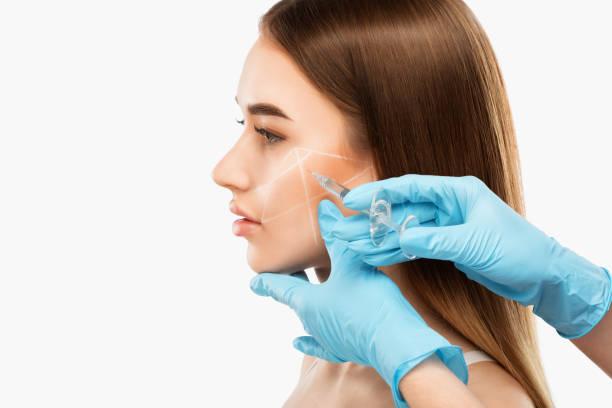
Facial balance is not simply about having a sharp jawline. Jawline Filler Injections in Dubai can improve facial harmony when the lower face lacks definition, the chin and jaw appear disproportionate, or subtle asymmetry affects the overall appearance. The goal is not to make every face look angular; it is to create better relationships between the chin, jawline, cheeks, and surrounding facial structures.
A well-planned result depends on understanding facial anatomy, existing proportions, skin and soft-tissue characteristics, and the patient's actual aesthetic concern. Modern filler planning therefore focuses on placement and proportion rather than simply adding volume.
What Does Facial Balance Actually Mean?
Facial balance describes how different facial structures relate to one another when viewed together. The chin, jawline, lips, cheeks, nose, and forehead all contribute to the visual impression of proportion.
A person may have an attractive jawline but still feel that the lower face looks disproportionate because the chin is recessed. Another person may have adequate chin projection but insufficient definition along the mandibular border.
This is why jawline filler should not be viewed as a one-size-fits-all treatment.
A medical assessment may consider:
- Chin projection and position
- Width and shape of the lower face
- Definition of the mandibular border
- Jaw angle and posterior jawline
- Pre-jowl area
- Skin thickness and elasticity
- Soft-tissue fullness
- Facial asymmetry
- Relationship between chin and jaw
- Overall front, side, and three-quarter profile
Recent anatomical literature emphasizes diagnosis based on individual facial structures and landmarks when planning chin augmentation and jawline contouring.
When Do Jawline Filler Injections in Dubai Improve Facial Balance?
Jawline filler is most useful when the problem involves a contour or volume deficiency that can realistically be improved with an injectable treatment.
For example, a weak mandibular outline may cause the lower face to appear soft even when the underlying facial proportions are otherwise harmonious. Carefully placed filler can create additional structural definition along selected areas of the jaw.
Facial balance may improve when:
- The jawline lacks visible definition
A poorly defined mandibular border can make the transition between the face and neck appear less distinct. Adding structural support in appropriate locations may create a cleaner contour.
- The chin and jaw appear disproportionate
Sometimes the perceived weakness of the jawline actually comes partly from the chin. In such cases, treating only the jaw may produce an incomplete result.
A clinician may therefore assess whether chin enhancement, jawline enhancement, or a combination would better address the proportion.
- Mild asymmetry affects the overall appearance
Small differences between the left and right sides of the face are normal. However, noticeable soft-tissue differences can sometimes be visually balanced with conservative filler placement.
The important distinction is whether the asymmetry originates from soft tissue or deeper skeletal anatomy. Filler cannot reproduce the effect of surgical correction when the underlying issue is substantial bone structure.
- The lower face has lost definition
Age-related changes can affect soft-tissue volume and the appearance of the mandibular border. Filler may restore selected areas of structural support and contour, depending on the patient's anatomy.
Clinical studies have evaluated hyaluronic acid fillers for improving jawline definition, with results supporting their use for selected patients.
- The side profile appears less balanced than the front view
A face can appear well proportioned from the front but less balanced in profile. Chin projection, mandibular definition, and the transition between the chin and neck can influence this appearance.
A three-dimensional assessment is therefore more useful than judging the jawline from a single photograph.
Jawline Filler and Facial Proportions: What Changes?
The objective is not necessarily to make the jaw larger. Instead, treatment can be planned to improve relationships between different structures.
| Facial concern | What may contribute | Potential role of filler |
|---|---|---|
| Soft jawline | Limited contour definition or soft-tissue coverage | Add selected structural definition |
| Recessed chin | Reduced chin projection | Chin filler may improve proportion |
| Uneven contour | Soft-tissue asymmetry | Conservative correction may help |
| Weak jaw angle | Limited posterior definition | Targeted contour enhancement may help |
| Pre-jowl hollowing | Localized volume deficiency | Filler may soften the transition |
| Lower-face imbalance | Multiple structural factors | Combination planning may be considered |
| Significant skin laxity | Tissue descent or excess skin | Filler may have limited benefit |
| Excess facial fat | Soft-tissue volume rather than structural deficiency | Fat-reduction approaches may be more appropriate |
This distinction matters because adding filler to the wrong area can sometimes make the face appear heavier rather than more balanced.
The ideal treatment plan begins with the problem rather than the product.
How Doctors Assess Facial Balance Before Jawline Filler
Before treatment, the clinician should evaluate the face as a complete structure rather than focusing exclusively on the jaw.
A useful assessment can involve photographs or direct examination from several perspectives:
- Straight-on view
- Right and left profile
- Three-quarter views
- Resting facial expression
- Natural head position
- Chin-to-neck relationship
- Jawline continuity
- Facial symmetry
The clinician may then determine whether the patient's concern is primarily related to projection, width, contour, volume, soft tissue, or a combination of these factors.
Modern jawline filler research also supports individualized treatment based on patient characteristics rather than applying identical volumes or injection patterns to everyone. A 2025 clinical trial, for example, found that different hyaluronic acid technologies may offer different integration characteristics depending on factors such as skin thickness and the desired contour.
When Jawline Filler May Not Be the Best Solution
Facial balance does not always require filler.
A consultation may reveal that the patient's primary concern comes from another factor, such as significant skin laxity, excess submental fat, strong masseter muscle development, or skeletal anatomy.
In these situations, other options may be more appropriate.
For example:
- Significant excess fat may require a fat-reduction strategy.
- Marked skin laxity may respond better to tightening or surgical approaches.
- A substantial skeletal discrepancy may require surgical evaluation.
- Prominent masseter muscles may influence lower-face width differently from a lack of jawline volume.
- A recessed chin may require chin-focused treatment rather than extensive jawline filler.
This is one reason a good consultation should identify the cause of the appearance before deciding how much filler to use.
For people researching facial balance and jawline treatment options in Dubai, the key question should be whether injectable contouring actually matches their anatomy and aesthetic objective.
Does More Filler Create Better Facial Balance?
Not necessarily.
A common misconception is that a stronger jawline automatically creates a more attractive face. In reality, excessive volume can change facial proportions in the opposite direction.
A jaw that is too wide, too projected, or too heavy relative to the chin and midface can make the lower face appear bulky.
The desired outcome is therefore usually controlled enhancement.
A clinician may consider:
- Where definition is missing
- How much projection is appropriate
- Whether the chin needs balancing
- How the jaw relates to the cheekbones
- Whether both sides require equal treatment
- Whether additional volume would improve or disrupt proportion
A 2025 prospective case series investigated anatomically guided HA filler treatment using individualized planning and minimal product volume, highlighting the importance of facial proportions and anatomical landmarks. Because the study involved only 10 patients, its findings should be viewed as supportive rather than universal proof.
What Should You Expect During and After Treatment?
Jawline filler is an injectable medical procedure rather than a simple beauty service. The treatment plan depends on the selected filler, treatment areas, anatomy, and clinician's technique.
Temporary reactions can include:
- Swelling
- Bruising
- Redness
- Tenderness
- Pain at injection sites
- Itching
These reactions commonly occur shortly after filler treatment and often resolve over days to weeks, although individual recovery varies.
After treatment, patients may be advised to temporarily minimize strenuous exercise and extensive exposure to sun or extreme temperatures because these factors can increase temporary redness, swelling, or itching. This consideration can be particularly relevant in Dubai, where strong outdoor heat and sunlight contrast with heavily air-conditioned indoor environments.
Patients planning weddings, professional photography, travel, or major social events should therefore leave sufficient time between treatment and the event rather than scheduling injections immediately beforehand.
Safety Matters More Than Speed
Because dermal filler is injected near important facial structures and blood vessels, provider expertise is a major part of achieving a safe result.
The FDA notes that accidental injection into a blood vessel is an uncommon but potentially serious complication of dermal fillers. Possible consequences include tissue necrosis, visual abnormalities including blindness, and stroke.
Patients should therefore choose a properly qualified healthcare professional who understands facial anatomy, uses appropriate products, and has a plan for managing complications.
Before treatment, ask:
- Which filler is being recommended and why?
- Which areas of my jawline actually need enhancement?
- Does my chin need to be assessed separately?
- Is my concern caused by volume, structure, fat, muscle, or skin laxity?
- What level of improvement is realistically achievable?
- What temporary side effects should I expect?
- What warning signs require urgent medical attention?
- What aftercare and follow-up will I need?
These questions help shift the consultation from “How much filler do I need?” to the more useful question: “What structural change would actually improve my facial balance?”
Why Dubai Patients Should Think Beyond the Jawline
Dubai's aesthetic market includes patients with very different facial structures, lifestyles, and expectations. A professional may want subtle definition that remains natural during meetings, while someone preparing for an event may prioritize stronger photographic definition.
The climate can also influence recovery planning. Outdoor heat, intense sunlight, exercise, and frequent transitions between hot outdoor environments and air-conditioned interiors make practical aftercare especially important.
For international patients, scheduling should also account for travel and the availability of appropriate follow-up if concerns develop after treatment.
When Is Jawline Filler Most Likely to Improve Facial Harmony?
The strongest candidates are not necessarily those asking for the sharpest possible jawline.
Instead, jawline filler may be particularly useful when there is a specific, identifiable contour issue that can be improved without disrupting the rest of the face.
A good treatment plan may involve:
- Subtle mandibular definition
- Strategic enhancement of the jaw angle
- Correction of selected contour irregularities
- Chin and jaw balancing
- Conservative management of mild soft-tissue asymmetry
- Restoration of definition after volume changes
The final decision should be based on anatomy, expectations, and clinical assessment rather than a fixed number of syringes.
The Strategic Investment
The real value of Jawline Filler Injections in Dubai is not simply creating a sharper mandibular outline. It is using precise, anatomy-based treatment to make the chin, jaw, lower face, and overall profile work together more harmoniously.
For patients considering this approach, a consultation with an experienced medical aesthetic provider can help determine whether filler is appropriate or whether another treatment would better address the underlying concern.

 English
 Arabic
 French
 Spanish
 Portuguese
 Deutsch
 Turkish
 Dutch
Dutch
 Italiano
 Romaian
 Portuguese (Brazil)
 Greek
Greek