


How Do You Pick the Best Real Estate Website Development Company?
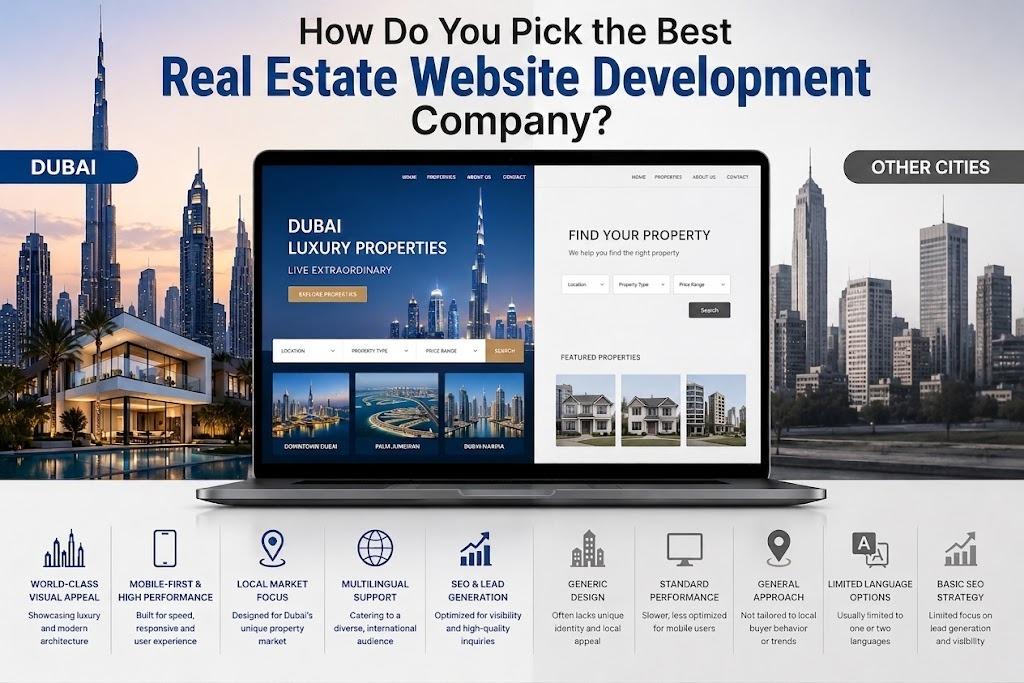
Choosing the right partner for your online presence can make or break your success in the property market. A well-built website brings in leads, builds trust, and showcases listings in the best possible light. A poorly built one drives potential buyers away within seconds. That's why finding the best real estate website development company is one of the most important decisions a real estate business can make.
This guide breaks down exactly what to look for, what questions to ask, and what red flags to avoid before you sign a contract.
Why Your Choice of Development Company Matters
Your website is often the very first impression a buyer or tenant has of your brand. Unlike a brochure or a business card, a website works around the clock — generating leads, answering questions through chatbots, and converting visitors into clients even while your team sleeps.
If the company you hire doesn't understand the real estate industry specifically, you risk ending up with a generic template site that lacks the tools agents and buyers actually need, such as property search filters, mortgage calculators, or MLS/IDX integration. This is why industry experience should be at the top of your checklist.
Look for Real Estate Industry Experience
Not every web development company understands the unique needs of the property sector. Before hiring anyone, check their portfolio specifically for real estate projects. Ask yourself:
- Have they built property listing pages with advanced search and filter options?
- Do their past projects include agent profiles, virtual tours, or map-based search?
- Have they integrated real estate-specific tools like IDX/MLS feeds, CRM systems, or lead capture forms?
A company with proven real estate experience will already understand these requirements and won't need extensive hand-holding to figure out what your business needs.
Check Their Portfolio and Case Studies
A strong portfolio tells you more than any sales pitch. Look at previous websites they've built for real estate clients and evaluate:
- Design quality – Is it modern, clean, and visually appealing?
- Loading speed – Fast websites keep visitors engaged; slow ones lose them instantly.
- Mobile responsiveness – Most property searches now happen on phones, so mobile design is non-negotiable.
- User experience – Can you easily search, filter, and view property details without confusion?
If possible, ask for case studies that show measurable results, such as increased lead generation, higher time-on-site, or improved search rankings after launch.
Evaluate Their Technical Capabilities
The best real estate website development company should offer more than just a nice-looking front end. Ask about their technical stack and capabilities, including:
- CMS flexibility – Can you easily update listings, blog posts, and pages yourself after launch?
- IDX/MLS integration – Can they connect your site to property databases for real-time listings?
- Custom functionality – Can they build features like saved searches, favorites, mortgage calculators, or virtual tour embeds?
- SEO-friendly architecture – Is the site structured in a way that search engines can easily crawl and index?
A company that can clearly explain their technical approach — without drowning you in jargon — is usually a good sign of expertise and transparency.
Ask About SEO and Digital Marketing Knowledge
A beautiful website is worthless if nobody finds it. The best real estate website development company should understand basic SEO principles even if search marketing isn't their core service. Ask whether they:
- Build websites with clean, semantic code that search engines can read easily
- Optimize page speed and Core Web Vitals
- Set up proper URL structures for property listings and location pages
- Include schema markup for real estate listings, which helps your properties appear more prominently in search results
Even if you plan to hire a separate SEO agency later, starting with an SEO-friendly foundation saves time and money down the road.
Review Client Testimonials and References
Don't just rely on what a company says about itself — talk to their past clients. Reach out to references and ask specific questions:
- Was the project delivered on time and within budget?
- How responsive was the team during and after development?
- Did the website perform well once it went live?
- Would they hire the same company again?
Genuine testimonials, especially from other real estate businesses, carry far more weight than polished marketing copy on a company's homepage.
Compare Pricing and Value, Not Just Cost
Price matters, but it shouldn't be the only deciding factor. The cheapest option often comes with hidden costs — poor code quality, limited support, or the need for a complete rebuild within a year or two.
When comparing quotes, ask what's actually included:
- Number of custom pages and templates
- Property listing management system
- Mobile optimization
- Post-launch support and maintenance
- Training on how to use the CMS
A slightly higher upfront investment from an experienced team often saves money in the long run by avoiding costly fixes and rebuilds.
Ask About Post-Launch Support
A website isn't a one-time project — it needs ongoing updates, security patches, and occasional feature additions. Before signing a contract, clarify:
- What kind of support is included after launch?
- Is there a maintenance package available?
- How quickly do they respond to bugs or technical issues?
- Will they be available for future upgrades as your business grows?
A development company that disappears after handing over the files isn't a long-term partner — it's a liability waiting to happen.
Watch Out for Red Flags
While evaluating potential partners, keep an eye out for warning signs such as:
- Vague answers about timelines or costs
- No real estate-specific portfolio examples
- Poor communication or slow response times during initial conversations
- Overpromising unrealistic results, like guaranteed #1 Google rankings
- Lack of a clear contract outlining deliverables and ownership rights
If something feels off during the sales process, it will likely feel worse once the project is underway.
Final Thoughts
Picking the best real estate website development company comes down to a mix of industry experience, technical skill, proven results, and long-term support. Take the time to review portfolios, speak with past clients, and ask detailed questions about both design and functionality before making a decision.
The right development partner won't just build you a website — they'll build you a tool that generates leads, builds credibility, and grows alongside your business for years to come.

 English
 French
 Spanish
 Portuguese
 Deutsch
 Turkish
 Dutch
Dutch
 Italiano
 Russian
 Romaian
 Portuguese (Brazil)
 Greek
Greek