


What Is SEO? A Complete Guide to Search Engine Optimization
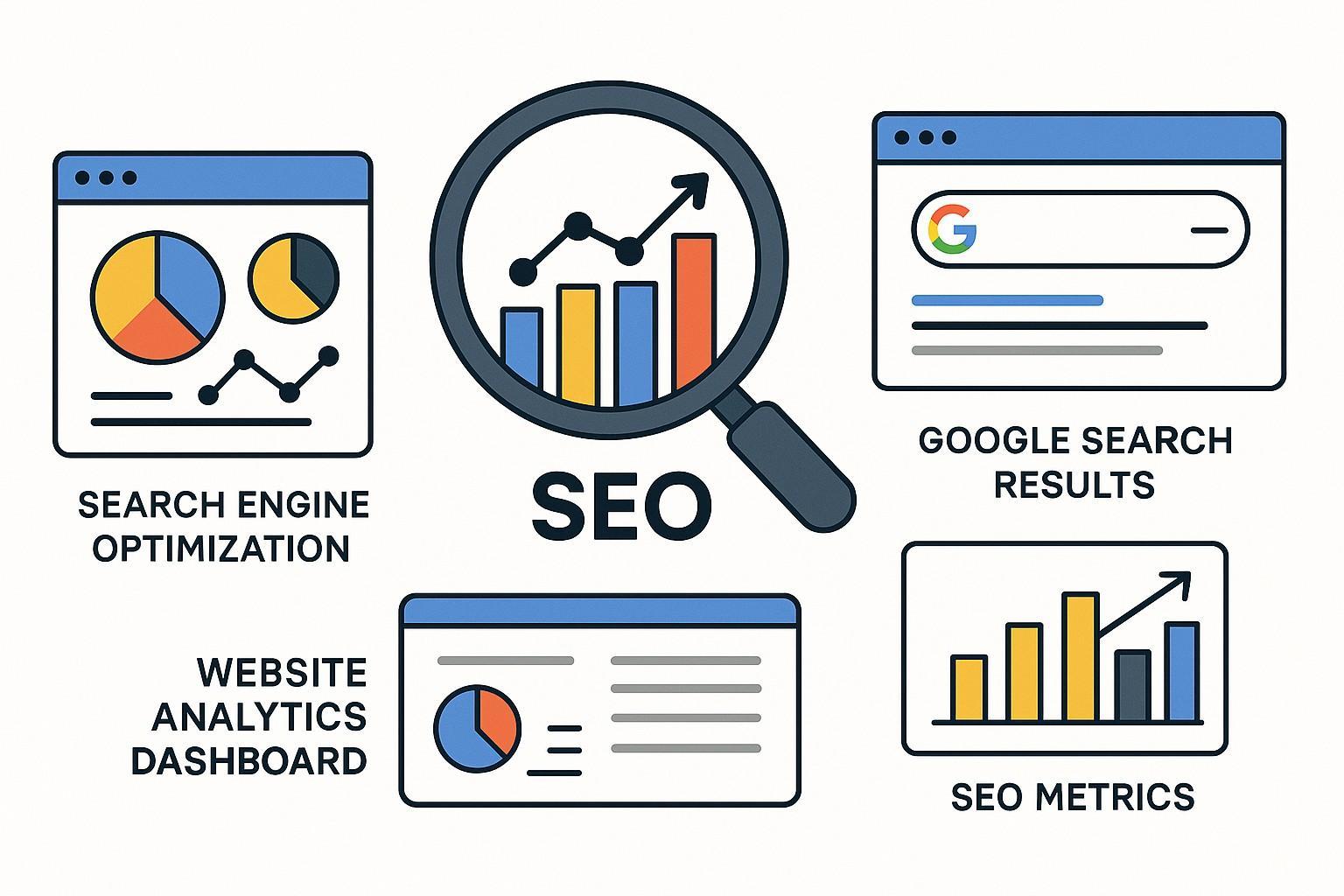
Search engine optimization, commonly known as SEO, is the process of improving a website so search engines can understand its content and people can discover it through organic search. Whether you manage a business website, educational platform, online store, or personal blog, this practice can help your content reach people who are actively searching for relevant information.
Search optimization involves much more than adding keywords to a webpage. A strong strategy combines useful content, website structure, technical accessibility, internal linking, relevant external references, search intent, and performance analysis.
Google's SEO Starter Guide explains how website owners can make their content easier for search engines to understand while creating a better experience for visitors.
How Does SEO Work?
Google Search generally operates through three important stages: crawling, indexing, and serving search results.
1. Crawling
Search engines use automated programs called crawlers to discover webpages across the internet. These systems can follow links between pages to find new or updated content.
A website with a logical structure and crawlable links makes it easier for search engines to discover important pages.
2. Indexing
After discovering a webpage, Google analyzes its content and stores information about it in its search index.
However, being indexed does not guarantee a high position in search results. Relevance, content quality, technical accessibility, and numerous other signals can influence visibility.
3. Ranking and Search Results
When someone enters a query, Google's systems identify potentially relevant pages and determine which results should be displayed.
Google explains that its ranking systems use many different signals and systems to understand which results are most relevant and useful for a particular search.
This is why effective optimization focuses on satisfying the user's information need rather than repeating a phrase a specific number of times.
Why Is SEO Important?
Organic search can be an important source of website traffic because it allows businesses, publishers, and organizations to reach people who are already looking for relevant information.
Some potential benefits include:
- Greater visibility: Relevant searches can introduce new audiences to your website.
- Qualified traffic: Matching content with search intent can attract visitors who are genuinely interested in your subject.
- Long-term value: Helpful pages may continue generating visitors after publication.
- Business opportunities: Organic visitors can become leads, customers, subscribers, or members.
- Better usability: Many optimization improvements also make websites easier for people to navigate.
However, following best practices does not guarantee a particular ranking. Google explicitly states that there are no secrets that automatically place a website in the first position.
What Are the Main Types of SEO?
Search optimization covers several interconnected areas. Each addresses a different part of a website's visibility and performance.
On-Page SEO
On-page optimization focuses on elements found directly on a webpage, including:
- Page titles
- Headings
- Main content
- Keywords
- Search intent
- Internal links
- Images and alternative text
- URLs
- Meta descriptions
The objective is to make the subject and purpose of a page clear while providing useful information to visitors.
Technical SEO
Technical optimization deals with the elements that help search engines crawl, render, and index a website.
Important areas include:
- Crawlability
- Indexability
- Website architecture
- XML sitemaps
- Canonical URLs
- Mobile usability
- Page performance
- HTTPS
- Structured data
Google recommends creating websites that are secure, fast, accessible, and usable across devices.
Technical considerations become particularly important during website redesigns and migrations. EdTechReader's guide on how to migrate a website without losing search rankings explains practical considerations such as URL auditing, redirect mapping, staging tests, and post-launch monitoring.
Off-Page SEO
Off-page optimization involves activities and signals that occur outside your own website.
Link building is one of the best-known examples. Relevant links from other websites can help users discover your content and may contribute to how search engines understand your website's authority and relationships.
However, successful link acquisition is not about collecting as many backlinks as possible. Relevant mentions, editorial links, digital PR, useful resources, and genuine industry relationships can provide more meaningful value than large quantities of unrelated links.
Local SEO
Local optimization focuses on searches connected to a particular geographic area.
Examples include:
- “SEO agency in Chicago”
- “moving company near me”
- “dentist in Austin”
Businesses can improve local visibility by maintaining accurate business information, producing useful location-specific content, earning relevant local mentions, managing reviews, and maintaining their Google Business Profile.
EdTechReader has previously explored local SEO strategies for small businesses, including location-based keywords, reviews, local backlinks, and business-profile optimization.
What Is Keyword Research?
Keyword research is the process of identifying the words and phrases people use when searching online.
For example, someone interested in search optimization might search for:
- what is SEO
- SEO meaning
- how does SEO work
- SEO techniques
- SEO best practices
- on-page SEO
- technical SEO
- SEO tools
- how to improve website SEO
The goal is not to repeat every phrase throughout an article. Instead, research helps you understand what your audience wants to know and which topics deserve attention.
Modern keyword research should consider search intent, related topics, questions, entities, and the broader information need behind a query.
What Is Search Intent?
Search intent describes the reason behind a search query.
Understanding intent is essential because different searches can require very different types of content.
Informational Intent
The user wants to learn something.
Example: “What is SEO?”
A detailed educational guide is appropriate.
Navigational Intent
The user wants to reach a particular website or page.
Example: “Google Search Console login.”
Commercial Investigation
The user is comparing options before making a decision.
Example: “best SEO tools for small business.”
Transactional Intent
The user is ready to complete an action.
Example: “buy SEO software.”
Matching a page with the correct intent can make it substantially more useful to the intended audience.
How Does Content Affect Search Visibility?
High-quality content should answer the reader's question clearly while providing enough context to understand the subject.
Strong search-focused content generally includes:
- A clear introduction
- Descriptive headings
- Direct answers to important questions
- Relevant examples
- Original or useful insights
- Natural terminology
- Internal links to related resources
- Authoritative external references
- Easy-to-scan formatting
Longer content is not automatically better. A concise page that completely satisfies the user's needs can be more valuable than a much longer article filled with repetition.
EdTechReader's existing search-focused content connects traditional optimization with AI-driven research, content planning, technical analysis, and performance monitoring. Its article on how AI can help identify gaps in website performance discusses areas such as technical problems, content gaps, page performance, internal navigation, and outdated information.
Why Is Internal Linking Important?
Internal links connect pages within the same website.
They help visitors discover related information and can help search engines understand the relationships between different pages.
For example, an educational guide can naturally link to a specialized resource about website migration when discussing technical optimization. Similarly, a section about local search can point readers toward an existing local-business resource.
The important principle is relevance. Links should help readers find the next useful piece of information instead of being inserted simply to increase link counts.
Why Use Outbound Links?
Outbound links direct visitors to resources on other websites.
For educational content, these links can provide evidence, official documentation, additional context, or further reading.
For example, Google's official documentation explains how crawling, indexing, and ranking work. That makes it an appropriate reference when discussing how search engines process webpages.
When adding external references, prioritize authoritative and directly relevant sources instead of linking to unrelated websites.
How Do You Measure SEO Performance?
Search performance should not be judged by rankings alone.
Useful metrics include:
- Organic clicks
- Search impressions
- Click-through rate
- Search positions
- Organic traffic
- Indexed pages
- Leads
- Sales
- Conversions
Google Search Console helps website owners understand how their pages perform in Google Search, including queries, impressions, clicks, and average positions. (Google Search Central)
The most useful measurement approach connects organic visibility to the website's actual goals.
For example, an online store may care more about revenue and completed purchases than ranking for a particular keyword. An educational publication may prioritize qualified readership, subscriptions, and engagement.
Common SEO Mistakes to Avoid
Keyword Stuffing
Repeating the same phrase unnaturally can make content difficult to read and does not create a better experience for visitors.
Ignoring Search Intent
A page can target a popular query and still perform poorly if it does not provide the information searchers actually want.
Neglecting Technical Issues
Excellent content can struggle when search engines cannot properly access, render, or index important pages.
Buying Low-Quality Links
Large numbers of irrelevant or manipulative backlinks are not a substitute for earning meaningful authority.
Publishing Thin Content
Creating many pages with little original value simply to target additional queries can leave a website with content that does not genuinely help its audience.
SEO in the Age of AI Search
Search is evolving beyond traditional blue-link results. People increasingly encounter AI-generated answers, conversational interfaces, featured results, and other search experiences.
This has increased interest in terms such as AEO (Answer Engine Optimization) and GEO (Generative Engine Optimization).
Although these approaches have their own strategies, the underlying principles remain familiar: provide accurate, useful, well-structured information that is easy for both people and machines to understand.
EdTechReader's existing AI SEO services article explores areas such as keyword-cluster analysis, search-intent mapping, content-gap identification, technical analysis, and performance monitoring.
Rather than creating separate content for every new optimization acronym, website owners should first build a strong foundation of useful information, sound technical practices, clear architecture, and trustworthy references.
How Long Does SEO Take to Work?
There is no fixed timeline for organic search improvements.
Some changes may become visible relatively quickly, while others can take weeks or months to produce measurable results. Search engines need time to recrawl and reassess webpages after significant changes.
Factors that can influence results include:
- Website history
- Competition
- Content quality
- Search intent
- Technical health
- Website authority
- Internal linking
- External references
- Search demand
- Meaningful content updates
For this reason, optimization should be treated as an ongoing process rather than a one-time task.
Final Thoughts
SEO is ultimately about helping people find useful information through search.
Keywords are important, but they are only one part of the process. Strong organic visibility combines search intent, useful content, technical accessibility, internal linking, relevant external references, website structure, and performance measurement.
For beginners, the best approach is to start with the fundamentals: understand your audience, research the questions they ask, create genuinely helpful content, make your website accessible to search engines, and measure what happens after publication.
As a website grows, its strategy can expand into technical optimization, local search, digital PR, structured data, content strategy, and optimization for emerging AI-powered search experiences.
The goal is not simply to rank.
The goal is to create a website that deserves to be found.
Frequently Asked Questions About SEO
What does SEO stand for?
SEO stands for Search Engine Optimization. It refers to the process of improving a website so search engines can better understand its content and users can discover relevant pages through organic search.
Why is SEO important?
SEO can improve organic visibility, attract relevant visitors, support business goals, and make website content easier for users and search engines to understand.
What are the main types of SEO?
The major areas include on-page SEO, technical SEO, off-page SEO, content SEO, and local SEO. These areas often overlap and work together.
How do I start SEO for my website?
Start by understanding your audience and search intent. Then create useful content, improve website structure and technical accessibility, build relevant internal links, earn quality mentions, and monitor performance with tools such as Google Search Console.
Can SEO guarantee a #1 Google ranking?
No. Following best practices can improve a website's ability to appear in search, but no legitimate method can guarantee a particular ranking position. Google explicitly states that there is no secret that automatically ranks a site first.
Does SEO still matter with AI search?
Yes. AI-powered search changes how information may be presented, but websites still benefit from clear, useful, trustworthy, and technically accessible content. Strong search fundamentals remain important as search experiences evolve.

 English
 Arabic
 French
 Spanish
 Portuguese
 Deutsch
 Turkish
 Dutch
Dutch
 Italiano
 Russian
 Romaian
 Portuguese (Brazil)