


Do Blackout Blinds Reduce Outside Light and Noise in Bedrooms
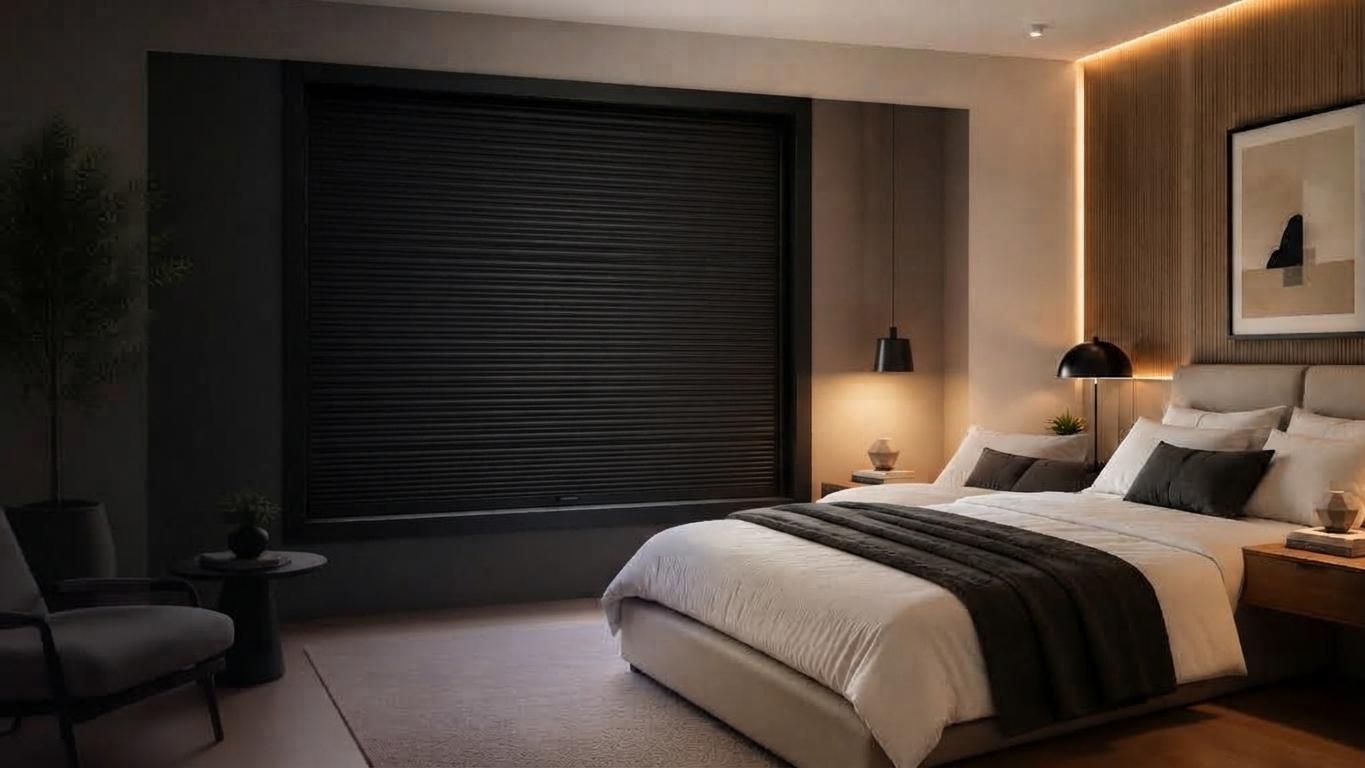
Yes, blackout blinds can significantly reduce unwanted outside light, and some designs can also soften noise entering a bedroom. Their effectiveness depends on more than the fabric itself. Fit, edge gaps, window construction, blind design and the type of outside noise all make a difference.
A bedroom facing a street can have two very different problems at night. There may be light from headlights, street lamps or nearby buildings. Then there is the sound: traffic, people, dogs, trains or early-morning deliveries.
Blackout blinds are primarily designed to deal with the first problem. However, a well-designed system can contribute to a quieter and more comfortable sleeping environment too.
How Do Blackout Blinds Reduce Outside Light?
The basic idea is straightforward. Blackout blinds use an opaque material or layered construction to prevent daylight from passing through the blind and entering the room.
But there's a catch.
The blind can block light through the fabric while still allowing light around its edges.
This is why two blinds labelled "blackout" can produce noticeably different results in the same bedroom.
A standard roller blind may stop most light passing through its material, yet leave narrow gaps at the sides. Light can also enter around the top or bottom, depending on how the blind is mounted.
For someone trying to sleep during daylight hours, those small gaps can be surprisingly noticeable.
This matters particularly in:
- Bedrooms facing east, where early morning sunlight enters directly
- Rooms exposed to street lighting
- Children's bedrooms and nurseries
- Bedrooms used by shift workers
- Rooms where daytime sleeping is necessary
- Homes where privacy is important after dark
A more enclosed blackout system can address these weak points by reducing the gaps around the window rather than relying on the fabric alone.
Does a Better Fit Make Blackout Blinds More Effective?
Usually, yes.
The dimensions of the window and the way the blind sits against it can have a major effect on perceived darkness. Made-to-measure blackout blinds are designed around the individual window rather than relying solely on standard sizes.
This approach can be useful when the goal is to create a genuinely dark bedroom.
A close-fitting frame or side channel can restrict the paths through which stray light normally enters. Magnetic closures and sealing systems can also help maintain contact around the edges.
That doesn't mean every bedroom can be made literally pitch black. Window frames, ventilation arrangements, installation conditions and the surrounding room can all affect the result.
Still, reducing edge leakage is one of the most practical ways to improve blackout performance.
Can Blackout Blinds Reduce Outside Noise?
This question needs a little more caution.
Blackout blinds aren't a substitute for acoustic glazing, secondary glazing or properly insulated walls. A blind won't transform a noisy bedroom into a recording studio.
However, some blackout blind systems use dense, layered materials that can help dampen certain sounds.
The distinction between blocking and dampening is important.
Blocking noise means preventing sound from entering the room. Dampening means reducing or softening some of the sound energy that reaches the window area.
A thick blind positioned close to a window can add another layer between the bedroom and the outside environment. Depending on its construction, it may reduce the perceived sharpness of certain noises.
This can be particularly relevant for bedrooms near:
- Busy roads
- Pedestrian areas
- Railway lines
- Commercial streets
- Schools and playgrounds
- Neighbouring properties
The effect will vary considerably. Low-frequency traffic rumble, for example, behaves differently from voices or high-frequency sounds such as birdsong.
So it is better to view noise reduction as a secondary benefit of certain blackout systems, rather than expecting ordinary blinds to provide the acoustic performance of specialist soundproofing.
Why Light and Noise Matter for Bedroom Comfort
A darker room isn't automatically a better sleeping environment, but unwanted light can interfere with the conditions many people prefer for sleep.
Artificial light entering through a window can make a room feel less like nighttime. Early sunlight can also wake someone before they intend to get up.
Noise can create a similar problem.
You may not consciously wake up every time a car passes, but repeated environmental sounds can make it harder to maintain a calm sleeping environment. People who work nights and sleep during the day may notice this especially.
That's why the most useful way to think about blackout blinds is not simply as a window covering.
They're part of the bedroom environment.
Light control, privacy, temperature and noise all interact to influence how comfortable a room feels.
What Features Should You Look For?
If reducing light is the main priority, don't judge a blind solely by the word "blackout" in its product description.
Look at the entire system.
1. Opaque or multi-layered fabric
The material should prevent visible light from passing through it. Some systems use multiple layers to achieve this while also adding thermal or acoustic properties.
2. Minimal edge gaps
This is one of the most important considerations.
A highly opaque blind with large gaps can allow more noticeable light into a bedroom than a slightly less substantial blind with a much tighter fit.
3. Made-to-measure sizing
Windows aren't always perfectly uniform. Custom sizing can help the blind correspond more closely to the actual opening.
4. Side channels or a surrounding frame
A frame can provide another barrier around the blind's edges. For anyone seeking maximum darkness, this can be more useful than simply choosing a darker fabric.
5. Dense construction
For people also concerned about outside noise, a denser or layered blind may offer some additional sound-dampening potential.
6. Thermal properties
A blind that adds another insulating layer at the window can help moderate heat transfer. This can make the bedroom feel more comfortable during both hot and cold weather.
Are Blackout Blinds Useful for Daytime Sleepers?
Absolutely.
For shift workers, parents with young children or anyone who needs to sleep during daylight, ordinary curtains may not provide enough control.
Imagine a bedroom at 2 p.m. on a bright summer afternoon. Even with curtains closed, light may still enter around the sides. A purpose-designed blackout system can make the room considerably darker.
This is one reason bedroom blackout solutions are often more useful when they're designed as a complete window system rather than simply as a dark piece of fabric.
A darker room can also make daytime rest feel more natural. The psychological difference shouldn't be overlooked.
What About Privacy?
Blackout blinds can provide privacy during both daytime and nighttime.
When fully closed, an opaque blind prevents people outside from seeing through the window. This is particularly useful for ground-floor bedrooms or homes that face roads and neighbouring properties.
A close-fitting design has another advantage: it reduces the possibility of visibility through gaps at the edges.
For bedrooms, privacy isn't merely a cosmetic feature. It's part of making the room feel secure and comfortable.
No-Drill Options: Are They Worth Considering?
Installation is another factor that often gets overlooked.
Traditional blinds may require drilling into the wall, window frame or surrounding structure. That's not ideal for every property, particularly rented accommodation or homes where permanent alterations aren't desirable.
Some modern blackout systems are designed for tool-free installation. LumiGlide, for example, describes a made-to-measure system using a framed design, precision sealing and no-drill installation.
That doesn't make no-drill installation automatically better. The important question is whether the installation method provides a secure, accurate fit without compromising the blind's performance.
For blackout applications, installation quality matters because even a small positioning error can create unwanted light leakage.
Can Blackout Blinds Completely Stop Noise?
In most cases, no.
This is where realistic expectations matter.
Windows are only one route through which sound enters a bedroom. Noise can also travel through walls, roofs, doors and ventilation points.
A blind can add mass and another layer at the window, but it can't address every acoustic pathway.
If noise is the main concern, consider the whole window assembly. Double or triple glazing, acoustic glass, properly sealed frames and secondary glazing can have a much greater effect on sound transmission.
Blackout blinds can then complement those measures by improving light control and potentially dampening some remaining outside noise.
Are Blackout Blinds Worth It for a Bedroom?
For bedrooms affected by early sunlight, street lighting or daytime brightness, blackout blinds can be a practical upgrade.
Their effectiveness depends heavily on the design.
The biggest difference often comes from moving beyond a simple blackout fabric and considering the entire system: how closely it fits the window, whether light can escape around the edges, how dense the material is and how well the blind is installed.
Noise reduction should be treated as an additional benefit rather than the primary reason to install them.
If the main goal is a darker, more private bedroom, focus first on light-blocking performance and edge sealing. If outside noise is also a concern, look at the blind alongside the window's glazing and overall acoustic performance.
In other words, the best blackout blind isn't necessarily the darkest fabric you can find. It's the system that deals with the actual weaknesses of your bedroom window.
For anyone comparing options, check the construction, fit, installation method and manufacturer's performance claims rather than relying on the word "blackout" alone. That small amount of research can make the difference between a room that's simply darker and one that's genuinely more comfortable for sleeping.

 English
 Arabic
 French
 Spanish
 Portuguese
 Deutsch
 Turkish
 Dutch
Dutch
 Italiano
 Russian
 Portuguese (Brazil)
 Greek
Greek