


Marketing Strategy: A Practical Step-by-Step Guide for Sustainable Growth
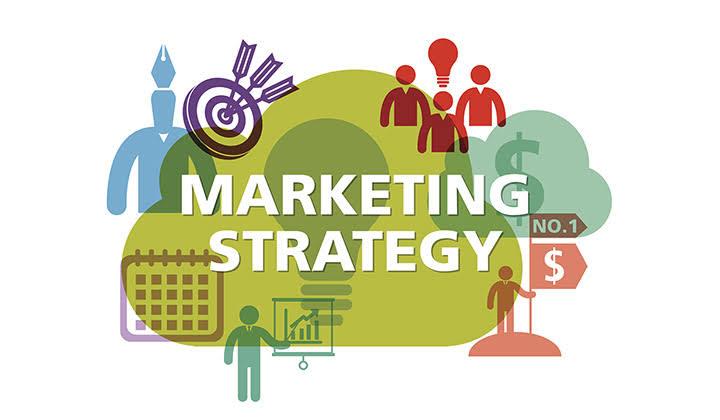
A marketing strategy gives a business a structured way to turn its goals into measurable growth. Instead of choosing marketing channels simply because they are popular, a well-developed strategy starts with the audience, defines what the business wants to achieve, determines how it will compete for attention, and then selects the right channels and tactics.
This distinction matters because marketing activity without a clear strategy can quickly become fragmented. A business may publish regularly, run advertising campaigns, post on social media, and invest in SEO without knowing whether these activities are actually moving customers toward a meaningful business outcome.
A practical marketing strategy connects those activities.
What Is a Marketing Strategy?
A marketing strategy is a long-term plan that connects business objectives with target audiences, positioning, messaging, channels, resources, and measurement.
It answers several fundamental questions:
- What does the business want to achieve?
- Who is the business trying to reach?
- What problem does it solve?
- Why should customers consider it?
- Which channels can reach those customers effectively?
- What content or campaigns will support the customer journey?
- How will performance be measured?
A strategy should provide direction without becoming so rigid that it cannot respond to changing customer behavior or market conditions.
The most important principle is to begin with the desired business outcome rather than the marketing channel. For example, “increase qualified leads” is a strategic objective. “Post on LinkedIn three times a week” is a tactic.
Confusing the two often leads to busy marketing teams without measurable progress.
Why Businesses Need a Clear Marketing Strategy
Without a defined strategy, marketing decisions are often made independently.
The SEO team may focus on rankings. The social media team may focus on engagement. The advertising team may focus on clicks. The sales team may focus on leads.
All of those metrics can be useful, but they do not automatically mean the business is moving toward its primary objectives.
A marketing strategy creates a shared framework.
It helps businesses:
- Prioritize marketing activities
- Allocate budgets more intelligently
- Understand customer needs
- Create consistent messaging
- Choose appropriate channels
- Build a structured content plan
- Connect marketing with sales
- Measure meaningful outcomes
- Identify weak points in the customer journey
The goal is not to be present everywhere. The goal is to be effective where the target audience actually spends time and makes decisions.
How to Create a Marketing Strategy Step by Step
A useful marketing strategy can be developed through a series of connected steps.
1. Define Clear Marketing Objectives
The first step is deciding what the marketing function needs to accomplish.
Common objectives include:
- Increasing qualified website traffic
- Generating leads
- Increasing sales
- Improving customer retention
- Entering a new market
- Increasing brand awareness
- Supporting a product launch
- Increasing customer lifetime value
Objectives should be specific enough to measure.
For example, “get more traffic” provides little strategic direction. A stronger objective might be to increase qualified organic traffic to specific commercial pages over a defined period.
The same principle applies to lead generation, sales, and retention.
Clear objectives also make it easier to determine which activities deserve investment.
2. Understand the Target Audience
A strategy becomes much stronger when it is based on actual customer needs rather than assumptions.
Research should examine:
- Who the target customers are
- What problems they are trying to solve
- What influences their decisions
- What objections prevent them from buying
- Where they search for information
- Which competitors they consider
- What questions they ask before purchasing
Search behavior can be particularly valuable because it reveals the language people use when looking for solutions.
For example, someone searching “what is technical SEO” is at a different stage from someone searching “technical SEO agency pricing.”
Those users may ultimately need the same service, but their immediate information needs are different.
3. Analyze the Market and Competitors
Competitive analysis helps identify both opportunities and limitations.
A useful competitor review should examine:
- Products or services
- Pricing models
- Positioning
- Website structure
- Organic search visibility
- Content topics
- Advertising messages
- Social presence
- Customer reviews
- Differentiators
The objective is not to copy competitors.
Instead, identify what the market already offers and where there may be an opportunity to provide clearer information, a better customer experience, stronger proof, or a more specific solution.
A competitor may rank well for a topic while still leaving important customer questions unanswered.
Those gaps can become strategic opportunities.
4. Develop a Clear Positioning
Positioning explains how a business wants to be understood relative to alternatives.
Strong positioning generally makes three things clear:
- Who the business serves
- What problem it solves
- Why its approach is relevant
A vague statement such as “we provide high-quality digital solutions” tells a potential customer very little.
More useful positioning is specific to the audience and problem.
For example, a business could position itself around helping small companies simplify complex technical processes, rather than attempting to appeal equally to everyone.
Good positioning also improves content because it gives writers and marketers a consistent perspective.
5. Build the Marketing Message
Once positioning is clear, the next step is developing messaging around the audience's needs.
A strong message should focus on customer outcomes rather than simply listing features.
For example:
Feature: Automated reporting
Customer-focused message: Reduce manual reporting work and make campaign performance easier to understand.
The second statement connects the feature with a practical benefit.
Messaging should remain consistent across:
- Website pages
- Search content
- Social media
- Email campaigns
- Paid advertising
- Sales materials
- Landing pages
Consistency does not mean repeating exactly the same sentence everywhere. It means maintaining the same strategic idea while adapting the presentation to each channel.
6. Choose the Right Marketing Channels
A common mistake when creating a marketing strategy is selecting channels before understanding the audience.
A business does not automatically need every major platform.
Potential channels include:
- Organic search
- Paid search
- Social media
- Email marketing
- Content marketing
- Video
- Partnerships
- Influencer marketing
- Communities
- Events
- Referral programs
The right combination depends on the audience, business model, resources, buying cycle, and objectives.
For example, SEO may be particularly valuable when customers repeatedly search for educational or commercial information. Paid search can be useful when there is existing high-intent demand. Email can become more important when the business needs to nurture prospects over a longer buying cycle.
Google Ads itself recommends beginning campaign planning with a defined objective and then selecting campaign types and settings around that goal.
7. Create a Content Marketing Strategy
Content should not exist simply to fill a publishing calendar.
Each piece should have a purpose.
A content marketing strategy can cover different stages of the customer journey.
Awareness
At this stage, people may be identifying a problem or learning about a subject.
Useful content includes:
- Educational articles
- Beginner guides
- Explainer videos
- Research reports
- Infographics
- Educational social posts
Consideration
Users understand their problem and are evaluating potential solutions.
Useful content includes:
- Detailed guides
- Comparison articles
- Case studies
- Webinars
- Checklists
- Expert analysis
Decision
The audience is closer to taking action and needs evidence that supports the decision.
Useful content includes:
- Product or service pages
- Demonstrations
- Pricing information
- Testimonials
- Case studies
- ROI information
- Implementation guides
This structure is commonly described as a content marketing funnel. A three-stage TOFU, MOFU, and BOFU model provides a simple framework, while more complex buying journeys may require additional post-purchase stages.
8. Map Content to Search Intent
SEO becomes more effective when content is planned around what users actually want to accomplish.
Search intent can broadly include:
- Informational
- Commercial investigation
- Transactional
- Navigational
Consider a topic such as “marketing strategy.”
A user searching “what is a marketing strategy” needs an explanation.
Someone searching “marketing strategy examples” is likely looking for practical models.
Someone searching “marketing strategy consultant” has a different level of commercial intent.
Treating every variation as the same keyword can result in several pages competing for similar searches without clearly serving different purposes.
Instead, group related queries by intent and create pages that answer a meaningful search need.
9. Connect the Content Funnel
A content library becomes more useful when individual pieces are connected.
For example:
Awareness article → Detailed guide → Comparison → Case study → Service/product page
Internal links can help users discover the next relevant resource while also creating a clearer information architecture.
The goal is not to force every visitor through a perfectly linear funnel. Modern customers often move backward and forward between research stages.
Instead, provide logical next steps based on what the reader is likely to need next.
10. Create a Distribution Plan
Publishing content is only one part of content marketing.
A distribution strategy determines how the right audience will discover it.
For example:
SEO
- Search-optimized articles
- Topic clusters
- Internal linking
- Evergreen resources
Social media
- Short-form insights
- Visual summaries
- Video clips
- Discussion-driven posts
- Educational newsletters
- Lead nurturing
- Product updates
- Curated resources
Paid promotion
- Search campaigns
- Retargeting
- Content promotion
- High-intent landing pages
Distribution should reflect the purpose of the content.
Awareness content may prioritize reach and discovery, while decision-stage content may need stronger conversion paths.
11. Set a Realistic Budget
A marketing strategy also needs financial boundaries.
Budget planning should consider:
- Advertising spend
- Content production
- Design
- Software
- Freelancers or agencies
- Marketing staff
- Research
- Testing
- Analytics
The goal is not necessarily to spend more.
It is to understand where additional investment can create meaningful incremental value.
Paid campaigns, for example, should be evaluated against objectives such as conversions or conversion value rather than clicks alone. Google provides planning tools that allow advertisers to model spend and potential changes against selected performance metrics.
12. Define the Right KPIs
A strategy needs measurement.
However, tracking too many metrics can make reporting harder rather than easier.
Useful metrics depend on the objective.
Awareness
- Impressions
- Reach
- Branded search growth
- Organic visibility
- Video views
Engagement
- Engagement rate
- Returning visitors
- Content interactions
- Email engagement
- Time spent with content
Lead generation
- Qualified leads
- Conversion rate
- Cost per lead
- Form submissions
- Demo requests
Sales
- Revenue
- Customer acquisition cost
- Conversion rate
- Return on advertising spend
- Customer lifetime value
Retention
- Repeat purchases
- Retention rate
- Churn
- Renewal rate
- Referral activity
The important point is to connect marketing KPIs with business outcomes.
Common Marketing Strategy Mistakes
Even well-funded marketing programs can struggle because of strategic mistakes.
Trying to Reach Everyone
A broad audience can make messaging vague.
A more defined audience often makes it easier to create relevant content and campaigns.
Choosing Channels Based on Trends
A platform being popular does not mean it is appropriate for every business.
Channel selection should follow audience behavior and business objectives.
Publishing Without a Content Plan
Random articles and social posts may generate activity without building topical depth or moving users toward conversion.
Measuring Vanity Metrics
Large impression or follower numbers can look impressive but may not translate into leads or revenue.
Ignoring Existing Customers
Acquisition is important, but retention and advocacy can also contribute significantly to sustainable growth.
Changing Strategy Too Frequently
Testing is valuable, but constantly abandoning a strategy before enough evidence is available makes it difficult to understand what actually works.
Focusing on Tactics Instead of Strategy
A marketing calendar is not a marketing strategy.
A list of posts, ads, emails, and videos becomes strategically useful only when those activities serve defined objectives.
How to Build a Marketing Strategy From Scratch
For a business starting with limited resources, the process can be simplified.
Start with:
1. One clearly defined audience
Know who you are trying to reach.
2. One primary business objective
Choose the outcome that matters most right now.
3. One clear positioning statement
Explain the problem you solve and who you solve it for.
4. Two or three priority channels
Choose channels based on audience behavior instead of trying to be everywhere.
5. A small content system
Create content that addresses awareness, consideration, and decision-stage questions.
6. A measurement framework
Decide which numbers will determine whether the strategy is working.
Once this foundation is producing useful data, the strategy can expand.
How SEO Fits Into a Modern Marketing Strategy
SEO should not be treated as an isolated traffic-generation activity.
Search data can provide insight into what audiences need, how they describe problems, and which questions matter at different stages of the buying journey.
An SEO-driven marketing strategy can connect:
Keyword research → Search intent → Content → Internal linking → Conversion paths → Measurement
This creates a relationship between search visibility and broader marketing objectives.
For example, informational content can attract new audiences, while commercial pages and case studies can support users who are evaluating solutions.
The result is more useful than simply creating pages around individual keywords.
How to Improve a Marketing Strategy Over Time
A marketing strategy should evolve as evidence becomes available.
Review performance regularly and ask:
- Which channels are generating qualified opportunities?
- Which content attracts the right audience?
- Where are users leaving the funnel?
- Which campaigns produce revenue rather than only traffic?
- Which customer segments respond best?
- Which pages need improvement?
- Which activities consume resources without producing meaningful outcomes?
Use the answers to adjust priorities.
A strategy becomes stronger through this cycle:
Plan → Execute → Measure → Learn → Improve
This process also prevents the strategy from becoming a static document that no longer reflects market conditions.
Final Thoughts
A strong marketing strategy does not require every available channel, a huge content library, or an unlimited budget.
It requires clarity.
The business needs to understand its objectives, audience, market position, messaging, customer journey, channels, and measurement framework. From there, individual tactics can work together instead of operating independently.
Content marketing funnels, SEO, paid campaigns, social media, email, and other channels can all play useful roles—but only when they support a larger objective.
The most effective strategy is therefore not the one with the most activity.
It is the one where every important activity has a clear reason to exist and can be evaluated against a meaningful business outcome.
Frequently Asked Questions
What are the main steps in a marketing strategy?
The main steps include defining objectives, researching the target audience, analyzing competitors, developing positioning and messaging, selecting channels, creating a content plan, setting a budget, defining KPIs, and continuously measuring and improving performance.
How do I create a marketing strategy from scratch?
Start with one target audience and one primary business objective. Research customer needs, define your positioning, choose the most relevant channels, create content around the customer journey, establish KPIs, and use performance data to refine the strategy.
What is a content marketing funnel?
A content marketing funnel organizes content according to different stages of the customer journey. A common framework uses awareness, consideration, and decision stages, often referred to as TOFU, MOFU, and BOFU.
How often should a marketing strategy be reviewed?
Marketing performance should be monitored regularly, while the broader strategy can be reviewed at planned intervals or whenever significant market, customer, product, or business changes occur. The exact review cycle depends on the business and its sales cycle.

 English
 Arabic
 French
 Spanish
 Deutsch
 Turkish
 Dutch
Dutch
 Italiano
 Russian
 Romaian
 Portuguese (Brazil)
 Greek
Greek