


Wisdom Tooth Pain: What Are the Common Causes Behind It?
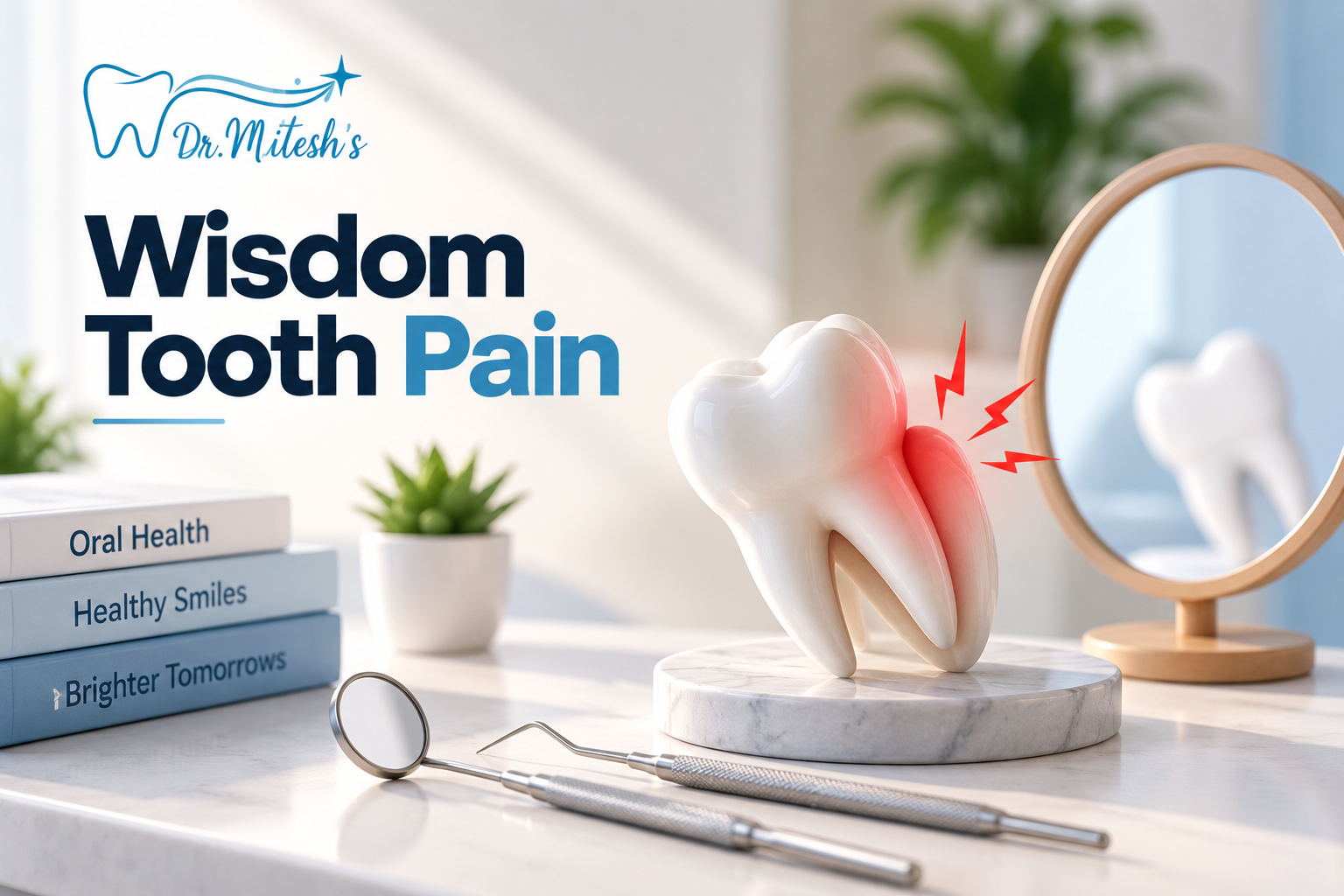
Wisdom tooth pain can appear suddenly, develop slowly, or keep coming back even after the discomfort seems to have settled.
Because wisdom teeth are located at the very back of the mouth, it is not always easy to see what is causing the problem. The pain may come from the tooth itself, the surrounding gum, an infection, tooth decay, or even a problem affecting the neighbouring tooth.
Wisdom teeth, also known as third molars, are the last permanent teeth to develop. Some wisdom teeth grow normally and never cause trouble. Others may not have enough room to emerge properly, making them more likely to become difficult to clean or cause problems.
Understanding the common causes of wisdom tooth pain can help you recognize when the area needs professional attention.
Why Can Wisdom Teeth Become Painful?
The position of wisdom teeth is one of the main reasons they can become problematic.
They develop behind the other molars, where space may be limited. If there is not enough room for a wisdom tooth to grow normally, it may remain under the gum, emerge only partly, or grow at an angle.
Even when a wisdom tooth does emerge, its position at the back of the mouth can make brushing and cleaning difficult.
As a result, several different conditions can develop around the tooth.
Impacted Wisdom Teeth
Impaction is a common reason wisdom teeth require dental assessment.
An impacted wisdom tooth is unable to fully emerge into its expected position. It may remain partly or completely underneath the gum or bone.
Not every impacted wisdom tooth causes pain. Some remain symptom-free and can simply be monitored.
Problems can develop when the position of the tooth affects the surrounding gum, makes cleaning difficult, or contributes to problems around nearby teeth.
You may experience pain or tenderness at the back of the jaw, particularly when chewing.
Because much of an impacted tooth may be hidden, a dental X-ray can be useful for assessing its position.
Gum Inflammation Around a Partially Erupted Tooth
A wisdom tooth may sometimes break through only part of the gum.
This can leave gum tissue partially covering or surrounding the tooth. Food debris and bacteria can collect in this difficult-to-clean space.
The surrounding gum may then become irritated or inflamed.
Symptoms can include redness, swelling, tenderness, and pain when chewing or brushing around the area.
The discomfort may improve temporarily after the area is cleaned, but it can return if the position of the tooth continues to make cleaning difficult.
Recurring inflammation around a wisdom tooth should be assessed by a dentist.
Infection Around the Wisdom Tooth
When bacteria collect around a partially erupted wisdom tooth, an infection can sometimes develop in the surrounding tissue.
Pain from an infection may become more noticeable than ordinary gum tenderness.
You might experience swelling, an unpleasant taste, bad breath, tenderness, or difficulty opening your mouth comfortably.
In some cases, the swelling may extend into the jaw or cheek.
A dental infection should not be ignored, particularly when symptoms are becoming worse.
Fever, increasing facial swelling, pus, significant difficulty opening the mouth, or difficulty swallowing should receive prompt professional attention.
Severe difficulty breathing or swallowing requires urgent medical care.
Tooth Decay in the Wisdom Tooth
Wisdom teeth can develop cavities just like any other tooth.
However, their location makes them particularly challenging to clean.
A toothbrush may not easily reach every surface, especially when the wisdom tooth is only partly erupted or positioned at an angle.
Plaque and food particles can remain around the tooth and contribute to decay.
As decay develops, you may experience sensitivity or pain, particularly while eating.
Sometimes the decay may be difficult to notice without a dental examination because of the tooth's position.
Good brushing habits are important, but some wisdom teeth remain difficult to clean effectively because of the way they have developed.
Problems With the Tooth Next to the Wisdom Tooth
The wisdom tooth itself may not always be the only source of discomfort.
A poorly positioned wisdom tooth can create an area between itself and the neighbouring second molar where food and plaque collect.
This area can be difficult to reach with a toothbrush or other cleaning methods.
Over time, the neighbouring tooth may develop gum or decay-related problems.
This is why a dentist usually examines more than just the wisdom tooth when investigating pain at the back of the mouth.
Identifying exactly where the problem is coming from is important before deciding on treatment.
Food Getting Trapped Around the Tooth
A partially erupted or unusually positioned wisdom tooth can create small spaces where food repeatedly becomes trapped.
This may seem like a minor problem at first.
However, trapped food can irritate the gum and make it easier for plaque and bacteria to collect around the area.
You may notice soreness after eating, an unpleasant taste, or discomfort when cleaning around the tooth.
If food repeatedly becomes trapped in the same area despite good oral hygiene, the position of the wisdom tooth may need to be assessed.
Pressure and Unusual Tooth Position
Wisdom teeth do not always grow straight.
Some develop at an angle or remain positioned beneath the gum.
An unusual position can contribute to discomfort and make the surrounding area difficult to maintain.
However, pain alone cannot tell you exactly how the tooth is positioned.
A dental examination and, where appropriate, an X-ray can provide a clearer view of what is happening beneath the gum.
This information can help the dentist understand whether the tooth can be monitored or whether treatment should be considered.
Can Wisdom Tooth Pain Come and Go?
Yes. Wisdom tooth discomfort does not always remain constant.
Pain may appear for a few days, improve, and then return weeks or months later.
For example, inflammation around a partially erupted tooth may temporarily settle after the area becomes cleaner. However, if the tooth's position continues to create a place where food and bacteria collect, the problem can happen again.
This is why recurring pain should not automatically be considered harmless just because it disappears.
Repeated episodes can be a sign that the underlying cause has not been addressed.
For a more detailed explanation of treatment decisions, you can read our guide on wisdom tooth pain and when extraction may be necessary.
How Can You Tell What Is Causing the Pain?
Different wisdom tooth problems can produce similar symptoms.
Pain, swollen gums, jaw tenderness, difficulty chewing, bad breath, and an unpleasant taste can occur for several reasons.
This makes self-diagnosis difficult.
A dentist can examine the tooth, surrounding gum, and neighbouring teeth to identify possible causes.
When the complete position of the tooth cannot be seen directly, an X-ray may be recommended.
The aim is to determine whether the problem is related to impaction, infection, decay, gum inflammation, the neighbouring tooth, or another dental concern.
Does Every Painful Wisdom Tooth Need Extraction?
No.
Wisdom tooth pain does not automatically mean that extraction is necessary.
Treatment depends on what is causing the symptoms.
A wisdom tooth that is healthy, properly positioned, easy to clean, and not affecting nearby structures may be kept and monitored.
In other situations, recurring infection, significant decay, persistent symptoms, or certain problems associated with an impacted tooth may lead a dentist to consider removal.
The decision should be based on a professional examination rather than pain alone.
When Should Wisdom Tooth Pain Be Checked?
Occasional mild discomfort may not always indicate a serious dental problem, but persistent or recurring symptoms deserve attention.
Consider arranging a dental examination when pain keeps returning, becomes stronger, makes eating uncomfortable, or is accompanied by noticeable gum swelling.
Persistent bad taste, discharge, increasing jaw or facial swelling, or difficulty opening the mouth are also reasons to seek dental care.
Early assessment can help identify the cause before the problem becomes more uncomfortable or difficult to manage.
Getting Wisdom Tooth Pain Properly Assessed
The most important step in dealing with recurring wisdom tooth pain is understanding why it is happening.
At Dr. Mutha's Dental Speciality Centre, wisdom tooth concerns can be examined to determine whether symptoms may be related to impaction, gum inflammation, infection, decay, or problems affecting nearby teeth.
A dental examination and appropriate imaging can help provide a clearer picture of the wisdom tooth's condition and position.
Treatment can then be considered according to the actual cause of the problem rather than simply treating the pain.
Wisdom teeth do not always need to be removed, but recurring discomfort should not simply be ignored.
Finding the cause is the first step toward deciding what care may be appropriate.
Frequently Asked Questions
What is the most common cause of wisdom tooth pain?
Wisdom tooth pain can have several causes. Common problems include gum inflammation around a partially erupted tooth, impaction, infection, tooth decay, and difficulty keeping the area clean.
Can an impacted wisdom tooth cause pain?
Yes, some impacted wisdom teeth can cause pain or contribute to problems in the surrounding area. However, other impacted wisdom teeth may remain symptom-free.
Why does my wisdom tooth pain keep coming back?
Recurring pain may happen when the underlying cause remains, such as repeated gum inflammation, food trapping, infection, decay, or difficulty cleaning around a partially erupted tooth.
Can the tooth next to a wisdom tooth cause pain?
Yes. Problems can develop around the neighbouring second molar, particularly when the position of the wisdom tooth makes the area between the teeth difficult to clean.
Does wisdom tooth pain mean I need extraction?
Not always. The need for extraction depends on the cause of the pain, the position and condition of the tooth, recurring problems, and whether nearby teeth or tissues are being affected.

 English
 Arabic
 French
 Spanish
 Deutsch
 Turkish
 Dutch
Dutch
 Italiano
 Russian
 Romaian
 Portuguese (Brazil)
 Greek
Greek