


Thirty Seconds to Disappear: A Survival Guide to Meccha Chameleon
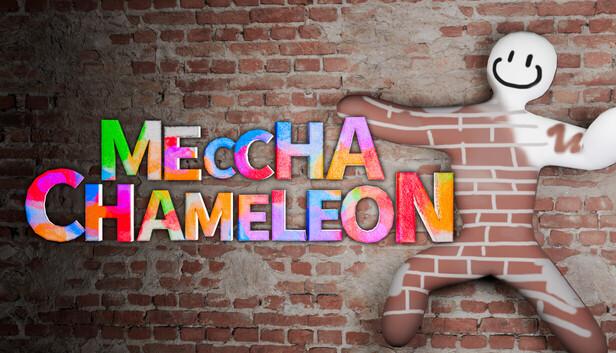
What happens when the Eyedropper in Meccha Chameleon stops working fast enough? You switch to the 3D Eyedropper, tighten the brush, and accept that the prep phase is almost over. Every experienced Chameleon has had this exact panic — fifteen seconds left on the clock, a half-painted surface, and a Hunter about to be released. Whether you make it through the hunt phase depends almost entirely on decisions made in those final moments of prep. Meccha Chameleon is a game about managing that pressure without making it visible.
| Genre | Multiplayer party / hide-and-seek |
| Platform | PC (Windows) |
| Release | June 2026 |
| Players | 2–24 |
| Custom content | Steam Workshop |
Core Mechanics of Meccha Chameleon in Practical Terms
Every https://meccha-chameleons.com match splits players into Chameleons and Hunters. Chameleons use the prep phase to roam the map, select a hiding position, paint their white character to match the surrounding surfaces, choose a pose, and lock in before Hunters are released. Hunters enter the map in first-person with no special detection tools — no flashlight, no scanner, no proximity alerts — and must find every hidden Chameleon using observation alone. Hunters win by tagging every Chameleon before the timer hits zero. Chameleons win if at least one of them survives to the end.
The paint tool is everything. It opens with F and contains a colour picker, adjustable brush, flat Eyedropper, and 3D Eyedropper. Adjusting brush size with right-click drag — wide for the base coat, narrowed down for edges and gaps — is the mechanical step most beginners skip, and it produces the visible white patches around limbs and seams that experienced Hunters check for first. The flat Eyedropper samples a visible surface colour. The 3D Eyedropper samples the colour at the contact angle with the object's geometry, which matters on every non-flat surface in the game. Players who use the flat Eyedropper on curved or angled surfaces end up with paint that looks right from one direction and wrong from several others.
Pose selection is the second half of camouflage. Hunters recognise human silhouettes faster than colour errors. A Chameleon standing upright against a wall, even with flawless paint, reads as a player because the shape is wrong for the surface. Crouched, flat, curled, and spread poses exist to break that silhouette — to make the painted character look like part of the object rather than a person pressed against it. Matching pose to geometry, then rotating the camera for an angle check before the hunt phase begins, is what the community describes as completing the prep phase properly.
What Beginners Get Wrong in Meccha Chameleon
The most common beginner error is rushing to a spot before painting. Players who sprint to what looks like a good hiding position and then open the paint tool find that they are working under time pressure in a location they have not studied. Experienced players reverse the sequence: identify the surface, study its colour and texture, open the paint tool to sample it, and then commit to that position — because the quality of the paint job on a mediocre spot beats a flawed paint job on the best spot in the room.
The second widespread mistake is moving during the hunt phase. Any motion — a small adjustment, repositioning after a Hunter enters the room, even a slight drift — immediately draws attention. The community treats breaking position as the cardinal error because it collapses even a flawless paint job instantly. A Hunter who would have walked past a Chameleon without noticing stops the moment there is movement. The counter-intuitive discipline the game trains is sitting completely still while someone stands close enough that their footsteps are audible.
Beginners also consistently underestimate the importance of the results screen. Every round ends with a reveal showing exactly where every Chameleon was hiding. Players who ignore this miss the fastest available feedback loop. Watching where survivors were positioned — what surface they matched, which pose they used, how they managed their angle from the Hunter entry points — compresses the learning process significantly. Players who treat the results screen as the actual lesson, not a post-game curiosity, improve faster than those who close the screen immediately to queue for the next round.
Sugarland and Backrooms — How Specific Maps Change Meccha Chameleon Strategy
Sugarland's candy aesthetic creates one of the more technically demanding colour-matching challenges in the official map rotation. The surfaces are saturated pinks, yellows, and purples with high contrast between adjacent colours. A Chameleon hiding against a section of striped wall has to match multiple colours simultaneously, switching brush coverage across the character to approximate the pattern. Players who settle for a flat average colour end up with a paint job that is obviously wrong compared to the actual texture. Sugarland favours methodical painters over speed-focused ones.
The Backrooms map works in almost the opposite direction. Its yellow-beige monotone and repeating grid pattern make colour-matching straightforward — sample once, cover the whole character, done. The challenge is positional. The Backrooms layout is a labyrinthine corridor system, and Hunters who do not sweep it in a structured sequence consistently miss sections. Chameleons who understand this structure choose positions deep in corridors that Hunter sweeps reach last, meaning their survival time extends purely through map geometry even without perfect paint work.
Sewer is the map that consistently produces the most chaotic results in lobby chat. The lighting is inconsistent across different sections — warm in some corridors, cooler and dimmer in others — which means colour samples that work in one part of Sewer are wrong in another. Players who move between preparation locations while sampling do not realise that the sample taken near the Sewer entrance does not match the walls deeper in the map. The community complaints about Sewer usually come down to this lighting inconsistency, which produces unexpected eliminations for players who did not account for it.
Leader Board Play and Scoring in Meccha Chameleon
Meccha Chameleon's scoring system rewards time spent in a Hunter's sightline while remaining undetected. This creates a strategic tension that defines competitive play: hiding in a completely invisible corner is the safe approach, but hiding in an obvious spot — right in the middle of a heavily-trafficked area — is the high-scoring approach. Players who consistently top the leaderboard are those who choose spots where Hunters walk past repeatedly, accumulating visibility time without being caught.
This means that the highest-scoring hiding spots are usually the ones that look like they should get you caught immediately. A Chameleon who matches a decorative balloon cluster in Sugarland and sits still while a full lobby of Hunters moves through the area is scoring every second they go undetected. The same mechanic that makes the results screen funny — revealing that someone was hiding in plain sight the whole time — is also the mechanic the scoring system rewards most generously.
Players who optimise purely for survival tend to score lower than players who balance survival with visibility. Tucking into a blind corner guarantees a long round but minimal points. Positioning near a Hunter path and executing a strong enough paint job to go unnoticed requires better technique but produces the numbers that win lobbies. Competitive players who understand this trade-off approach hiding spot selection differently from casual players — they are not asking "where is safe?" but "where will Hunters look directly and still not see me?"
Meccha Chameleon in Streaming Culture and How It Grew
Meccha Chameleon's viral trajectory came from stream content rather than reviews. The game is visually legible to viewers who have never played it: you can understand what is happening, why something is funny, and what went wrong for the Hunter — all without knowing any rules. A Hunter walking directly past a hider pressed against the Osaka market wall, or stopping for three full seconds in front of a perfectly painted Chameleon and then moving on, produces the kind of reaction that streams and short-form video clips are built for.
The game includes built-in features for streaming and content creation — public and private server support, an accessible lobby system — which lowered the barrier for streamers to bring their audiences directly into matches. This created a growth loop where viewers who recognised the game from streams joined public lobbies and encountered established players, which accelerated the spread of community vocabulary and advanced techniques. By the time Meccha Chameleon crossed ten million sales, the vocabulary of eyedropper, prep phase, clone bait, and breaking position had spread far enough that new players arrived already knowing the terms even if they had never used the tools.
The rough visual quality of the game — frequently described by the community as janky — became part of its identity rather than a liability. Players who would have passed over a more polished but mechanically similar title found the roughness endearing in context. The gap between the game's simple appearance and the genuine skill depth of the paint system became the thing that surprised people and kept them playing. It is one of the more honest cases in recent memory of a game selling on what it does rather than how it looks.
How do you get better at finding hiders as a Hunter in Meccha Chameleon?
The fastest improvement comes from slowing down. Most Hunters scan too quickly and miss the specific tells that give away a hider: brush pattern edges that do not connect smoothly to the background, a shadow pointing in a direction the light source does not support, a prop silhouette appearing at a location where that prop is not part of the map. These details are invisible at speed and obvious when moving slowly. Zone-clearing — finishing one room before entering the next — also prevents Hunters from missing hiders in rooms they walked through too quickly to inspect properly.
What should you do on your first few rounds of Meccha Chameleon?
The consistent advice from experienced players is to spend the first lobbies on the paint tool specifically, not on finding good spots. Use a private server — create one from the main menu, set the player count to one — and spend time on Mansion practising the 3D Eyedropper, brush size control, and angle checks without the pressure of a live round. Understanding what a clean paint job looks like before joining a public lobby makes every subsequent round more legible: you recognise immediately what went wrong when you are caught, which is what makes improvement fast.
Are the official Meccha Chameleon maps or Workshop maps better for regular play?
Official maps — Mansion, Sewer, Backrooms, Sugarland, Osaka, Penguin Hotel — offer consistent, tested environments where the community has had time to develop settled strategies. Workshop maps offer novelty and variety, with some of the most creative environments in the game. After the malware incident in mid-2026 and its resolution with update 3.1.0, the community guidance shifted toward checking Workshop maps for established play counts and community comments before loading them in a match. Maps with hundreds of plays and recognisable community commentary behind them are treated as safe; newly uploaded maps from unknown accounts are given more scrutiny than before the incident.
Meccha Chameleon rewards the kind of patience that few games actually test. The moment that defines the experience is not the round you won — it is the round where you held position in the Penguin Hotel ice corridor for the full hunt phase while a Hunter stood close enough to touch you, walked away, came back, and walked away again, never finding the paint job you spent ninety seconds getting right. That moment is the game at its best, and it is why players who describe it as janky come back anyway.

 English
 Arabic
 French
 Spanish
 Portuguese
 Deutsch
 Turkish
 Dutch
Dutch
 Italiano
 Russian
 Portuguese (Brazil)
 Greek
Greek