


Liquid Facelift in Dubai for Facial Contour Without Surgery
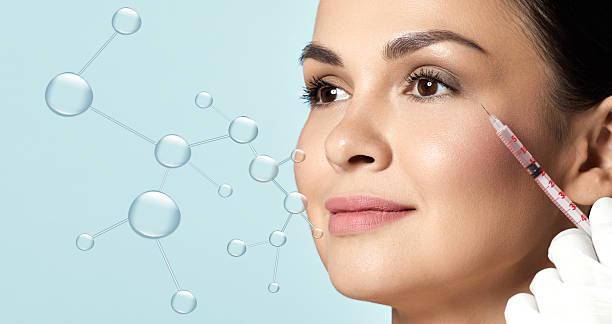
Some patients want sharper facial definition but are not ready for an operation, lengthy recovery, or permanent surgical alteration. Liquid Facelift in Dubai can provide a nonsurgical approach to selected contour concerns by using injectable treatments to influence volume, projection, soft-tissue transitions, and facial balance.
The key is understanding what injectable contouring can realistically achieve. A liquid facelift can refine certain facial relationships, but it cannot reproduce every structural or lifting effect of surgery.
What Non-Surgical Facial Contouring Actually Means
Liquid facelift is not a single standardized injection or universal treatment protocol. It generally refers to a customized combination of injectable procedures, most commonly involving dermal fillers and, when appropriate, neuromodulators or other injectable approaches.
The purpose is not simply to make the face fuller.
Instead, treatment can be planned around specific visual objectives such as improving projection, softening selected transitions, restoring proportional relationships, or creating a more defined facial outline.
Contour is not the same as volume
A common misconception is that better definition requires adding substantial filler.
In reality, contour depends on the relationship between adjacent anatomical structures. A relatively small, strategically positioned correction may sometimes influence the appearance of an entire facial region.
This is why anatomical planning is more important than chasing a particular number of syringes.
How Liquid Facelift in Dubai Can Refine Facial Contours
The face can be considered as a connected three-dimensional structure rather than a collection of isolated treatment points.
Potential areas of assessment include:
- Cheek projection
- Chin projection
- Jawline transitions
- Temple contour
- Pre-jowl region
- Nasolabial transitions
- Lower-face proportions
- Selected areas of soft-tissue deficiency
Not every patient needs treatment in every region.
The clinician's role is to identify which relationship is actually reducing definition and determine whether an injectable correction can improve it.
The Difference Between Projection and Lifting
These concepts are often confused in aesthetic marketing.
Projection means increasing or restoring the prominence of a particular anatomical area. Lifting refers to changing the position or visual relationship of tissues.
A filler can create projection and, in selected anatomical circumstances, contribute to a lifting effect through strategic placement. Contemporary filler literature increasingly emphasizes anatomy-based and layer-specific approaches rather than treating every concern as simple surface volume loss.
However, injectable treatment should not be presented as an equivalent replacement for surgical tissue repositioning.
When projection can improve perceived contour
A relatively underprojected chin, for example, may make the lower face appear less defined even when the jaw itself has adequate structure.
Improving the chin-to-jaw relationship may therefore influence the apparent contour without directly treating every part of the jawline.
When true laxity becomes the limiting factor
If loose skin and significant tissue descent are the dominant issues, adding filler may provide limited improvement.
More product does not necessarily solve laxity. In some cases, excessive volume can make the face appear heavier.
Choosing the Correct Injection Plane
The depth of placement is an important component of facial contour treatment.
A clinician may work at different tissue levels depending on the anatomical objective and product characteristics.
Deeper placement
Deeper structural treatment may be considered when projection or support is required in an appropriate anatomical location.
Subcutaneous placement
The subcutaneous compartment may be relevant for selected contour or volume adjustments where the anatomy permits.
Superficial placement
Superficial injections can be useful for carefully selected indications but require precise technique because irregularities or visible product can become more apparent.
Anatomical knowledge is particularly important because facial vessels, nerves, retaining structures, and tissue compartments vary between individuals.
Product Characteristics Influence Contouring
There is no universally “best” filler for facial contouring.
Different hyaluronic-acid fillers and other injectable materials have different physical characteristics and are selected according to the intended tissue behavior.
For structural objectives, clinicians may consider characteristics such as:
- Projection capacity
- Elasticity
- Cohesivity
- Integration with surrounding tissue
- Resistance to deformation
- Water interaction
- Appropriate tissue depth
A product selected for a deep structural objective may not be appropriate for a delicate superficial transition.
The treatment should therefore be product-specific as well as anatomy-specific.
Facial Contouring Without Surgery Has Clear Limits
Avoiding surgery does not mean avoiding anatomical limitations.
A nonsurgical approach may be less suitable when a patient has substantial:
- Skin laxity
- Jowling
- Neck laxity
- Tissue descent
- Excess skin
- Advanced lower-face aging
A surgical facelift can physically reposition and remove tissues in ways injectable treatment cannot. Medical sources likewise distinguish liquid facelift approaches from surgery when sagging or aging becomes more substantial.
The most responsible consultation therefore includes discussing when an injectable approach is appropriate and when another treatment category may provide a better result.
How Facial Anatomy Changes the Contouring Strategy
Two patients can request the same outcome but require completely different treatment plans.
A narrow face may require a different approach from a broad face. A strong chin may not need additional projection, while a weaker chin may influence how the jawline is perceived.
Similarly, a patient with naturally prominent cheekbones should not automatically receive the same cheek treatment as someone with a flatter midface.
Facial width
Adding excessive lateral volume can make some faces appear wider rather than more defined.
Facial length
Chin projection can influence perceived lower-face length and therefore needs to be considered alongside the rest of the facial profile.
Profile balance
A treatment that looks attractive from the front may not be appropriate if it creates an imbalance in side profile.
Natural asymmetry
Minor asymmetry is normal. The objective is generally not mathematical symmetry but a balanced appearance that remains natural during movement.
Why Conservative Treatment Often Produces Better Contour
Contour enhancement is highly sensitive to volume placement.
A small change in projection can alter the way light interacts with the face. Conversely, excessive filler can flatten natural transitions and produce a rounded or heavy appearance.
A conservative treatment strategy commonly involves:
- Establishing the patient's baseline anatomy.
- Identifying the dominant contour deficiency.
- Selecting the smallest appropriate treatment area.
- Choosing a product according to tissue depth and intended effect.
- Reassessing the face after the initial correction.
- Adding further treatment only when clinically justified.
This approach can help preserve facial movement and reduce the risk of unnecessary treatment.
Why Dubai Patients May Prefer a Nonsurgical Approach
Dubai's professional and social environment can make recovery time an important consideration for some patients.
People may have demanding work schedules, frequent events, travel plans, exercise routines, or other commitments that make prolonged postoperative recovery less convenient.
Injectable treatment can offer a less invasive alternative for appropriately selected concerns, although swelling, bruising, tenderness, and temporary redness can still occur.
Patients should plan treatment around their schedule rather than assuming that nonsurgical means completely invisible recovery.
Sun Exposure and Facial Aesthetics in Dubai
The Dubai environment also makes long-term skin care relevant to facial appearance.
High ultraviolet exposure can contribute to premature skin aging and visible changes in skin texture. Facial contouring cannot correct every appearance concern caused by photodamage.
A comprehensive plan may therefore distinguish between structural contour, skin quality, pigmentation, and elasticity.
Daily photoprotection remains important regardless of whether a patient chooses injectable treatment.
Questions to Ask Before Choosing a Liquid Facelift
A consultation should go beyond asking how many syringes are required.
Useful questions include:
- Which anatomical feature is reducing my facial definition?
- Is my concern primarily structural, soft-tissue, muscular, or skin-related?
- Which treatment areas are actually necessary?
- What product characteristics are appropriate for those areas?
- Which injection planes are being considered?
- What degree of improvement is realistic without surgery?
- Would treating less initially provide a safer assessment?
- What happens if my degree of laxity is beyond injectable correction?
These questions encourage treatment planning based on anatomy rather than marketing terminology.
When a Liquid Facelift May Be the Better Starting Point
For selected patients with mild to moderate contour concerns, injectable treatment can be a reasonable starting point when the goal is refinement rather than major repositioning.
It may be particularly relevant when the patient wants:
- Subtle contour enhancement
- Limited treatment areas
- A nonsurgical approach
- Individualized facial correction
- Minimal disruption to normal activities
- A reversible approach when appropriate
The final decision should be made after clinical examination rather than from photographs or treatment menus alone.
The Strategic Investment in Non-Surgical Contouring
The strongest case for a liquid facelift is not that it eliminates the need for surgery. Its value is that it can address selected contour concerns without an operation when the patient's anatomy and expectations make that approach appropriate.
For people considering Liquid Facelift in Dubai, the most important factors are anatomical assessment, product selection, injection depth, conservative correction, safety planning, and a clear understanding of the limits of injectable contouring.
A well-designed treatment should make the facial structure appear more balanced and refined rather than obviously “filled.”
For patients exploring personalized aesthetic care, Tajmeels Clinic can be considered when discussing whether a nonsurgical facial-contouring approach is appropriate for their individual anatomy and goals.

 English
 Arabic
 French
 Spanish
 Portuguese
 Deutsch
 Turkish
 Dutch
Dutch
 Italiano
 Romaian
 Portuguese (Brazil)
 Greek
Greek