


Golf App Development: A Complete Guide for Businesses
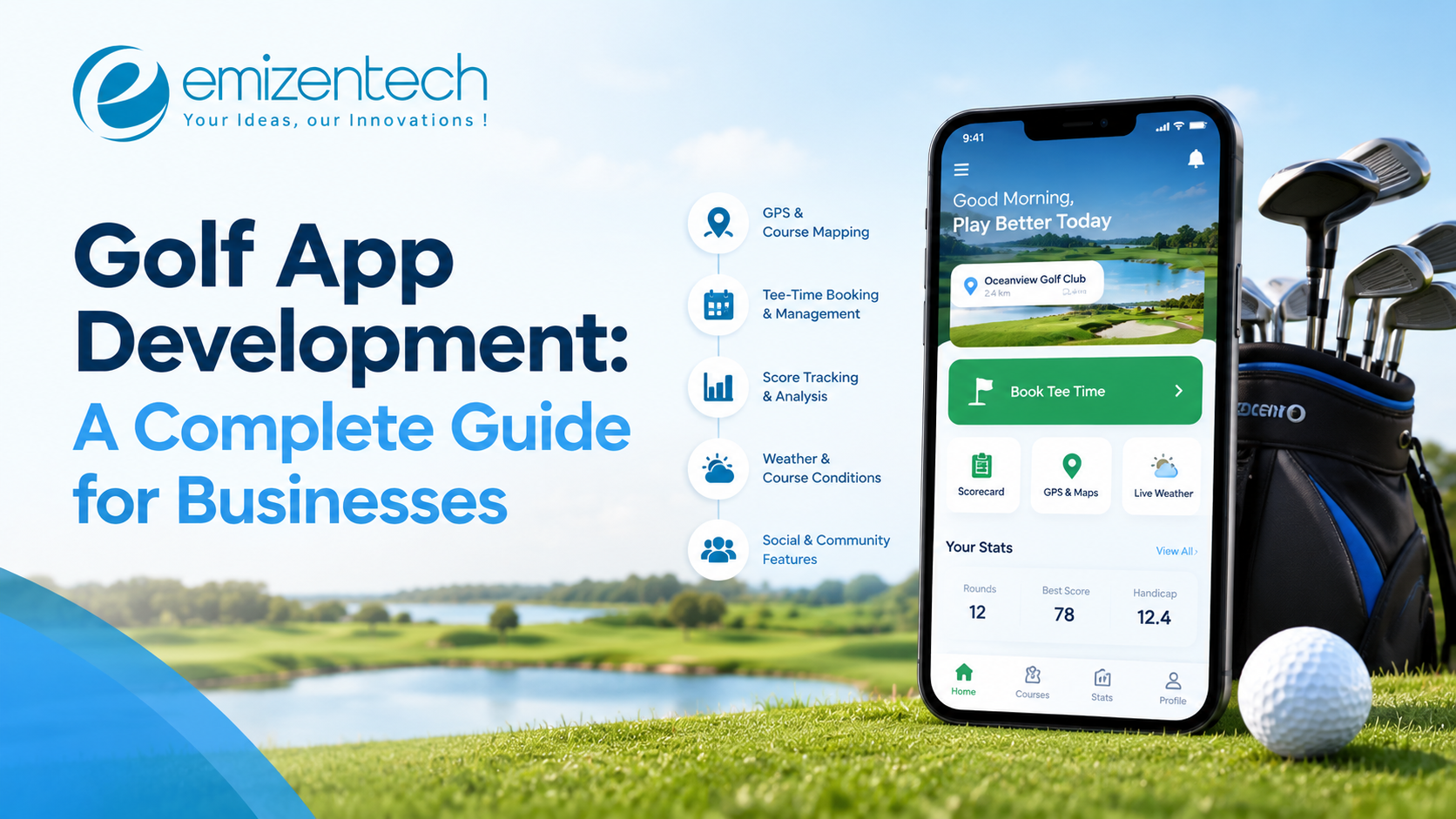
Golf has quietly turned into one of the more tech-friendly sports out there. Players show up expecting to book tee time from their phone, check their handicap between holes, and glance at a GPS view of the green before they've even walked up to it. None of that happens on its own; someone had to build the thing behind it. And the golf software market is climbing steadily too, on track to more than double over the next decade, which says a lot about how many businesses are betting on this space right now.
If you run a golf course, a coaching business, or you're building tools for the golf industry more broadly, this guide walks through what actually goes into building a golf app the types worth considering, the features that actually matter, roughly what it costs, and how the process tends to play out in practice.
Why Businesses Are Investing in Golf App Development
Part of it is just that more people are playing. Golf participation has been climbing for a few years now, and that growing base of players wants the same digital convenience they get from pretty much everything else booking, tracking, and paying, all from a phone, with no calls required. For golf courses, an app is also a direct line to the customer instead of routing everything through a front desk or a third-party booking platform that skims a cut off every reservation. Coaches and equipment brands get something out of it too: a way to stay in front of players between visits, rather than only showing up during a lesson or a sale. And honestly, at this point players half expect it. A course or academy without an app starts to feel a little dated, whether that's fair or not.
Types of Golf Apps You Can Build
Not every golf app does the same job, and figuring out which type actually fits your business is really the first decision worth making.
Course Navigation and GPS Apps
These give players accurate yardages, hole layouts, and hazard positions through GPS mapping often the single feature golfers care about most once they're actually on the course.
Score Tracking and Handicap Apps
Built around logging scores round after round and calculating a handicap automatically, these tend to appeal to players who take their game seriously enough to want the numbers in front of them.
Tee Time Booking Apps
Simple in concept but genuinely valuable letting players book, reschedule, or cancel without a phone call, which cuts down considerably on how much time a front desk spends on the phone.
Swing Analysis and Coaching Apps
Using video or sensor data to break down a player's swing, sometimes with AI feeding back suggestions, this is where things get more technically demanding.
Golf Course Management Platforms
Aimed less at players and more at the business side of things memberships, staff scheduling, and day-to-day course operations, all handled from one system instead of five disconnected ones.
Must-Have Features for a Golf App
Once you've settled on the type, a handful of features show up across almost every successful golf app, no matter which category it falls into.
-
GPS course mapping — accurate distances and hole layouts that players actually rely on mid-round
-
Score tracking and handicap calculation — the core loop that keeps golfers coming back after every game
-
Tee time booking and scheduling — especially important if the app's tied to an actual golf course
-
Live leaderboards and social features — small competitive touches that keep casual players a bit more engaged
-
Wearable and sensor integration — syncing with smartwatches or swing sensors for a richer, more connected experience
-
Push notifications — reminders about upcoming tee times, weather changes, or tournament updates
How Much Does Golf App Development Cost?
This is one of those questions without a single clean answer, since it depends heavily on exactly what you're building.
-
Basic apps with login, GPS, and simple scoring tend to sit at the lower end, often somewhere around $10,000 to $20,000
-
Mid-complexity apps adding booking systems, handicap tracking, and social features generally push costs higher from there
-
Advanced apps with AI-driven swing analysis, shot detection, or wearable integration can run well into six figures depending on scope
-
The real driver isn't screen count — it's the workflows and data behind those screens: GPS accuracy, third-party integrations, how much custom logic is baked in
Most general estimates put a full-featured golf app development project somewhere between $30,000 and $200,000, though the final number really comes down to the specific mix of features and integrations chosen.
Golf App Development Process
Building a golf app usually follows a fairly predictable sequence, even if the specifics shift from project to project.
Market Research and Planning
Understanding who the app is actually for, what competitors already offer, and which features matter most, all before any design work starts.
UI/UX Design
Designing something that's easy to use mid-round, on a bright screen, often with one hand — a genuinely different challenge from designing a typical shopping app.
Development and API Integrations
Building out the core functionality and hooking up third-party services like weather data, maps, and payment gateways.
Testing
Checking GPS accuracy, payment flows, and general performance across different devices and course conditions before anything goes live.
Launch and Post-Launch Support
Releasing the app, then sticking around to fix bugs, add features, and keep things running smoothly as usage grows, especially once peak golf season hits.
How the Right Golf App Development Services Can Help
A lot of the technical pieces discussed above GPS accuracy, wearable syncing, payment integration, and scaling for busy weekends – aren't things every development team works with regularly. This is where golf app development services can be particularly useful. Experience with golf-specific features and user expectations often makes implementation smoother and helps avoid common technical roadblocks.
-
Golf-specific expertise — understanding course data, GPS behavior, and golf workflows that a generalist team might not have run into before
-
Third-party integrations done right — connecting weather APIs, payment gateways, and wearable devices without the trial-and-error a less experienced team might go through
-
Scalable architecture — building the app to handle traffic spikes during tournaments or peak season without falling over
-
Ongoing support — fixing bugs and rolling out updates as the app grows and player expectations shift
For a golf course or business without an in-house tech team, working with people who've actually built golf apps before tends to save a fair amount of time, and sidesteps a few fairly predictable mistakes along the way.
Conclusion
Golf app development covers a lot of ground, from a simple GPS and scorekeeping tool all the way up to a full course management platform, and which one makes sense really depends on what your business is trying to solve. What matters most is starting with a clear picture of your users and what they actually need, rather than trying to cram in every feature on day one.
Getting the technical details right GPS accuracy, integrations, holding up during busy periods tends to make or break how an app is received once it's out there. EmizenTech has worked on golf-specific app projects before, so it's worth a look if you'd rather work with a team that already gets the space instead of starting from zero.
Frequently Asked Questions
1. How long does it take to build a golf app?
A focused MVP with core features usually takes around three to four months. A more complete app with booking, GPS, and handicap tracking often runs six to nine months, and a large-scale platform with AI features can stretch past a year.
2. Do I need a golf-specific developer?
Not strictly, but it helps quite a bit. A general mobile developer can handle the screens and basic functionality fine, but golf-specific workflows, accurate course mapping, handicap rules, tournament formats are easy to get wrong without having done it before.
3. What's the difference between a digital scorecard and a full management platform?
A digital scorecard is narrow and player-facing, mainly for recording scores. A management platform has much broader memberships, staff scheduling, day-to-day operations and it's typically the business using it, not individual players.
4. Can I start with an MVP and add features later?
Yes, and honestly it's usually the smarter move. Launching with core features like GPS and scoring lets you check whether there's real demand before sinking money into pricier additions like AI swing analysis or wearable integration.

 English
 Arabic
 French
 Spanish
 Portuguese
 Deutsch
 Turkish
 Dutch
Dutch
 Russian
 Romaian
 Portuguese (Brazil)
 Greek
Greek