


How to Become a Pilot in India: Complete 2026 Guide for Aspiring Pilots
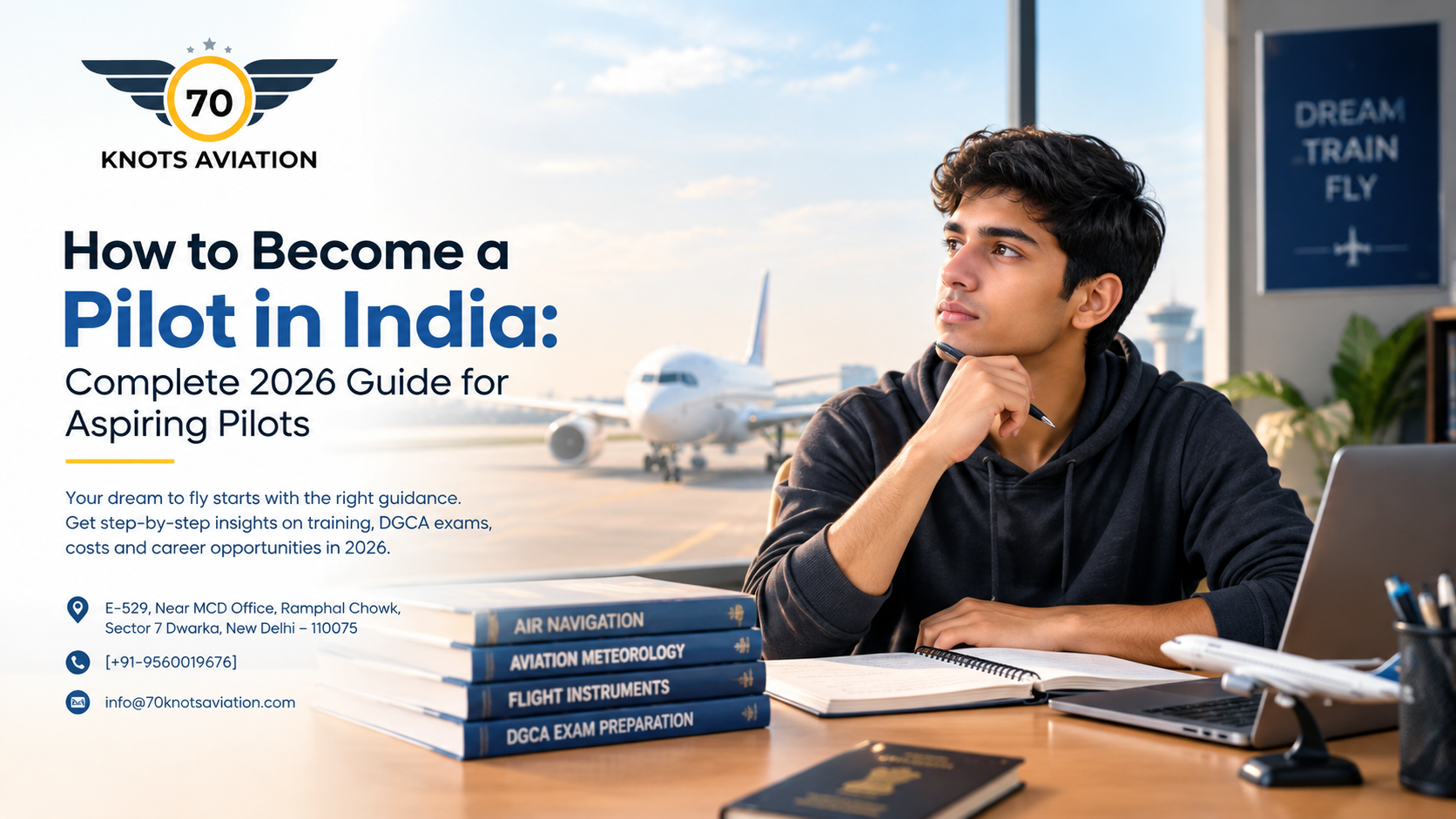
Becoming a professional pilot is a goal shared by many students who are passionate about aviation, travel, technology, and a career in the skies. However, turning that ambition into a professional career requires more than simply learning how to fly an aircraft. Students need to understand educational eligibility, medical requirements, DGCA examinations, ground training, flight training, licensing, and the financial planning involved.
For students searching for How to become a pilot, having a clear understanding of the complete process is important before investing time and money in aviation training. 70Knots Aviation helps aspiring pilots understand the different stages of this journey and prepare themselves for the academic and regulatory requirements associated with professional pilot training in India.
What Does It Take to Become a Pilot in India?
The route to becoming a professional pilot involves several stages. Students generally begin by checking whether they meet the educational and medical requirements, followed by DGCA-related examination preparation and flight training.
The journey can broadly include:
-
Meeting the required educational eligibility
-
Completing the required medical assessment
-
Understanding DGCA licensing requirements
-
Registering for applicable examinations
-
Completing ground school
-
Preparing for DGCA examinations
-
Completing the required flight training
-
Meeting the applicable licensing requirements
-
Applying for the appropriate pilot licence
The exact requirements can depend on the licence and rating being pursued, so students should always verify the latest requirements directly through the Directorate General of Civil Aviation (DGCA).
Step 1: Understand the Educational Requirements
Students interested in professional pilot training should first understand the educational requirements applicable to the licence they intend to pursue. For a Commercial Pilot Licence (CPL), academic preparation in subjects such as Physics and Mathematics is particularly important.
Students who are still in school should therefore plan their education carefully. Completing the required subjects before joining professional pilot training can prevent unnecessary delays later.
It is also important to keep academic documentation organised because different stages of the licensing and examination process can require supporting documents.
Step 2: Complete the Required Medical Assessment
Medical fitness is an important part of a pilot's career. Aviation medical requirements are designed to determine whether a candidate is medically fit to perform flight duties safely.
Students should understand the applicable DGCA medical process before making major financial commitments to pilot training. Medical requirements can involve assessment of areas such as vision, hearing, general physical health, and other relevant medical parameters.
Taking care of this stage early can help students make better decisions about their aviation career.
Step 3: Understand DGCA Examinations
Theoretical knowledge is an essential part of professional pilot training. Students need to study aviation subjects and prepare for the applicable DGCA examinations.
This is where structured ground training can become particularly valuable. Subjects can involve areas such as:
-
Air Regulations
-
Air Navigation
-
Aviation Meteorology
-
Aircraft and technical knowledge
-
Radio communication and related aviation knowledge
The applicable subjects and examination requirements should always be checked against the latest DGCA information.
DGCA Pariksha in 2026
For aspiring pilots, understanding DGCA Pariksha is an important part of the preparation process. DGCA's Pariksha portal is the online registration and examination platform used for Flight Crew and Aircraft Maintenance Engineer examinations. Candidates with a Computer Number are required to register on the portal for future examinations.
The Pariksha portal currently provides access to examination information, including examination calendars, syllabi, notices, candidate registration, and Flight Crew examination-related information. The portal also publishes updates regarding examination sessions and available centres.
In 2026, DGCA has continued to conduct Flight Crew examinations through regular and Online On-Demand Examination (OLODE) sessions. Official notices show that examination centres can include locations such as New Delhi, Mumbai, Chennai, Kolkata, Hyderabad, Bengaluru, and other cities depending on the session.
Students should therefore avoid relying on old examination schedules or information shared on unofficial websites. The latest examination calendar, notices, syllabus, and application instructions should be checked through the official Pariksha portal before applying.
Step 4: Choose Ground Training Carefully
Ground training forms the academic foundation of professional pilot training. Students spend significant time learning aviation theory before and alongside their flying training.
A good ground-training programme should help students understand concepts instead of simply memorising answers. Strong conceptual knowledge becomes useful not only for examinations but also when students begin applying theoretical knowledge during practical flying.
70Knots Aviation provides aviation education and guidance for students preparing for the theoretical side of their pilot-training journey.
Step 5: Begin Flight Training
After completing the necessary academic and regulatory stages, students undertake practical flight training through an appropriate flight training organisation.
Flight training allows students to develop practical flying skills under the supervision of qualified instructors. Training includes progressively learning aircraft handling, procedures, navigation, communication, emergency procedures, and other skills required for safe flying.
Students should carefully research the flight training organisation they choose. Factors such as aircraft availability, instructor strength, operational environment, training structure, maintenance standards, flying opportunities, and overall training support can influence the student experience.
Understanding Pilot Training Cost in India
One of the biggest questions students and parents ask is about the Pilot training cost in India. There is no single fixed figure that applies to every student because the total expenditure can vary considerably.
The overall cost may depend on:
-
Flight training organisation
-
Number of flying hours required
-
Aircraft type
-
Flying rates
-
Ground school fees
-
DGCA examination fees
-
Medical examinations
-
Licensing-related expenses
-
Accommodation and living expenses
-
Travel
-
Study materials
-
Additional flying or training requirements
Students should therefore avoid comparing institutes solely on the basis of an advertised package price.
A lower initial quotation does not automatically mean lower final expenditure. Similarly, a higher quoted fee does not necessarily indicate better training. Students should ask for a transparent breakdown of what is included and what may be charged separately.
Why Choosing the Right Training Institute Matters
Students searching for the Best Pilot training school in delhi should look beyond marketing claims. A training institute should be evaluated according to the type and quality of education it provides, instructor experience, academic support, study resources, examination preparation, facilities, student guidance, and transparency.
For students considering aviation education in Delhi, location can also be convenient for attending ground classes and receiving academic guidance.
70Knots Aviation is located at:
E-529, Near MCD Office, Ramphal Chowk, Sector 7 Dwarka, New Delhi – 110075
The institute focuses on aviation education and helps students understand the theoretical and regulatory aspects of their pilot-training journey.
How 70Knots Aviation Supports Aspiring Pilots
70Knots Aviation aims to make aviation education more accessible and understandable for students beginning their pilot career journey.
Students can seek guidance related to pilot training, DGCA examination preparation, aviation subjects, and the overall process involved in working toward a professional pilot career.
Rather than treating pilot training as a single course, students should look at it as a structured journey involving education, regulatory requirements, medical fitness, theoretical examinations, practical flying, and licensing.
Important Advice for Students in 2026
The aviation industry and regulatory processes continue to evolve, so students should make a habit of checking official information regularly.
Before applying for an examination, students should verify:
-
Current DGCA examination notices
-
Applicable syllabus
-
Examination dates
-
Registration requirements
-
Computer Number requirements
-
Examination centre information
-
Applicable fees
-
Medical requirements
-
Current licensing requirements
The official DGCA Pariksha portal should be treated as the primary source for examination-related updates.
Start Your Pilot Journey With Better Preparation
Knowing how to become a pilot is the beginning of a much larger journey. Students need patience, discipline, academic preparation, financial planning, medical fitness, and practical flying experience to progress toward a professional aviation career.
With the right information and guidance, students can better understand what lies ahead and avoid common mistakes while planning their training.
For aviation education and pilot-training guidance, students can connect with 70Knots Aviation at:
Address: E-529, Near MCD Office, Ramphal Chowk, Sector 7 Dwarka, New Delhi – 110075
Phone: +91-9560019676
Email: info@70knotsaviation.com

 English
 French
 Spanish
 Portuguese
 Deutsch
 Turkish
 Dutch
Dutch
 Italiano
 Russian
 Romaian
 Portuguese (Brazil)
 Greek
Greek