


How Design Applique Embroidery Creates Stunning Designs
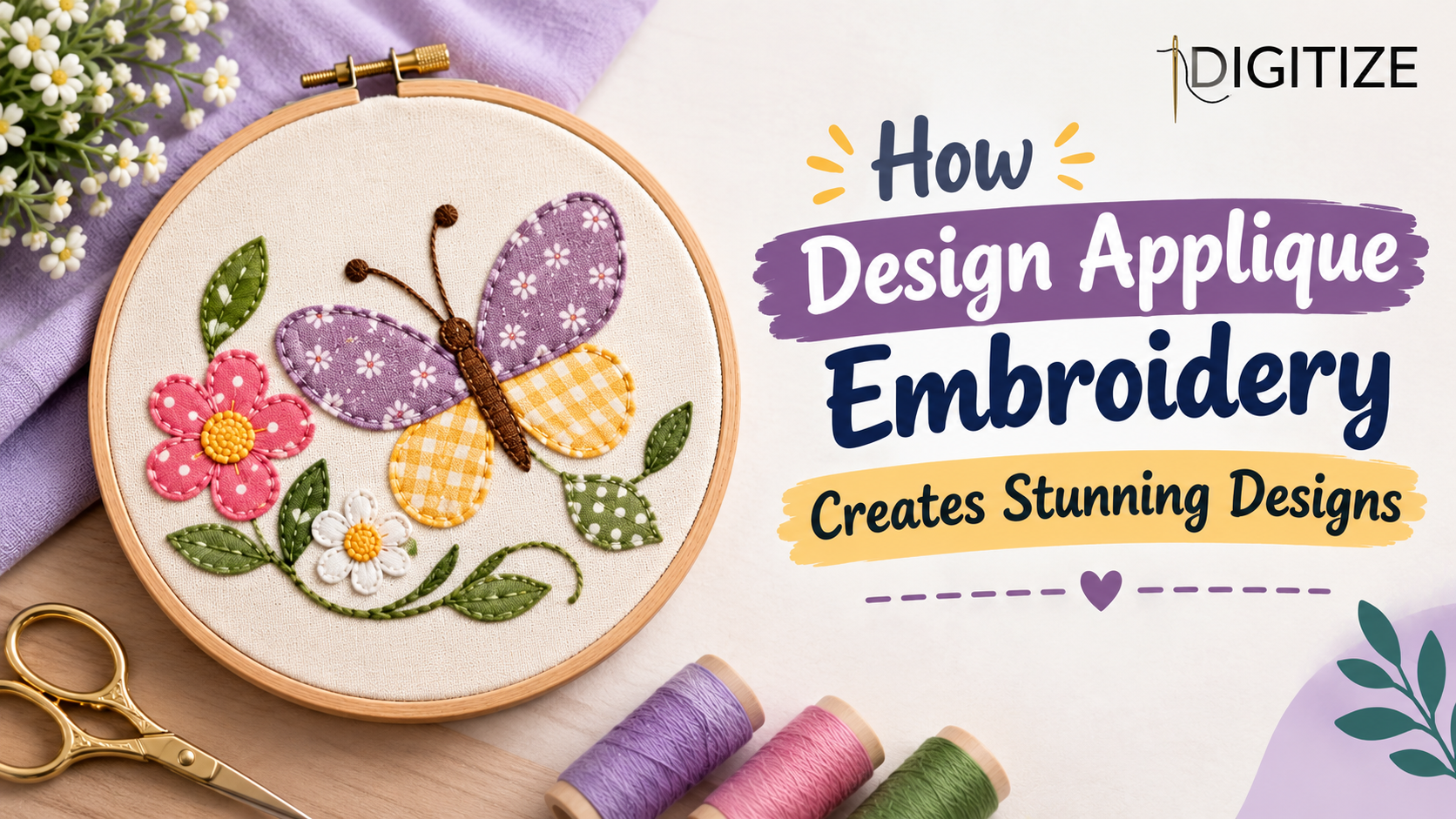
Design applique embroidery creates stunning designs by layering cut fabric shapes onto a base material and locking them in place with dense, decorative stitching. This layering effect adds depth and texture that flat embroidery cannot match. If you want professional embroidery designs that stand out on shirts, bags, or home decor, the layered fabric technique is where the magic happens.
The reason applique looks so striking comes down to contrast. Fabric texture, color blocking, and a clean stitched border work together to make a design pop off the surface. Brands that rely on applique digitizing know that a well planned file is what turns a flat sketch into a design with real dimension and shine.
What Makes Applique Embroidery Look So Striking?
Applique embroidery stands out because it adds a raised, three dimensional feel that regular stitching cannot copy. The fabric patch catches light differently than thread alone, giving the design a soft shadow effect. That small detail is often what makes people stop and look twice at a finished piece.
What Is Applique in Sewing?
What is applique in sewing? It means attaching a separate piece of fabric onto a base fabric using stitches or fusible adhesive to build a design. This method has been used for centuries on quilts, banners, and clothing. In my experience, it remains one of the fastest ways to add bold color without printing or painting.
The Design Process Behind Embroidery Applique
Great embroidery applique starts long before the needle touches fabric. A designer studies the shape, decides where fabric will layer, and plans the stitch order so nothing shifts during sewing. I've noticed that skipping this planning stage is the number one reason a design looks messy instead of sharp.
How to Embroider Applique Step by Step
Follow these steps for a design that holds its shape and color.
-
Choose a base fabric that can handle the stitch density.
-
Cut the applique fabric slightly larger than the final shape.
-
Stitch a placement guide so the fabric lines up correctly.
-
Trim close to the line once the fabric is secure.
-
Add a bold tackdown and satin border to finish the edge.
Learning how to embroider applique this way keeps every piece looking clean, even on curved shapes.
Picking the Right Applique Thread and Fabric
The applique thread you choose changes how bold or soft the final look feels. Matte cotton thread gives a quiet, classic finish, while glossy polyester thread adds shine that catches the eye. Pair your thread with a sturdy fabric so the stitches do not pull or pucker over time. That's why many designers recommend testing thread and fabric together before running a full batch.
Creative Ways Designers Use Appliques for Embroidery
Appliques for embroidery open up endless creative options. Layering two or three fabric colors before stitching gives shapes extra depth. Mixing patterns, like a striped fabric next to a solid one, creates visual interest without adding more stitches. Creative applique embroidery projects often play with scale, using one large patch as the focal point of the design.
Machine Embroidery Applique Design for Bold Results
A strong machine embroidery applique design file tells the machine exactly where to stitch, trim, and finish. Home machines can handle these files well when the hoop size and stabilizer match the fabric weight. Creative appliques embroidery artists often start with two color designs before moving to layered, multi fabric pieces.
Why Applique Digitizing Shapes the Final Look
Applique digitizing turns hand drawn or digital artwork into a stitch file a machine can follow. This step controls stitch angle, density, and trim points, all of which affect how bold the final design looks. A poorly digitized file can cause gaps or loose thread, while a clean file gives crisp, professional edges every time.
How to Make Applique Embroidery Look Bold and Clean
Learning how to make applique embroidery look bold comes down to color contrast and stitch density. Choose fabric colors that stand apart from the base material so the shape reads clearly from a distance. Keep your embroidery application steady and slow during the trim stage to avoid uneven edges. I've seen this work well in many homes where beginners focus on one strong color pairing before adding more layers.
Final Thoughts
Design applique embroidery turns simple fabric into eye catching art through smart layering, careful stitching, and the right thread choice. Every stunning design starts with good planning and ends with a clean, bold finish. IDigitize has encouraged makers and small brands to invest time in proper digitizing so their applique work always looks sharp and professional. Whether you are stitching a gift or building a product line, the extra care at each step is what makes the final design truly stand out. Visit IDigitize to see how thoughtful digitizing brings your applique ideas to life.
Frequently Asked Questions
What is applique in sewing?
Applique in sewing is the process of stitching a fabric shape onto a base fabric to build a layered, textured design.
Why does applique embroidery look more dimensional than regular embroidery?
The layered fabric patch catches light and shadow differently than thread alone, which gives applique its raised, textured look.
What is the best thread for applique embroidery?
Polyester thread offers shine and strength, while cotton thread gives a softer, more classic finish for applique work.
How can I make my applique designs look bold?
Choose fabric colors with strong contrast and keep your stitch density even for a clean, bold outline.
What does applique digitizing actually control?
Applique digitizing sets the stitch angle, density, and trim points, which shape how crisp and professional the final design looks.

 English
 Arabic
 French
 Portuguese
 Deutsch
 Turkish
 Dutch
Dutch
 Italiano
 Russian
 Romaian
 Portuguese (Brazil)
 Greek
Greek