


Real Estate Token Development: How Tokenized Development Rights Could Open New Property Markets
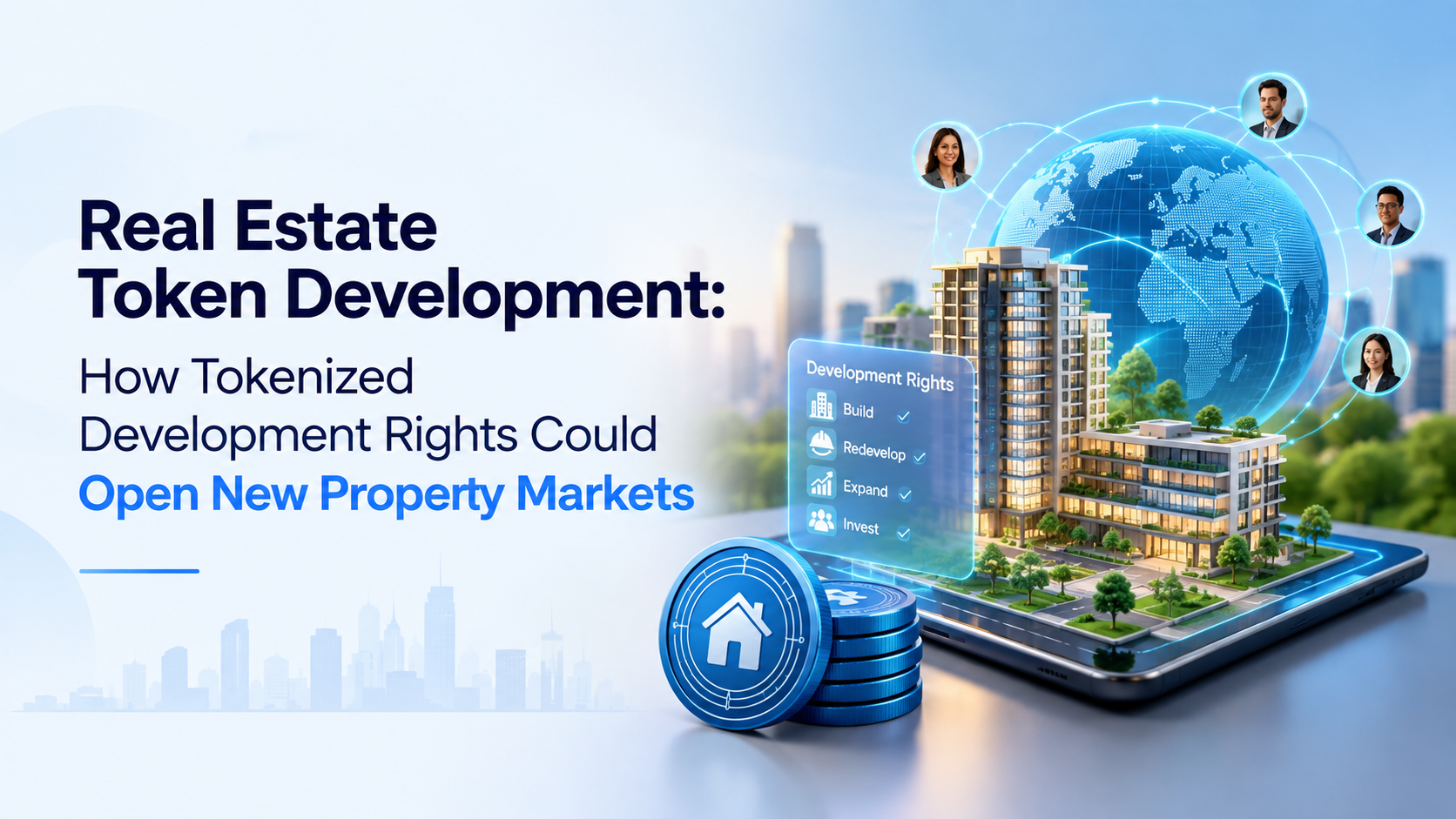
Real estate markets have traditionally focused on land, buildings, leases, and income-producing properties. Yet property ownership involves more than physical structures. Development rights, zoning allowances, air rights, floor area permissions, redevelopment entitlements, and future construction opportunities can also have substantial economic value. As blockchain-based asset models mature, real estate token development is beginning to examine how these rights could be represented digitally and offered to qualified participants.
Tokenized development rights could provide a different way for property owners, developers, investment firms, and landholders to structure transactions around future development potential. Rather than waiting until a project is completed, a rights holder could potentially represent an agreed portion of development-related interests through blockchain tokens, subject to local property laws, securities rules, planning regulations, and contractual arrangements.
This model does not mean that a blockchain token automatically grants permission to construct a building. Planning approval remains under the authority of the relevant government or planning body. Instead, tokenization can provide a digital representation of legally defined rights or economic interests associated with a development opportunity. This distinction is important when considering the future of real estate tokenization.
What Are Tokenized Development Rights?
Development rights refer to permissions or entitlements associated with the use or development of a property. Depending on the jurisdiction, these may involve permitted floor area, density, building height, redevelopment potential, transferable development rights, air rights, or other planning-related interests.
Tokenized development rights involve recording a legally defined interest related to those rights through blockchain infrastructure. The token may represent ownership, contractual participation, revenue rights, or another legally structured interest. Its actual meaning depends on the legal documents supporting the token.
For example, imagine a landowner has approval for a larger development than the owner intends to undertake. A portion of the development opportunity could potentially be placed into a legal structure and represented through digital tokens. Investors or development partners could then participate according to the terms of that structure.
A real estate tokenization company working on such a project would therefore need to consider legal ownership, planning permissions, valuation, investor eligibility, token design, custody, compliance, and transfer restrictions rather than focusing only on blockchain technology.
Why Development Rights Could Become a New Property Market
Property markets generally place significant attention on existing assets because they are easier to value and transact. Development rights are different because their value often comes from what may be constructed or changed in the future.
Consider a parcel located in an area where planning rules allow greater density after redevelopment. The existing building may have one market value, while its future development potential may represent another source of economic value. If that potential can be legally separated and represented through a structured digital instrument, it could attract participants who are interested in development opportunities without purchasing an entire property.
This could create new transaction models around underused land, redevelopment sites, air rights, and unused construction allowances. A real estate asset tokenization company could support these arrangements by connecting legal structures with token issuance and investor management systems.
However, market creation would depend heavily on local regulations. Development rights are not identical across countries or cities, and some rights may not be transferable at all. Therefore, tokenization must follow the legal characteristics of the underlying property interest.
Types of Development Rights That Could Be Tokenized
The possibilities differ according to planning systems and property law. Some potential categories include:
Transferable Development Rights
Transferable development rights allow development potential to be moved from one property to another under certain planning frameworks. A token could potentially represent an approved contractual interest connected with such rights.
This could create a digital marketplace where eligible participants can identify available development interests, review documentation, and transact according to regulatory requirements.
Air Rights
Air rights concern the ability to use or develop the space above a property, subject to applicable laws and planning restrictions. In high-value urban areas, unused vertical space can have significant economic value.
A tokenized structure could represent a legally established interest connected with those rights. Such a model may be particularly relevant in dense cities where land availability is limited but vertical development remains possible.
Unused Floor Area
Some properties may have development capacity that has not been used. Where local regulations permit the transfer or monetization of such capacity, a digital representation could provide a way to organize participation in the opportunity.
The token would not itself create additional floor area. Instead, it would represent an interest established through legal agreements and applicable planning permissions.
Redevelopment Rights
Older commercial buildings, industrial properties, and large land parcels can carry redevelopment potential. A tokenized arrangement could allow investors to participate in a redevelopment project before construction begins.
This model could also support development companies seeking capital for projects where the underlying opportunity is based on a property and its approved development plan.
How Real Estate Token Development Could Support the Model
Real estate token development involves much more than issuing tokens on a blockchain. For development rights, the process would typically begin with property due diligence.
The property owner or developer first identifies the rights available under the applicable planning and property framework. Legal professionals then determine whether those rights can be transferred, assigned, monetized, or represented through a separate legal arrangement.
After that, the economic value of the opportunity can be assessed. Valuation may consider location, permitted development, expected construction costs, projected property prices, planning conditions, market demand, and potential development timelines.
The token model can then be designed around the legal structure. Depending on the project, tokens could represent ownership interests, contractual claims, participation rights, or another defined economic interest.
A real estate tokenization development company may also integrate investor onboarding, identity verification, wallet management, transaction records, compliance rules, reporting, and secondary transfer restrictions into the platform.
Role of a Real Estate Tokenization Platform
A real estate tokenization platform can act as the digital environment connecting property documentation, token records, investor accounts, and transaction workflows.
For development-right projects, the platform could include property profiles showing planning information, development permissions, valuation reports, legal documents, project timelines, and token allocation details.
Investor onboarding can include identity verification and eligibility checks. The system can then apply rules concerning who may acquire or transfer specific tokens.
Smart contracts may manage token issuance, ownership records, distributions, transfer conditions, and other predefined functions. Off-chain legal agreements would still remain important because blockchain records do not replace planning approvals or property law.
This makes real estate tokenization platform development a combination of blockchain engineering, legal structuring, property data management, and financial technology.
A Possible Tokenized Development Rights Workflow
A typical project could follow several stages.
1. Property and Planning Assessment
The property owner identifies unused or transferable development potential. Legal and planning professionals review whether the rights can be separated or monetized.
2. Legal Structuring
The rights are placed within an appropriate legal framework. This could involve a special purpose vehicle, contractual arrangement, partnership, or another structure permitted by local law.
3. Valuation
Independent professionals estimate the economic value of the development opportunity. Assumptions around planning, construction, demand, and future property values are documented.
4. Token Design
The development team defines what each token represents, including ownership rights, economic participation, restrictions, duration, and transfer conditions.
5. Platform Integration
The token is connected to the investor interface, compliance system, payment process, wallet infrastructure, and reporting functions.
6. Issuance
Eligible investors receive tokens according to the offering structure. Ownership records are maintained on the selected blockchain network.
7. Project Execution
As the development progresses, participants can receive project updates, financial reports, distributions, or other rights specified in the legal agreements.
Benefits for Property Developers
Developers could gain access to a broader range of funding structures. Instead of selling an entire property or relying entirely on conventional financing, a development opportunity could potentially be divided into smaller economic interests.
This may be useful for large redevelopment projects where capital requirements are substantial. Developers could also separate different components of a project, depending on the legal and financial structure.
A digital system may make investor administration easier by maintaining records of token ownership and project participation in one environment. It can also provide investors with regular information about planning status, project milestones, valuations, and financial activity.
The practical value depends on the quality of the legal structure and the underlying development opportunity. Tokenization does not automatically make an unattractive property project financially viable.
Benefits for Investors
Tokenized development rights could give investors access to property opportunities that may otherwise require significant capital or direct involvement in development projects.
An investor may be able to participate in a specific redevelopment opportunity rather than purchasing an entire building. This could create different portfolio strategies based on geography, property type, development stage, and risk profile.
Investors could also receive digital records of their participation and access project information through an online platform.
However, these investments may carry planning, construction, market, liquidity, legal, and execution risks. Investors need to understand what the token represents before treating it as a property investment.
Secondary Markets Could Change the Model
One of the more interesting possibilities involves secondary trading. If local regulations permit it, tokenized development interests could potentially be transferred between eligible investors.
A secondary market could provide an alternative exit route for investors who do not want to hold an interest until project completion. It could also allow new investors to participate after the original issuance.
Yet liquidity should not be assumed. A token can technically be transferable while still having limited buyers. Regulatory restrictions, investor eligibility requirements, property conditions, and market demand can all influence trading activity.
This is why real estate tokenization development should treat secondary-market functionality as a regulated financial workflow rather than simply adding a token trading feature.
Compliance Considerations
Development rights involve several layers of regulation. Planning authorities determine what can be developed, while property laws determine ownership and transfer rights. Financial regulations may apply when tokens represent investment interests.
A platform may therefore need identity verification, investor classification, transaction monitoring, jurisdiction restrictions, tax reporting, record keeping, and transfer controls.
The legal status of a token should be established before development begins. A token should not be marketed as direct property ownership unless the underlying legal structure genuinely provides that ownership.
For a real estate tokenization platform development company, compliance requirements should influence architecture from the beginning rather than being added after the platform has been completed.
Technology Requirements for Tokenized Development Rights
A development-right platform may require several technology components working together. Blockchain infrastructure can maintain token ownership records and smart-contract functions. A web application can provide investor and administrator interfaces.
Property data systems can store project documentation, planning approvals, valuation reports, and development information. Identity and compliance services can manage investor eligibility.
Oracle systems may also be used where external information needs to reach smart contracts, although important property decisions should remain subject to appropriate legal and administrative verification.
Security is another major consideration. Smart contracts, wallets, administrative accounts, APIs, and investor information all need suitable security controls and monitoring.
How Businesses Can Enter This Market
Companies considering real estate tokenization should first identify a property segment where development rights have measurable economic value. Urban redevelopment, commercial properties, mixed-use projects, and transferable development rights may offer different opportunities depending on local regulations.
The next step is to establish whether the underlying rights can legally support the proposed investment structure. From there, businesses can select a blockchain network, define token economics, prepare compliance processes, and develop the investor platform.
Businesses may work with a real estate tokenization company for the full development lifecycle or collaborate with specialized providers for legal, blockchain, property valuation, and compliance requirements.
When evaluating Top real estate tokenization companies or Best real estate tokenization companies, businesses should look beyond token issuance capabilities. Experience with property workflows, legal structures, compliance, smart contracts, investor management, and secondary transfers can be more important than the blockchain network itself.
Future Outlook for Tokenized Development Rights
The future of tokenized development rights will likely depend on regulatory acceptance, standardized property data, investor demand, and the ability to connect digital ownership records with real-world legal structures.
If jurisdictions create clearer frameworks for transferable development interests, tokenization could support new forms of property financing. Developers could access investors interested in specific development opportunities, while investors could participate in property projects without purchasing complete assets.
Real estate tokenization may therefore expand beyond buildings and land into the rights associated with future property use. This creates an interesting area for real estate token development because the underlying asset is not always a completed structure. In some cases, the economic opportunity may exist in what a property is legally permitted to become.
Conclusion
Tokenized development rights could introduce a different approach to property markets by giving digital representation to legally recognized development opportunities such as transferable development rights, air rights, unused floor area, and redevelopment interests. The concept has potential for developers seeking alternative capital structures and investors looking for participation in specific property opportunities, but its success depends on planning law, securities regulation, valuation, legal documentation, and market demand. Blockchain can maintain digital records and automate certain transactions, yet it does not replace government approvals or property rights. As the sector develops, businesses will need to combine real estate expertise with compliant token infrastructure and investor management systems. Blockchain App Factory provides Real estate tokenization development services for businesses looking to develop platforms around tokenized property interests and related digital asset models.
FAQs
1. What are tokenized development rights?
Tokenized development rights are digital representations of legally defined interests connected with property development opportunities. They may relate to transferable development rights, air rights, redevelopment permissions, or other development-related interests.
2. Does a token automatically provide planning permission?
No. A blockchain token does not independently create planning permission. The underlying development rights must already exist under the applicable legal and planning framework.
3. Can development rights be divided into multiple tokens?
Potentially, yes. If the legal structure permits fractional participation, a development interest can be represented through multiple tokens. The rights associated with each token must be defined legally.
4. How does real estate tokenization differ from traditional property investment?
Traditional property investment generally involves direct ownership, shares in a property company, or other conventional structures. Real estate tokenization uses blockchain-based tokens to represent defined ownership or economic interests under a legal framework.
5. What blockchain features are useful for development-right projects?
Smart contracts, token ownership records, investor wallets, compliance controls, transaction histories, and reporting systems can be useful. The exact technology depends on the legal and financial structure of the project.
6. Can tokenized development rights be traded?
They may be transferable or tradable if the applicable laws, offering structure, and platform rules allow it. Restrictions may apply based on investor eligibility and jurisdiction.
7. Who can develop a platform for tokenized development rights?
A real estate tokenization development company can handle blockchain development, token architecture, investor interfaces, compliance-related features, smart contracts, and administrative systems, while legal and property specialists handle matters outside the technology layer.
8. What should businesses consider before launching a tokenized property platform?
Businesses should assess property rights, planning regulations, securities laws, tax requirements, investor eligibility, valuation, token structure, blockchain selection, custody, cybersecurity, and possible transfer mechanisms before launching.

 English
 Arabic
 French
 Portuguese
 Deutsch
 Turkish
 Dutch
Dutch
 Italiano
 Russian
 Romaian
 Portuguese (Brazil)
 Greek
Greek