


Choosing the Right Nasha Mukti Kendra: What Patients and Families Should Know
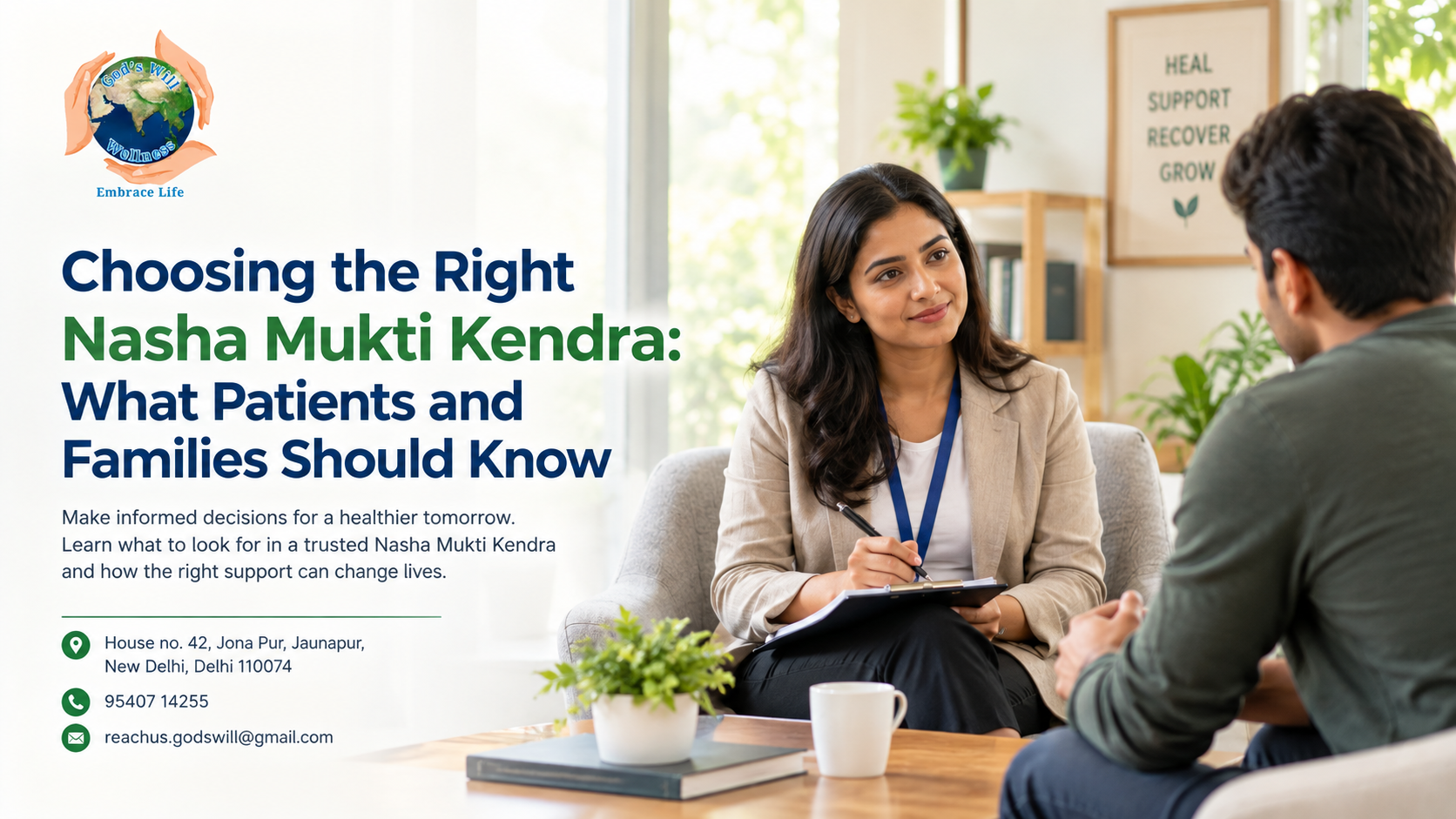
Overcoming addiction is not simply about stopping alcohol or drug use for a few days. For many individuals, addiction affects physical health, emotional well-being, relationships, work, and everyday decision-making. Taking the first step toward recovery can therefore feel difficult, especially when a person or their family is unsure about what treatment actually involves.
Choosing the right rehabilitation facility is an important part of that journey. Families looking for a nasha mukti kendra in Delhi NCR often have many questions about treatment methods, counselling, accommodation, recovery timelines, family involvement, and what life will be like after treatment.
At God’s Will Wellness, the focus is on creating a supportive environment where individuals can work toward recovery with dignity, compassion, professional guidance, and a structured approach.
Understanding What Addiction Treatment Really Means
Addiction is a complex condition that can involve physical dependence, psychological patterns, emotional difficulties, and environmental factors. Simply asking someone to stop using a substance may not address the reasons behind the addiction.
A rehabilitation programme can provide structure while helping individuals understand their triggers, develop healthier coping mechanisms, rebuild routines, and work toward long-term recovery.
Treatment may involve different components depending on the individual's circumstances, including:
- Initial assessment and understanding of substance-use patterns
- Medical support when clinically required
- Individual counselling
- Group counselling and peer support
- Behavioural and emotional support
- Family involvement
- Development of healthier daily routines
- Relapse-prevention education
- Aftercare and continued recovery support
Every person's recovery journey is different. A good rehabilitation programme should therefore consider the individual's needs rather than treating every patient in exactly the same way.
Why Location Can Matter When Choosing a Rehabilitation Centre
Families often begin their search by looking for treatment options close to home. Searching for a nasha mukti kendra in Delhi NCR can be useful for families who want access to rehabilitation services without moving too far away from their support network.
Being relatively close to family can make communication and involvement easier. At the same time, some individuals may benefit from temporarily stepping away from familiar environments, social circles, or situations associated with substance use.
The important point is not simply choosing the closest facility. Families should look at the quality of the programme, the approach to counselling, the environment, staff support, safety, transparency, and the level of continuing care available.
A Conversation Between a Patient and Counsellor
Patient: “I have tried stopping several times, but after a few days I start again. Does that mean treatment won't work for me?”
Counsellor: “Not necessarily. Relapse or difficulty stopping does not mean that recovery is impossible. It can mean that you need structured support and a better understanding of what triggers your substance use.”
Patient: “I'm worried about staying in a rehabilitation centre. I don't know what to expect.”
Counsellor: “That is completely understandable. Before beginning treatment, you should be able to ask questions about the programme, daily routine, counselling, accommodation, family communication, and what happens after the initial treatment period.”
Patient: “Will I have to talk about everything immediately?”
Counsellor: “Recovery takes time. Counselling is meant to create a supportive space where you can gradually understand your experiences, emotions, triggers, and behaviour. You should feel respected throughout the process.”
This kind of conversation reflects an important part of recovery: patients should feel comfortable asking questions instead of being afraid of treatment.
Five Questions People Ask Before Starting Nasha Mukti Kendra Treatment
1. How long does addiction treatment take?
Patient: “How many days will I have to stay at the centre?”
Counsellor: “There isn't one fixed duration that works for everyone. Treatment depends on the substance involved, the severity and duration of use, physical and psychological needs, progress during counselling, and the individual's recovery plan.”
A rehabilitation programme should be based on the person's needs rather than promising a guaranteed recovery within a specific number of days.
Families should ask the centre how treatment duration is assessed and whether continued support is available after the residential programme.
2. Will I be forced to stop everything immediately?
Patient: “I'm scared about suddenly stopping alcohol or drugs. What happens when I enter treatment?”
Counsellor: “That concern is important. Some substances can cause significant withdrawal symptoms, and withdrawal management should be approached carefully. The appropriate medical response depends on the substance and the individual's condition.”
This is why families should ask about medical assessment and professional supervision before choosing a facility. Withdrawal can sometimes require medical attention, and treatment decisions should be made according to the individual's clinical needs.
3. Will my family be involved in my recovery?
Patient: “I don't want my family to control my treatment. But I also know they are worried about me.”
Counsellor: “Family involvement doesn't have to mean controlling your recovery. When appropriate, families can learn how to communicate more effectively, understand addiction, provide healthy support, and recognise situations that may increase the risk of relapse.”
Addiction affects more than one person. Family education and counselling can therefore be an important part of rebuilding relationships and creating a healthier support system.
4. What if I relapse after treatment?
Patient: “What happens if I return home and start using again?”
Counsellor: “Recovery doesn't end simply because residential treatment ends. A strong recovery plan should include strategies for managing triggers, recognising warning signs, maintaining healthy routines, and seeking support when difficulties arise.”
Relapse should not automatically be viewed as the end of recovery. It can indicate that the individual and treatment team need to reassess the recovery plan and identify what contributed to the setback.
This is why families should ask about aftercare and relapse-prevention support before selecting a centre.
5. How do I choose the right centre?
Patient: “There are so many centres available. How do I know which one is right for me?”
Counsellor: “Don't choose a centre only because it appears first online or because someone calls it the best. Ask questions. Understand the treatment approach, staff qualifications, living arrangements, counselling process, medical support, family involvement, privacy, costs, and aftercare.”
If a family is considering a nasha mukti kendra in Gurgaon, for example, they should evaluate the facility using these same criteria rather than making the decision solely based on location.
Similarly, people searching for a nasha mukti kendra in Faridabad should compare the actual treatment environment and support system before making a decision.
What Families Should Look for Before Admission
The decision to enter rehabilitation can be emotional. Families may feel pressure to find a solution quickly, but taking some time to ask the right questions can help them make a more informed decision.
Before admission, consider asking:
- What does the treatment programme include?
- Is an initial assessment conducted?
- What kind of counselling is provided?
- How is withdrawal handled when medical supervision is required?
- How often can families communicate with the patient?
- Are family counselling sessions available?
- What is the daily routine?
- How is privacy maintained?
- What happens after residential treatment?
- Is there an aftercare or relapse-prevention plan?
- Are the costs and included services clearly explained?
Transparency is important. Families should understand what they are paying for and what kind of support the individual will receive.
Recovery Is More Than Leaving Substance Use Behind
One of the most important parts of rehabilitation is helping an individual build a healthier life beyond substance use.
Recovery may involve rebuilding relationships, developing better routines, learning to manage stress, identifying emotional triggers, improving communication, and finding productive activities that support long-term well-being.
Counselling can help individuals examine the thoughts and situations that contribute to substance use. Group sessions can provide a sense of shared experience, while family support can help create a more stable environment after treatment.
The goal is not simply to spend time away from substances. It is to develop the skills and support systems needed to continue making healthier choices.
Finding Support in Delhi NCR and Nearby Areas
For families exploring a nasha mukti kendra in Delhi NCR, Delhi and surrounding areas provide access to different rehabilitation options. People may also specifically search for treatment facilities in Gurgaon or Faridabad depending on where they live and what type of support they are seeking.
However, location should be only one factor in the decision.
Whether someone is considering a nasha mukti kendra in Gurgaon, a facility in Faridabad, or another rehabilitation option in the Delhi NCR region, the most important questions remain the same: Is the programme structured? Is the environment supportive? Are qualified professionals involved? Is the patient's dignity respected? And is there a plan for continuing recovery after treatment?
Taking the First Step Toward Recovery
Deciding to seek help can be difficult, particularly when a person has experienced repeated attempts to quit. Shame, fear, family conflict, financial concerns, and uncertainty about treatment can all become barriers.
The first step does not have to mean having every answer. It can simply mean speaking with a qualified professional, discussing the situation honestly, and understanding what treatment options may be appropriate.
God’s Will Wellness aims to provide compassionate addiction recovery, evidence-based rehabilitation, and long-term support for individuals and families seeking a healthier future. Recovery is a process, and with appropriate guidance, structure, counselling, and continued support, individuals can begin working toward a healthier and more stable life.

 English
 Arabic
 French
 Portuguese
 Deutsch
 Turkish
 Dutch
Dutch
 Italiano
 Russian
 Romaian
 Portuguese (Brazil)
 Greek
Greek