


Stress Echocardiography: Purpose, Procedure, Results, and What the Test Can Detect
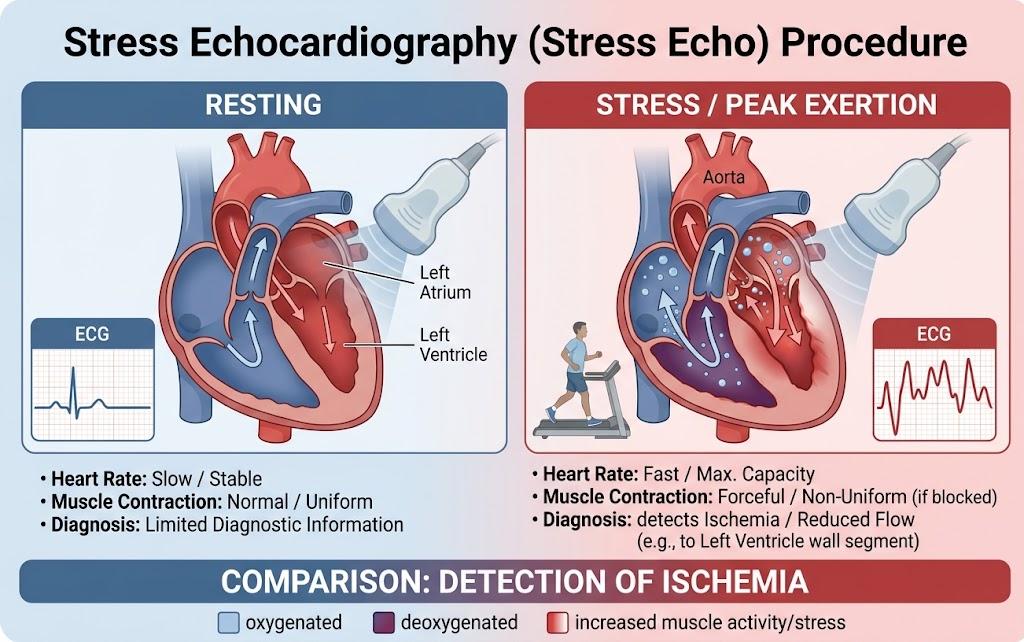
The heart is designed to adjust its workload according to the body’s needs. During exercise or physical activity, the heart beats faster and requires more oxygen-rich blood to keep the body functioning properly. Sometimes, heart problems may not appear when the heart is resting but become noticeable when it is working harder.
A stress echocardiography, also known as a stress echo, is a specialized heart imaging test that combines exercise or medication-induced stress with ultrasound imaging. It allows doctors to observe how the heart muscle, valves, and blood flow respond under stress. The test is commonly used to identify reduced blood supply to the heart muscle caused by narrowed coronary arteries.
This diagnostic procedure helps cardiologists detect heart conditions, evaluate symptoms, and decide the most appropriate treatment plan for patients experiencing chest pain, shortness of breath, or other signs of cardiovascular problems.
What Is Stress Echocardiography and How Does It Work?
Stress echocardiography is a non-invasive cardiac test that evaluates how well the heart functions when it is under increased workload. Unlike a regular echocardiogram, which examines the heart at rest, a stress echo compares heart activity before and after stress.
During the test, ultrasound images are taken while the heart is resting and again when it is working harder. Doctors analyze changes in heart muscle movement, pumping ability, and blood flow patterns. If a part of the heart does not receive enough oxygen during stress, it may indicate reduced blood supply due to coronary artery narrowing.
The test provides valuable information about heart performance without requiring invasive procedures. It helps doctors understand whether symptoms are related to coronary artery disease or other heart conditions.
Why Is a Stress Echocardiogram Recommended?
Doctors recommend stress echocardiography when they need to evaluate how the heart responds during increased activity. Many heart problems become more obvious when the heart requires more oxygen and blood flow.
A cardiologist may suggest this test for patients who experience:
- Chest pain or pressure
- Shortness of breath during activity
- Unexplained fatigue
- Irregular heartbeat sensations
- Reduced exercise capacity
Stress echocardiography may also be used to monitor known heart disease, assess treatment effectiveness, or determine whether a patient’s heart is strong enough for certain procedures or exercise programs.
The test can provide important details about heart muscle function, valve performance, and possible circulation problems.
Conditions That Stress Echocardiography Can Detect
A stress echocardiogram helps doctors identify several heart-related conditions by showing how the heart behaves under pressure. It is particularly useful for detecting problems that may not appear during a resting heart examination.
Some conditions that may be evaluated include:
Coronary artery disease (CAD):
The test can reveal areas of the heart muscle that are not receiving enough blood due to narrowed or blocked arteries.
Previous heart muscle damage:
Abnormal heart wall movement may indicate damage caused by a previous heart attack.
Heart valve problems:
Stress echo can help evaluate whether heart valves open and close properly during increased activity.
Heart failure and cardiomyopathy:
The test provides information about the heart’s pumping ability and how effectively it responds to stress.
Exercise tolerance:
Doctors can understand how much physical activity a patient’s heart can safely handle.
Stress echocardiography is an important tool for identifying hidden cardiovascular problems and guiding treatment decisions.
How Should You Prepare Before a Stress Echocardiogram?
Proper preparation helps ensure accurate test results and a smooth experience. Before undergoing a stress echocardiogram, your doctor will provide specific instructions based on your medical condition and medications.
Patients are generally advised to:
- Avoid eating or drinking for a few hours before the test if instructed
- Wear comfortable clothing and walking shoes
- Inform the doctor about all medications being taken
- Ask before stopping any heart medications
- Avoid smoking before the procedure
Certain medicines, especially those affecting heart rate, may need special instructions before testing. However, patients should never stop medication without guidance from their healthcare provider.
Discussing your medical history, previous heart conditions, and current symptoms with your doctor helps make the procedure safer and more effective.
What Happens During a Stress Echocardiography Procedure?
The procedure usually begins with a resting echocardiogram. A technician applies gel to the chest and uses a handheld device called a transducer to create ultrasound images of the heart. These images show the heart’s structure, movement, and function.
After the resting images are collected, the stress portion begins. Most patients perform controlled exercise on a treadmill or stationary bicycle. The intensity gradually increases to raise the heart rate.
Throughout the procedure, healthcare professionals monitor:
- Heart rate
- Blood pressure
- Heart rhythm through ECG
- Symptoms such as chest discomfort or dizziness
Once the heart reaches the required stress level, additional ultrasound images are taken to compare how the heart performs under pressure.
For patients who cannot exercise safely, doctors may use medications such as dobutamine to make the heart beat faster and simulate exercise conditions.
Understanding Stress Echocardiography Results
After the test, a cardiologist reviews the images and monitoring information to interpret the results. The findings show how effectively different areas of the heart respond when demand increases.
A normal stress echocardiogram usually means:
- The heart muscle receives adequate blood supply
- Heart walls move normally during stress
- Pumping function is appropriate
- There are no significant signs of blocked coronary arteries
An abnormal result may suggest:
- Reduced blood flow to part of the heart
- Possible coronary artery narrowing
- Previous heart muscle injury
- Problems with heart function
An abnormal result does not always mean a person has severe heart disease. Doctors consider symptoms, medical history, and additional tests before making a diagnosis or recommending treatment.
Benefits of Stress Echocardiography Compared With Other Heart Tests
Stress echocardiography offers several advantages because it provides real-time information about heart performance without exposing patients to radiation.
Key benefits include:
- Non-invasive testing method
- Provides images of the heart during activity
- Helps detect hidden heart problems
- Evaluates heart muscle movement and valve function
- Helps doctors plan appropriate treatment
Compared with some other stress tests, stress echocardiography combines functional information with detailed ultrasound images of the heart. This allows doctors to assess both circulation problems and structural abnormalities.
It is often chosen when doctors need more information than a standard ECG or resting echocardiogram can provide.
Are There Any Risks Associated With Stress Echocardiography?
Stress echocardiography is generally considered a safe procedure because patients are continuously monitored throughout the test. However, because the heart is intentionally placed under stress, rare complications can occur.
Possible risks include:
- Temporary abnormal heart rhythm
- Dizziness or fainting
- Chest discomfort
- Shortness of breath
- Rarely, heart attack
Medical professionals closely monitor patients and stop the test if concerning symptoms or changes appear. The overall risk is low, especially when performed in a controlled medical environment.
Patients should inform the medical team immediately if they experience unusual symptoms during the procedure.
Recovery and What to Expect After the Test
Most people can return to their normal routine shortly after a stress echocardiogram. Since it is not a surgical procedure, there is usually no long recovery period.
After the test, you may feel temporarily tired because your heart rate has increased during exercise. This feeling usually improves quickly as your body returns to its normal state.
Your doctor will discuss the results and explain whether additional tests, lifestyle changes, medications, or treatments are needed.
Following heart-healthy habits, attending regular checkups, and managing risk factors such as high blood pressure and cholesterol can help protect long-term cardiovascular health.
Book Online Appointment With Best Cardiologist Via InstaCare
Heart-related symptoms should never be ignored, especially when they involve chest discomfort, breathing difficulties, or reduced stamina. A skilled cardiologist can evaluate your symptoms, recommend appropriate diagnostic tests like stress echocardiography, and create a personalized treatment plan.
If you need expert advice regarding heart health, you can book an online appointment with the best cardiologist via InstaCare for professional consultation and guidance from the comfort of your home.
Frequently Asked Questions About Stress Echocardiography
1. Is stress echocardiography painful?
No, stress echocardiography is generally not painful. You may feel tired or experience increased breathing during exercise, but the procedure is performed under medical supervision.
2. How long does a stress echocardiogram take?
The complete procedure usually takes around 45 to 90 minutes, depending on the type of stress test and the patient’s condition.
3. What does an abnormal stress echocardiogram mean?
An abnormal result may indicate reduced blood flow to the heart muscle, possible coronary artery disease, or other heart function problems. Further evaluation may be required.
4. Can stress echocardiography detect blocked arteries?
Stress echocardiography can identify signs suggesting reduced blood flow caused by narrowed coronary arteries. Additional imaging may be needed to confirm the exact blockage.
5. Who should undergo a stress echocardiogram?
Doctors may recommend this test for people with symptoms of heart disease, unexplained chest pain, shortness of breath, or those needing evaluation of known heart conditions.
Conclusion
Stress echocardiography is a valuable diagnostic test that helps doctors understand how the heart performs when it is working harder. By combining exercise or medication-induced stress with ultrasound imaging, it provides detailed information about blood flow, heart muscle movement, and overall cardiac function.
Early detection of heart problems can lead to better treatment outcomes and improved quality of life. If symptoms suggest a possible heart condition, consulting a qualified cardiologist and undergoing the right diagnostic evaluation can help protect your heart health for the future.

 English
 Arabic
 Spanish
 Portuguese
 Deutsch
 Turkish
 Dutch
Dutch
 Italiano
 Russian
 Romaian
 Portuguese (Brazil)
 Greek
Greek