


Influencer Marketing Guide: How to Promote Your Brand Effectively
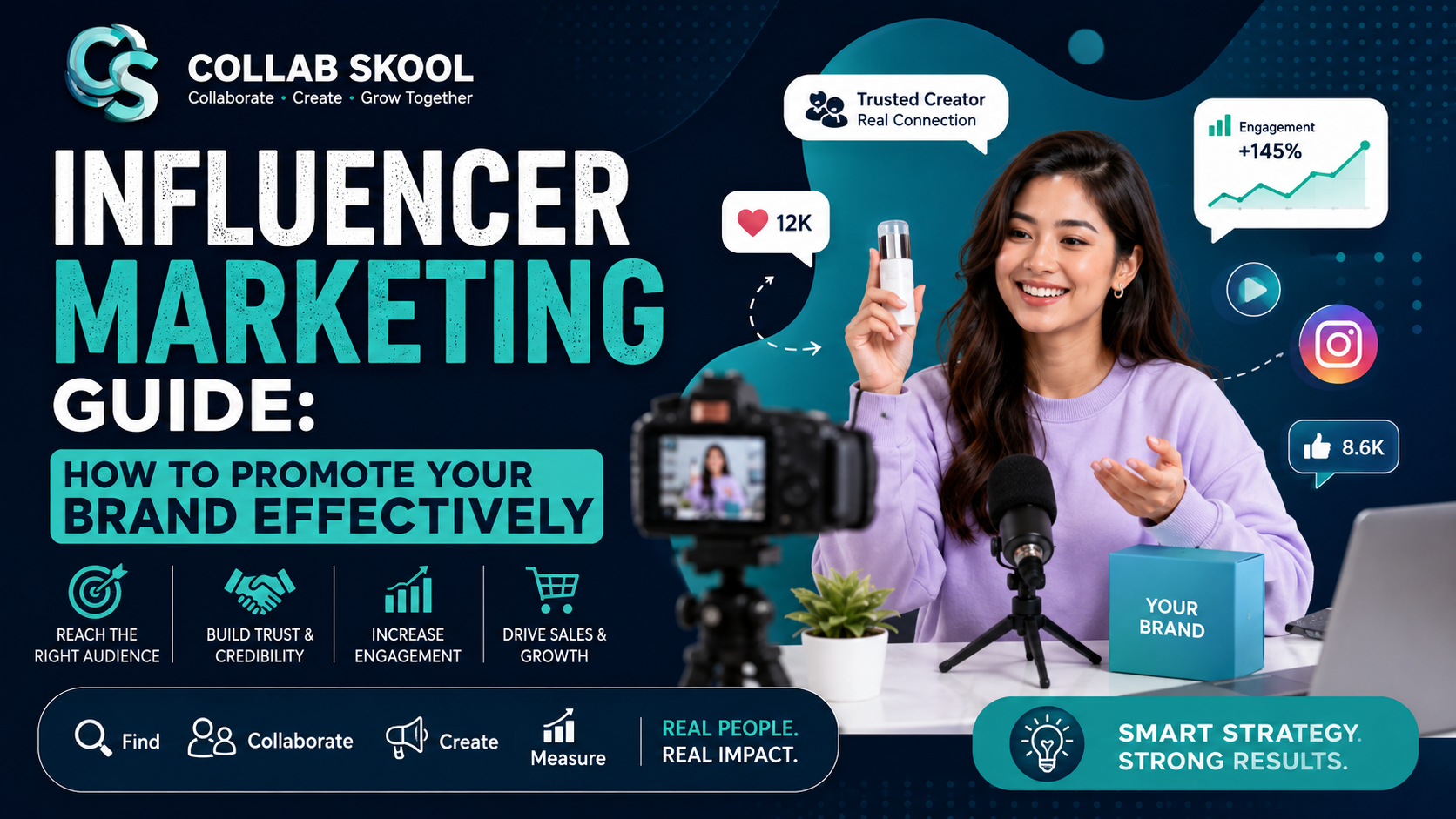
Influencer Marketing: An Introduction
Influencer Marketing is a way for brands to promote their products or services through people who have an active audience on social media or other online channels. These people may be creators, bloggers, experts, celebrities, or niche content makers.
Today, people often look for reviews, videos, and real experiences before buying something. Because of this, Influencer Marketing can help a brand present its products in a more natural way. Instead of only showing a normal advertisement, a brand can work with a creator who already has the trust of a certain audience.
For example, a beauty brand can work with a makeup creator, while a food company can work with a food blogger. Similarly, a local business can work with a creator who has followers in the same city.
Therefore, the right creator can help a brand reach people who are more likely to care about its product.
Influencer Marketing: Why It Is Important for Brands
Influencer Marketing is not only about getting likes or views. A good campaign should have a clear purpose.
A brand may use creator content to:
- Introduce a new product
- Reach a new audience
- Increase product awareness
- Bring visitors to a website
- Generate leads
- Support product sales
- Build trust
- Create social media content
- Reach a local audience
- Get product reviews
- Support an event or product launch
Moreover, creator content can give a brand fresh ideas for social media posts. In some cases, the same content can also be used on a brand's website, social pages, or paid ads when the correct usage rights are agreed upon.
As a result, a well-planned campaign can support several marketing goals at the same time.
Influencer Marketing: How Influencer Marketing Works
How influencer marketing works is quite simple. A brand first decides what it wants to achieve. Next, it finds creators who match its product and audience.
The basic process looks like this:
- Set the campaign goal.
- Define the target audience.
- Choose the right social media platform.
- Find suitable creators.
- Check their audience and content.
- Contact the selected creators.
- Discuss price and campaign terms.
- Prepare a campaign brief.
- Create and review the content.
- Publish the campaign.
- Track the results.
- Review the campaign and plan the next step.
However, each campaign can follow a different process. A small business may work with two or three creators, while a large company may work with many creators across several platforms.
The key point is that the creator, audience, content, and campaign goal should all match.
Influencer Marketing: Types of Influencers
Creators can be grouped in different ways based on their audience size, content type, and niche.
|
Influencer Type |
General Audience Size |
Suitable For |
|
Nano Influencer |
Small audience |
Local and niche campaigns |
|
Micro Influencer |
Small to medium audience |
Focused product promotion |
|
Mid-Tier Influencer |
Medium audience |
Wider reach |
|
Macro Influencer |
Large audience |
Brand awareness |
|
Celebrity Influencer |
Very large audience |
Mass campaigns |
Follower count, however, should not be the only factor.
A creator with a smaller audience may have a strong connection with followers in a specific area or niche. Therefore, brands should also look at views, comments, saves, shares, audience quality, and content style.
Influencer Marketing: Building an Influencer Marketing Strategy
An Influencer marketing strategy should start with a clear goal. Without a goal, it becomes difficult to decide which creator or platform is right.
1. Set a Clear Goal
First, decide what you want from the campaign.
Your goal could be:
- More website visits
- More product sales
- More leads
- More app downloads
- More social followers
- More product awareness
- More video views
- More local customers
2. Know Your Audience
Next, understand the people you want to reach.
Think about:
- Age
- Location
- Interests
- Buying habits
- Income group
- Problems they want to solve
- Social media habits
3. Select the Right Platform
Different platforms work well for different types of content.
For example:
- Instagram is useful for Reels, Stories, photos, and lifestyle content.
- YouTube is useful for reviews, tutorials, Shorts, and detailed videos.
- LinkedIn can work well for business and professional content.
- Other short-video platforms can be useful where they are available.
Therefore, choose the platform where your target audience is active.
4. Select the Right Creator
The creator should fit your brand.
Check:
- Niche
- Audience
- Location
- Content quality
- Average views
- Engagement
- Previous campaigns
- Communication style
- Brand fit
Then, create a shortlist before making the final choice.
Influencer Marketing: Influencer Marketing Benefits and Promotion
The Influencer marketing benefits and promotion can be useful for both new and established brands.
Some key benefits include:
Better Audience Reach
Creators can introduce a product to people who already follow their content.
Social Proof
A product mention from a trusted creator may help people feel more comfortable learning about the brand.
Content Creation
Brands can receive photos, videos, reviews, and other content through creator campaigns.
Niche Promotion
Brands can reach a focused audience based on interests, location, or lifestyle.
Product Education
Creators can show how a product works in a simple way.
Brand Awareness
Repeated creator content can help more people become familiar with a brand.
Sales Support
When campaigns include clear offers, links, discount codes, or affiliate links, brands can track direct sales.
However, the Influencer marketing benefits and promotion depend on good planning. A poor creator match can lead to low results even when the creator has many
Influencer Marketing: Final Conclusion
Influencer Marketing can be a useful way to promote a brand when the right creator, audience, platform, and campaign goal come together.
The main lesson is simple: do not choose a creator only because they have many followers. Instead, look at audience fit, content quality, trust, engagement, and past work.
A good Influencer marketing strategy should start with a clear goal. Next, brands should find creators who match that goal. Then, both sides should agree on content, payment, deadlines, usage rights, and disclosure.
Likewise, creators should understand the brand before accepting a campaign. They should choose partnerships that fit their audience and maintain honesty with their followers.
Finally, measure the results and learn from every campaign. With clear planning and good communication, Influencer Marketing can become a regular part of a brand's marketing plan rather than a one-time promotion.

 Arabic
 French
 Spanish
 Portuguese
 Deutsch
 Turkish
 Dutch
Dutch
 Italiano
 Russian
 Romaian
 Portuguese (Brazil)
 Greek
Greek