


Digital Signage Trends to Watch in 2026: What Businesses Need to Know
Digital signage is becoming an increasingly important part of modern business communication, customer engagement, and marketing. From retail stores and corporate offices to healthcare facilities and educational institutions, businesses are using dynamic displays to deliver relevant information in more engaging ways.
As technology continues to evolve in 2026, digital signage is moving beyond simple screens and advertisements. Artificial intelligence, real-time content, personalization, cloud management, and interactive experiences are transforming how businesses communicate with their audiences.
Understanding these trends can help businesses make smarter technology investments and create more meaningful customer experiences.
1. AI-Powered Digital Signage
Artificial intelligence is one of the biggest technology trends influencing digital signage in 2026. AI can help businesses understand audiences, analyze customer behavior, and deliver more relevant content.
For example, AI-powered systems can analyze factors such as time, location, audience patterns, and engagement to determine what content should be displayed. Retailers can use these capabilities to promote relevant products, while corporate environments can display personalized information.
AI can also support automated content creation, scheduling, analytics, and performance optimization. This allows businesses to reduce manual work while making their communication strategies more responsive.
2. Personalized Customer Experiences
Customers increasingly expect businesses to provide experiences that are relevant to their interests and needs. Digital signage can help deliver this personalization through targeted content.
Instead of displaying the same message throughout the day, businesses can change content based on factors such as location, time, audience, promotions, or current events.
For retailers, personalized displays can highlight product recommendations, discounts, and seasonal campaigns. Restaurants can update menus and offers throughout the day, while hotels can provide guests with customized information about facilities and services.
Personalization makes digital communication more useful and can help businesses improve engagement.
3. Interactive Digital Signage
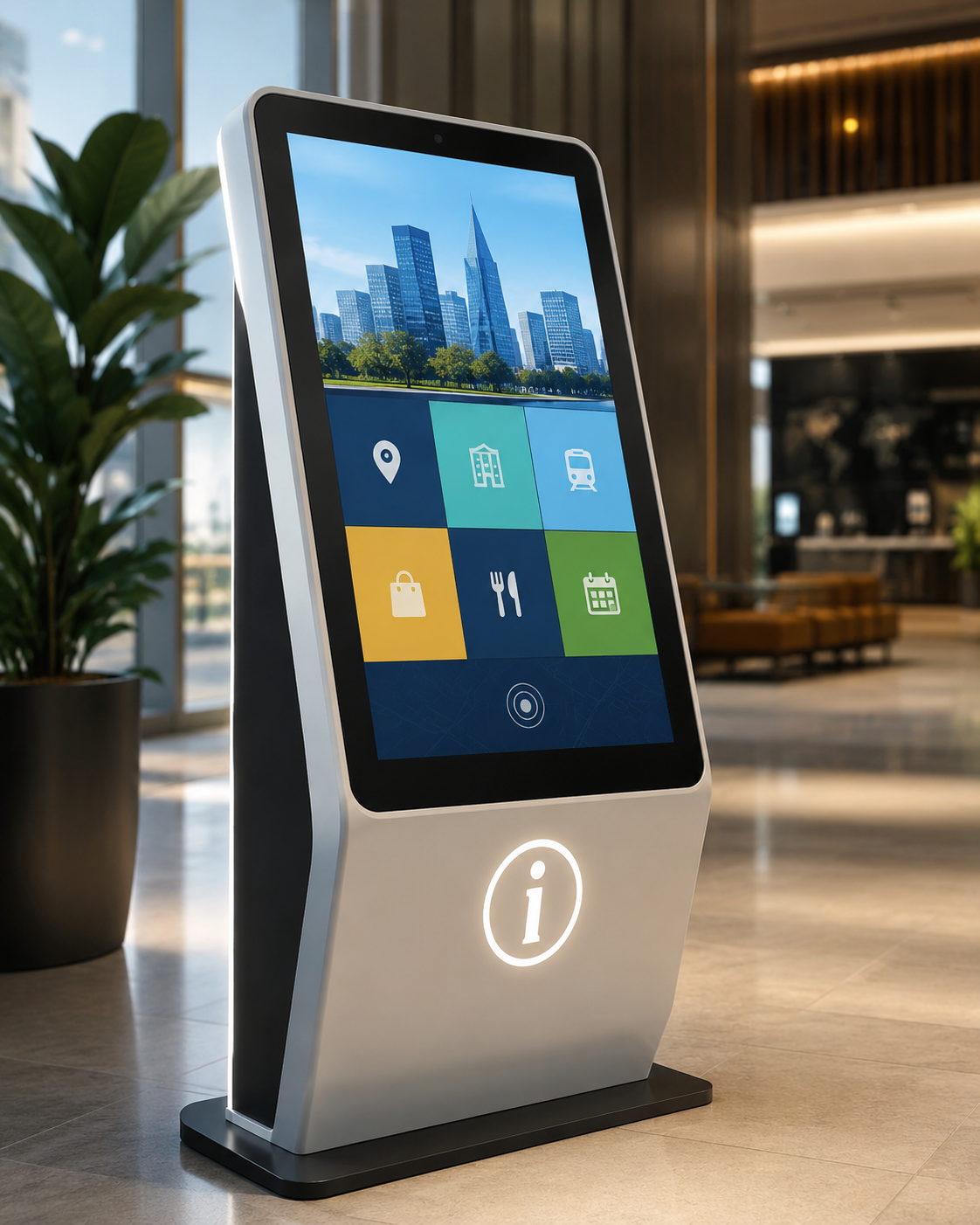
Interactive experiences are another major trend businesses should watch in 2026. Touchscreens, interactive kiosks, QR codes, and mobile integrations allow customers to actively engage with displayed content.
Rather than simply viewing an advertisement, customers can browse products, explore services, access information, or complete specific actions.
For example, a retail store can use an interactive display to help shoppers find products. Healthcare facilities can use kiosks for navigation and information, while educational institutions can provide interactive campus information.
Interactive digital signage creates a two-way communication experience and can make physical spaces more engaging.
4. Cloud-Based Digital Signage Management
Managing multiple displays manually can be time-consuming, particularly for businesses with locations across different cities or regions. Cloud-based technology is making this process much easier.
With cloud-based digital signage solutions, businesses can manage content remotely from a centralized platform. Teams can schedule campaigns, update displays, monitor screens, and make changes without physically visiting each location.
This provides greater flexibility and helps businesses maintain consistent branding across multiple locations.
Cloud management can also make it easier to scale digital communication as a company grows.
5. Real-Time Content and Data Integration
In 2026, businesses are increasingly connecting digital displays with real-time information. This allows screens to display content that changes automatically based on live data.
Examples include weather updates, transportation information, inventory availability, news, event schedules, pricing, and promotional campaigns.
For businesses, real-time content can make displays more useful and relevant. Instead of static messages, screens can continuously provide information that reflects what is happening at that moment.
This trend is particularly valuable in transportation, hospitality, retail, corporate, and public environments.
6. Data Analytics and Performance Tracking
Businesses want to understand whether their technology investments are producing results. Digital signage analytics can provide valuable insights into content performance and audience engagement.
Modern platforms can help businesses monitor metrics such as screen activity, campaign performance, content schedules, and engagement patterns.
These insights allow marketers and business owners to identify which messages perform well and which campaigns need improvement.
By using data-driven strategies, companies can continuously optimize their displays instead of relying solely on assumptions.
7. Omnichannel Customer Engagement
Another important trend is the connection between physical digital displays and online marketing channels.
Businesses can use screens to encourage customers to visit websites, scan QR codes, follow social media accounts, download applications, or explore online offers.
This creates a connection between physical and digital customer journeys. A customer might see a promotion on a screen in a store and continue the experience on their smartphone.
Digital signage therefore becomes more than an advertising tool—it can become an important part of an overall omnichannel marketing strategy.
8. Smarter and More Sustainable Displays
Energy efficiency is becoming increasingly important for modern businesses. Display technology is continuing to improve, providing businesses with brighter and more efficient screens.
Companies are also becoming more conscious about how technology affects operational costs and sustainability goals.
Smarter scheduling can help reduce unnecessary screen usage, while centralized management can improve operational efficiency. Businesses can therefore create engaging communication experiences while being more mindful of energy consumption.
Why Businesses Should Invest in Digital Signage in 2026
The combination of AI, personalization, cloud management, interactivity, analytics, and real-time content is making digital signage more powerful than ever.
For businesses, the biggest advantage is flexibility. Content can be updated quickly, campaigns can be customized, and performance can be measured more effectively than with many traditional communication methods.
Whether a company operates a single location or a large network of branches, the right solution can help improve communication, strengthen branding, and create better customer experiences.
The key is to focus on useful, relevant, and engaging content rather than simply filling screens with advertisements.
FAQs
1. What is digital signage?
Digital signage uses electronic displays to communicate information, advertisements, announcements, promotions, and other dynamic content to targeted audiences.
2. What are the biggest digital signage trends in 2026?
AI, personalization, interactive displays, cloud management, real-time content, analytics, and omnichannel integration are major trends shaping digital signage in 2026.
3. How can digital signage help businesses?
It helps businesses communicate dynamically, attract attention, promote products, share information, improve customer experiences, and update content quickly.
4. Is digital signage suitable for small businesses?
Yes. Small businesses can use digital signage for promotions, menus, announcements, product information, and customer engagement without requiring a large display network.
5. Why is AI important for digital signage?
AI can help businesses personalize content, automate scheduling, analyze audience behavior, and improve campaigns using data-driven insights and real-time optimization.
Conclusion
As businesses look toward 2026, digital signage is becoming an essential technology for smarter communication and customer engagement. The combination of AI, personalization, interactivity, cloud management, real-time data, and analytics is creating new opportunities for businesses across industries.
Intelisa is a technology-focused company committed to helping businesses embrace innovative digital solutions. With a focus on modern technology, creative solutions, and customer needs, Intelisa helps organizations create smarter, more engaging, and impactful digital experiences. By combining innovation with practical business applications, Intelisa aims to support businesses as they adapt to the evolving digital landscape.

 English
 Arabic
 French
 Spanish
 Portuguese
 Deutsch
 Turkish
 Dutch
Dutch
 Italiano
 Russian
 Portuguese (Brazil)
 Greek
Greek