


Cryptocurrency Exchange License in Seychelles: A Complete Guide for Businesses
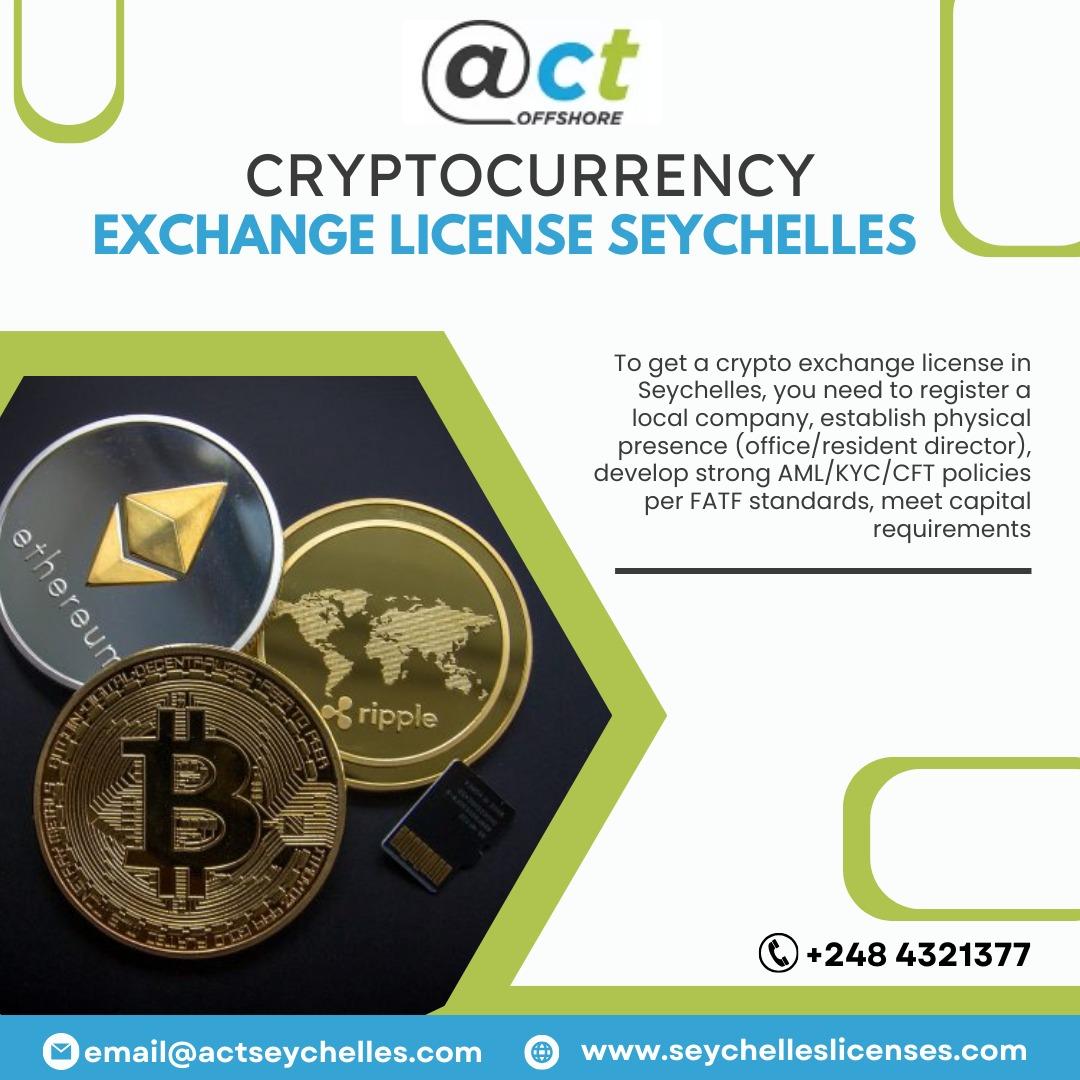
The global cryptocurrency industry has developed rapidly, creating new opportunities for businesses that want to provide digital asset trading and related financial services. At the same time, regulators around the world are introducing stronger licensing, compliance, and consumer protection requirements. Seychelles has established a dedicated regulatory framework for virtual asset businesses through the Virtual Asset Service Providers Act, 2024. For companies planning to establish a regulated digital asset exchange, understanding the licensing structure, eligibility requirements, capital expectations, and compliance obligations is essential.
A Cryptocurrency Exchange License Seychelles is relevant to businesses that intend to operate a virtual asset exchange from or within Seychelles. Under the current framework, a business cannot provide virtual asset services in or from Seychelles without obtaining the appropriate authorization from the Financial Services Authority.
Understanding the Seychelles VASP Framework
The Virtual Asset Service Providers Act, 2024 created a specific legal framework for businesses providing virtual asset services. The legislation covers several categories of activities, including virtual asset wallet services, virtual asset exchanges, virtual asset broking, and virtual asset investment services.
The framework is designed to bring greater transparency and accountability to the digital asset sector while addressing risks associated with money laundering, terrorist financing, consumer protection, and financial stability.
The Seychelles FSA is responsible for licensing and supervising eligible virtual asset service providers. Businesses should therefore determine their exact activities before applying because the required authorization can depend on the services they intend to offer.
What Is a Virtual Asset Exchange?
A virtual asset exchange generally provides a platform through which customers can exchange one virtual asset for another or access exchanges involving fiat currencies, subject to the activities permitted under the applicable regulatory framework.
An exchange business may involve several operational functions, such as:
- Digital asset trading infrastructure
- Customer account management
- Order matching
- Virtual asset and fiat trading
- Wallet integration
- Transaction monitoring
- Customer onboarding
- Compliance and reporting
- Cybersecurity and technology controls
Because these activities can involve the handling or movement of customer assets, regulators place significant importance on governance, security, financial resources, and compliance systems.
Who Can Apply for a VASP License?
The Seychelles FSA states that domestic companies and International Business Companies can be eligible to apply for a VASP license, while individuals are not eligible to conduct virtual asset services as natural persons. Importantly, incorporation alone does not authorize a company to conduct virtual asset activities.
Businesses considering an application should therefore establish the appropriate corporate structure and ensure that the proposed activities fall within the permissible categories under the Act.
A company incorporated in Seychelles may also require licensing even when it intends to provide virtual asset services outside Seychelles without a physical office or staff in the country. The FSA specifically addresses this point in its licensing guidance.
Main Requirements for an Exchange License
The licensing process requires more than registering a company. Applicants should be prepared to demonstrate that their business has an appropriate structure, management team, financial resources, compliance framework, and operational systems.
Important areas generally include:
Corporate Structure
The applicant needs to be an eligible legal entity and provide information about its ownership, directors, management, and proposed activities.
Business Plan
A clear business plan should explain how the exchange will operate, the services it will provide, its target market, technology infrastructure, revenue model, and risk management approach.
Management and Governance
Regulators need confidence that the people responsible for managing the business are suitable and capable of operating a regulated virtual asset business.
AML and CFT Compliance
Virtual asset service providers are subject to anti-money laundering and countering the financing of terrorism requirements. Effective customer due diligence, transaction monitoring, recordkeeping, suspicious transaction reporting, and risk-based controls are therefore important parts of the compliance framework.
Technology and Security
A cryptocurrency exchange relies heavily on technology. Applicants should be prepared to demonstrate appropriate systems for protecting customer information, managing wallets, monitoring transactions, controlling access, and responding to cybersecurity incidents.
Capital Requirements for a Virtual Asset Exchange
Financial resources are another important part of the licensing framework. The published regulations specify an initial paid-up capital requirement of US$100,000 for a Virtual Asset Exchange for entities covered by the relevant capital provisions.
Applicants should verify the latest applicable requirements before structuring their capital because regulatory rules and implementation requirements can change.
Capital should not be viewed simply as a licensing formality. Adequate financial resources can help an exchange maintain technology, compliance functions, personnel, cybersecurity controls, and other operational requirements.
Licensing Fees
The FSA's published VASP FAQ provides a separate fee structure for licensing.
For a Virtual Asset Exchange, the published annual fee includes a base fee of SCR 75,000 plus SCR 375,000 for the Virtual Asset Exchange activity. The published application fee for a license is SCR 75,000.
The total cost of establishing and operating an exchange can be considerably higher than regulatory fees alone. Businesses should also budget for technology, legal advice, compliance personnel, cybersecurity, accounting, corporate administration, banking, and ongoing reporting.
Compliance Does Not End After Licensing
Obtaining a license is only the beginning of operating a regulated exchange. Licensed businesses must maintain ongoing compliance with applicable legislation and regulatory requirements.
The FSA states that VASPs must comply with the AML/CFT framework and applicable financial consumer protection requirements. Depending on the company's wider activities, additional licenses, registrations, or authorizations may also be necessary.
An effective compliance program can include:
- Know Your Customer procedures
- Customer risk classification
- Enhanced due diligence where appropriate
- Transaction monitoring
- Sanctions screening
- Suspicious transaction reporting
- Internal compliance policies
- Record retention
- Cybersecurity controls
- Complaint-handling procedures
- Ongoing regulatory reporting
Why Professional Preparation Matters
Preparing a virtual asset license application can involve multiple areas at once. Corporate documentation, ownership information, financial resources, compliance policies, technology systems, governance arrangements, and operational procedures all need to work together.
A poorly prepared application can create delays or require additional clarification. Businesses can improve their readiness by reviewing the regulatory framework carefully and preparing their documentation before submitting an application.
Professional legal, compliance, and corporate advisory support can also help businesses understand which regulatory obligations apply to their specific operating model.
Choosing the Right Business Model
Not every digital asset business needs exactly the same regulatory authorization. The Seychelles framework identifies four permissible VASP activities:
- Virtual Asset Wallet Provider
- Virtual Asset Exchange
- Virtual Asset Broking
- Virtual Asset Investment Provider
The FSA's published guidance confirms these categories and provides separate fee information for each.
A business should therefore define its services carefully before applying. For example, a platform that only provides wallet-related services may have a different regulatory requirement from a full exchange that facilitates trading between virtual assets.
Importance of Regulatory Verification
The digital asset sector is increasingly monitored by regulators, making verification especially important. The Seychelles FSA publishes information about licensed VASPs so that businesses and members of the public can verify regulatory status.
The FSA has also issued recent warnings concerning unauthorized virtual asset activities and companies incorrectly presenting themselves as regulated. This demonstrates why businesses should not assume that simply having a Seychelles-registered company means that the company is authorized to provide cryptocurrency services.
In fact, the FSA previously warned that an IBC incorporated in Seychelles does not automatically have authorization to conduct virtual asset services.
Final Thoughts
Seychelles has developed a dedicated framework for regulating virtual asset businesses, giving cryptocurrency companies a defined regulatory pathway for operating eligible services. For an exchange, the process involves much more than company incorporation. Businesses need to consider licensing eligibility, capital requirements, governance, AML/CFT controls, technology, cybersecurity, consumer protection, and ongoing regulatory responsibilities.
A well-prepared application begins with a clear understanding of the intended business model and the specific VASP category that applies. Companies should also monitor regulatory updates and verify requirements directly with the relevant authority before launching or expanding their services.
For businesses seeking a regulated and structured environment for digital asset operations, understanding the Cryptocurrency Exchange License Seychelles framework is an important first step toward building a compliant and sustainable cryptocurrency exchange.

 English
 Arabic
 French
 Portuguese
 Deutsch
 Turkish
 Dutch
Dutch
 Italiano
 Russian
 Romaian
 Portuguese (Brazil)
 Greek
Greek