


Buying Thermal Paper for Your Business: A Cost Breakdown
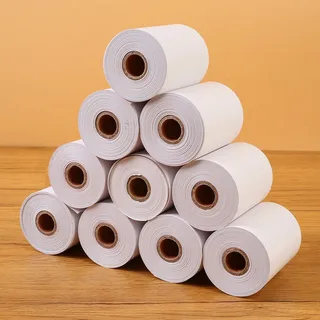
What to Know Before You Buy Thermal Paper in Bulk
Every business running a till, a kitchen printer, or a shipping station eventually faces the same recurring purchase: ordering more thermal paper before the current stock runs out mid-transaction. It's a small line item on paper, but get the sourcing decision wrong — the wrong size, an unreliable supplier, or a bulk order that outlasts the printer it was bought for — and it turns into a surprisingly expensive habit rather than the routine restock it's supposed to be.
Why This Purchase Gets Overlooked Until It's a Problem
Most businesses only think carefully about thermal paper the first time an order goes wrong — a roll that doesn't fit the holder, a delivery that arrives late during a busy week, or a bulk deal that turns out to be poor quality once it's actually loaded into a printer. Treating the sourcing decision seriously from the start avoids all three, and it costs nothing more than a bit of upfront comparison.
The Three Things That Determine Fit
Before comparing price at all, three specifications need to match the printer exactly:
-
Paper width, which has to align with the printer's feed slot
-
Roll diameter, which determines whether it physically fits the holder
-
Core size, since a mismatched core either won't spin or will spin loosely and jam
Where to Actually Source It From
Businesses generally choose between three sourcing routes, and each comes with a different balance of price, reliability, and minimum order size.
|
Sourcing Route |
Typical Price Per Roll |
Best Suited To |
|
Local stationery/retail supplier |
Higher per roll, low minimum order |
Occasional or small-volume buyers |
|
Online bulk retailer |
Mid-range, moderate minimum order |
Regular monthly restocking |
|
Wholesale/direct distributor |
Lowest per roll, high minimum order |
High-volume businesses, multi-location chains |
A single till in a small shop rarely justifies wholesale-level minimum orders, while a multi-branch retail chain going through hundreds of thermal paper rolls a month is usually losing money by not moving to a distributor relationship.
Calculating What You Actually Need
Buying in bulk only saves money if the stock gets used before it degrades or the printer model changes. Working backwards from actual usage avoids both overbuying and running short at an inconvenient time.
-
Estimate average receipts printed per day, then multiply by the roll's typical yield to find rolls-per-week usage
-
Add a small buffer, generally one to two weeks' worth, to cover delivery delays without risking a stockout
-
Reassess the calculation seasonally if the business has predictable busy and slow periods
What Separates a Reliable Supplier From a Risky One
Price is the easiest thing to compare and the least reliable way to judge a supplier on its own. A few better signals to check before committing to a larger order:
-
Whether the supplier states clear specifications (width, length, diameter, core size, coating type) rather than vague generic listings
-
Whether they disclose coating chemistry, ideally confirming BPA-free or phenol-free formulation
-
Whether sample or small trial orders are available before a full bulk commitment
-
How they handle returns or replacements if a batch arrives faulty or mismatched
Comparing the Real Cost, Not Just the Sticker Price
The cheapest price per roll isn't always the cheapest option once real usage is factored in. A shorter roll priced lower per unit often works out more expensive per receipt printed than a longer roll at a higher upfront cost, simply because it needs replacing more often — and each replacement carries a small hidden cost in staff time and printer downtime, even if it's rarely tracked.
A Simple Way to Compare Offers
Dividing total price by total roll length, rather than comparing price per roll directly, gives a fairer read on which offer is genuinely cheaper — especially when comparing suppliers selling different roll lengths side by side.
Common Buying Mistakes Worth Avoiding
A surprising number of reorders happen because of avoidable mistakes rather than genuinely bad suppliers. The most frequent ones include assuming all "standard" rolls are interchangeable across brands without checking core size, committing to a large bulk order before confirming print quality with a sample, and switching suppliers purely on price without checking whether the coating chemistry or width has changed.
Getting the Timing Right
Ordering too early ties up storage space and cash unnecessarily; ordering too late risks a till or printer going down mid-shift. Setting a simple reorder trigger — for instance, restocking once remaining inventory drops to two to three weeks of typical usage — removes the guesswork and keeps the process consistent regardless of who's placing the order that month.
If you want to read more this type of content click here
Frequently Asked Questions
How do I know what size thermal paper to buy for my printer?
Check the printer's specification sheet for width, diameter, and core size, and match all three exactly — even a small mismatch usually means the roll won't fit or feed properly.
Is it cheaper to buy thermal paper wholesale?
Usually yes for high-volume buyers, since wholesale pricing drops per roll significantly at larger order sizes, but it only pays off if the business can realistically use the stock before it degrades.
What should I check before switching thermal paper suppliers?
Confirm the new supplier matches your exact width, diameter, core size, and coating type, and ideally test a small sample order before committing to a full bulk purchase.
How can I compare thermal paper prices fairly across suppliers?
Divide total price by total roll length rather than comparing per-roll pricing directly, since suppliers often sell different roll lengths at different price points.
How much thermal paper should a business keep in stock?
A buffer of one to two weeks beyond typical usage is generally enough to absorb delivery delays without tying up excessive storage space or cash in unused stock.

 English
 Arabic
 Spanish
 Portuguese
 Deutsch
 Turkish
 Dutch
Dutch
 Italiano
 Russian
 Romaian
 Portuguese (Brazil)
 Greek
Greek