


How to Become a Pilot in India: A Student’s Guide
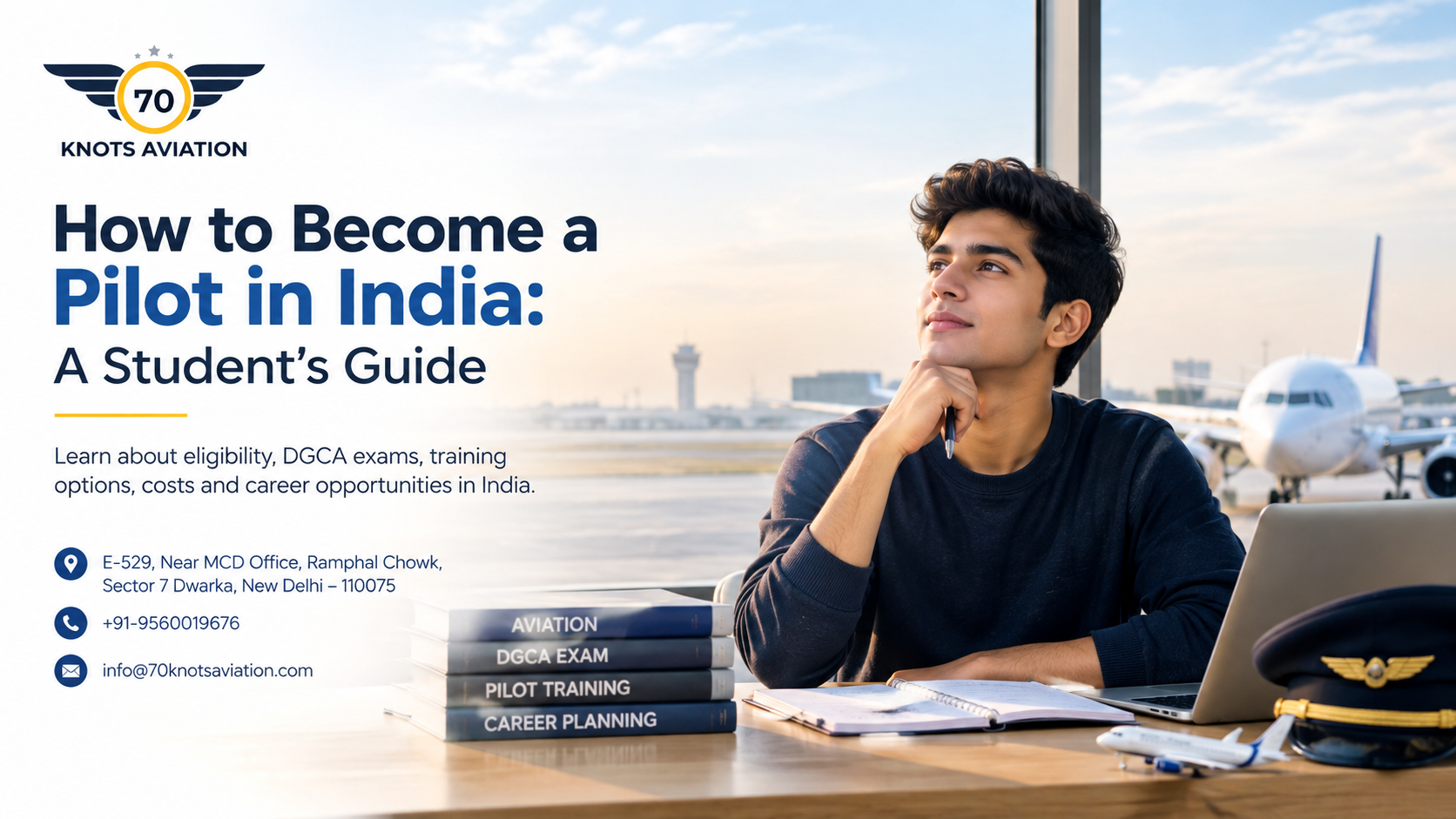
Becoming a pilot is a dream for many students who enjoy aviation, travelling, technology, and the responsibility that comes with flying an aircraft. But turning that dream into a career requires more than simply learning how to fly. Students need to understand eligibility, ground studies, DGCA requirements, examinations, flight training, medical fitness, licensing, and the overall investment involved.
For students wondering how to become a pilot, the first step is to understand the complete journey rather than focusing only on flight training. With the right planning and guidance, students can prepare themselves for each stage and avoid common mistakes during their aviation journey.
Start by Understanding the Pilot Career Path
Before joining a training programme, students should know what they are working towards. In India, students who want to become commercial pilots generally work toward obtaining a Commercial Pilot Licence (CPL) under the regulations of the Directorate General of Civil Aviation (DGCA).
The journey usually involves:
- Meeting the required educational eligibility
- Completing the necessary medical examinations
- Preparing for DGCA-related theoretical examinations
- Completing ground training
- Passing the required examinations
- Completing flight training and flying hours
- Meeting the requirements for the Commercial Pilot Licence
- Completing the necessary licensing and documentation process
Understanding this pathway early can help students choose an appropriate training school and prepare their finances and study schedule accordingly.
Check Your Eligibility Before Joining
Students should first check whether they meet the educational and age requirements applicable to their intended pilot training pathway. For commercial pilot training, students generally need a strong foundation in subjects such as Physics and Mathematics at the required level.
If a student does not have the required subjects or qualifications, there may be recognised routes to fulfil the academic requirements. However, students should verify their individual eligibility with the latest DGCA requirements before making a financial commitment.
Medical fitness is another important part of the process. Aviation medical requirements are different from an ordinary health check-up, so completing the appropriate medical assessment early can prevent major problems later.
Build a Strong Ground-Study Foundation
Flying an aircraft requires practical skills, but pilots also need a solid understanding of aviation theory. Ground classes introduce students to subjects and concepts that form the foundation of their pilot training.
Depending on the licensing pathway, students may study areas such as:
- Air Navigation
- Aviation Meteorology
- Air Regulations
- Aircraft and Engines
- Radio communication
- Flight planning and related aviation concepts
This is also where disciplined study habits become extremely important. Students who treat ground training seriously often find it easier to connect theoretical concepts with what they experience during practical flight training.
Prepare for DGCA Pariksha
One of the important academic stages of pilot training is preparing for DGCA Pariksha. Students need to understand the examination requirements, syllabus, preparation strategy, and applicable procedures rather than simply memorising questions.
A good preparation routine can include regular revision, practice questions, mock tests, and proper understanding of aviation concepts. Students should also keep themselves updated with official examination requirements because aviation regulations and procedures can change.
At 70Knots Aviation, students can seek structured guidance while preparing for the academic side of their pilot training journey, helping them approach their studies with a clearer plan.
Understand Pilot Course Fees in India
One of the first questions students and parents ask is about pilot course fees in india. The total cost is not necessarily the same for every student because it can depend on the training route, flight hours, aircraft type, training organisation, location, examination requirements, accommodation, and other individual expenses.
Instead of choosing a school only because it advertises a lower price, students should understand exactly what is included in the quoted training cost.
When comparing programmes, students should consider:
- Ground school fees
- Flight training charges
- Required flying hours
- Examination-related expenses
- Medical examination costs
- Study material
- Accommodation and living expenses, if applicable
- Additional flying or training requirements
- Licence and administrative expenses
A transparent cost structure makes it easier for students and parents to plan their aviation education without unexpected financial pressure.
Choose the Right Pilot Training School
Choosing a training organisation is one of the most important decisions a student makes. The right school should offer an environment where students can develop both theoretical knowledge and practical aviation skills.
Students searching for the Best Pilot training school in delhi should look beyond advertisements and compare factors such as training support, instructor guidance, academic preparation, student support, transparency, and the overall learning environment.
Location can also matter, particularly for students who prefer to attend regular ground classes while continuing their academic preparation.
Why Planning Matters in Pilot Training
Pilot training requires consistent effort. A student may be excited about sitting in an aircraft for the first time, but there are many stages before and after that experience.
For example, imagine a student named Arjun who has always wanted to become a commercial pilot. He initially focuses only on flight training. After researching the career properly, he realises that he also needs to prepare for examinations, complete medical requirements, understand licensing procedures, and plan his finances.
This kind of planning can make a major difference.
Rather than asking only, “When can I start flying?”, students should ask:
“What do I need to complete at every stage to reach my licence?”
That mindset helps turn a dream into a realistic career plan.
Flight Training Is More Than Just Flying
Once the required academic and procedural stages are addressed, students move deeper into practical flight training. This is where theoretical knowledge begins to connect with real aviation operations.
Students learn important skills such as aircraft handling, communication, navigation, take-offs, landings, emergency procedures, decision-making, and cockpit discipline.
Flight training also teaches students that aviation is built around safety and precision. A pilot cannot rely on confidence alone. Every action needs to be based on training, procedures, situational awareness, and sound judgement.
Develop the Habits of a Professional Pilot
Students should start developing professional habits from the beginning of their training.
Being punctual, maintaining proper records, revising regularly, following procedures, communicating clearly, and learning from instructors are all important parts of becoming a responsible pilot.
Aviation also requires students to accept that mistakes can become learning opportunities. Instead of hiding weaknesses, students should discuss them with their instructors and work systematically to improve.
This attitude becomes valuable throughout a pilot's career.
How 70Knots Aviation Can Support Aspiring Students
For students beginning their aviation journey in Delhi, 70Knots Aviation provides a training and guidance environment focused on helping aspiring pilots understand the different stages involved in pilot education.
Students can visit the 70Knots Aviation location at E-529, Near MCD Office, Ramphal Chowk, Sector 7 Dwarka, New Delhi – 110075 to discuss their training plans and understand the pathway that fits their goals.
For enquiries, students can contact +91-9560019676 or email info@70knotsaviation.com.
The objective should not simply be to join a course quickly. Students should first understand what they are signing up for, what qualifications they need, how the training is structured, and how they can prepare themselves for a professional aviation career.
Questions Students Commonly Ask Before Pilot Training
1. What is the first step to becoming a pilot in India?
The first step is to understand the eligibility requirements and determine whether you meet the educational and medical criteria for your intended pilot licence. After that, students can plan their ground training, examinations, and flight training pathway.
2. How much do pilot course fees in India usually cost?
The overall cost can vary significantly depending on the training programme, flying hours, training organisation, location, and additional expenses. Students should request a detailed fee structure and understand what is included before selecting a programme.
3. Is DGCA Pariksha difficult for students?
The difficulty depends largely on the student's preparation and understanding of aviation subjects. Regular study, conceptual learning, revision, and mock-test practice can make the examination process more manageable.
4. How should I choose the best pilot training school in Delhi?
Students should compare training support, instructors, academic preparation, facilities, transparency, student feedback, and the overall training structure. Cost should be considered, but it should not be the only deciding factor.
5. Can I become a pilot immediately after school?
Students can begin their pilot training journey after completing the required educational qualifications and meeting the applicable age and medical requirements. However, becoming a professional pilot involves multiple stages, including theoretical examinations, practical flight training, and licensing requirements.
Your Pilot Journey Starts With the Right Information
Becoming a pilot is a long-term commitment, but students who understand the process early can approach their training with greater confidence. From eligibility and medical requirements to ground studies, DGCA Pariksha, flight training, and financial planning, every stage deserves proper attention.
The most important thing is to avoid making the decision based solely on advertisements or course prices. Research the training pathway, ask questions, compare your options, and choose an environment where you can receive proper guidance throughout your journey.
For aspiring pilots in Delhi, 70Knots Aviation is located at E-529, Near MCD Office, Ramphal Chowk, Sector 7 Dwarka, New Delhi – 110075. Students can reach the team at +91-9560019676 or info@70knotsaviation.com to discuss their aviation education plans.

 English
 Arabic
 French
 Spanish
 Portuguese
 Deutsch
 Turkish
 Italiano
 Russian
 Romaian
 Portuguese (Brazil)
 Greek
Greek