


Hair Loss Treatment in Dubai After Repeated Heat Styling
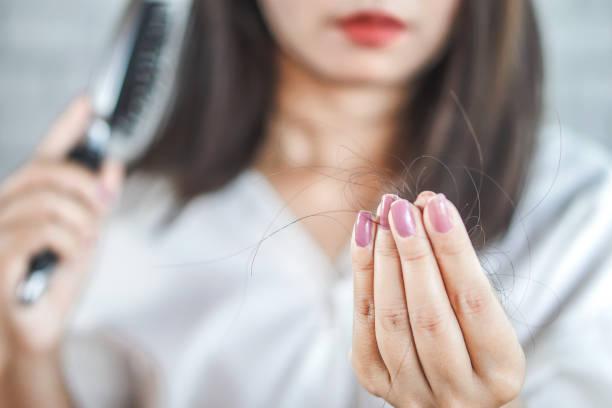
Repeated exposure to high heat can make hair look thinner without necessarily reducing the number of scalp follicles. Hair Loss Treatment in Dubai becomes relevant when styling-related damage is accompanied by persistent density loss, progressive scalp visibility, or changes at the follicular level that cannot be explained by shaft breakage alone.
When Styling Damage Starts Looking Like Hair Loss
Straighteners, curling irons, heated brushes, blow dryers, and repeated salon treatments can alter the physical structure of the hair shaft.
The result may be split ends, rough texture, shortened strands, reduced shine, and increased breakage. When enough strands break, the overall hairstyle can appear substantially less dense.
This creates an important clinical distinction.
Damage to the visible shaft occurs above the scalp. Follicular hair loss begins within the scalp.
The two problems can exist simultaneously, but they require different approaches.
Someone may therefore believe that a hair-restoration procedure is necessary when the primary issue is severe breakage. Another person may blame styling because the hair feels fragile while an underlying follicular thinning process is progressing at the same time.
Hair Loss Treatment in Dubai Requires Separating Breakage From Follicular Loss
The location of the missing hair can provide an initial clue.
With significant shaft breakage, the scalp may still contain numerous active follicles, but the hairs emerging from them may be different lengths because sections of the shafts have fractured.
With follicular thinning, the clinician is more concerned with changes in the number, distribution, and calibre of hairs being produced.
| Pattern noticed by the patient | More consistent with | Clinical focus |
|---|---|---|
| Many short, uneven strands | Shaft breakage | Hair-fibre integrity |
| Split or frayed ends | Mechanical or thermal damage | Styling and hair-care history |
| Hairline becoming progressively less dense | Follicular change may be present | Hairline and follicle assessment |
| Hair feels thinner from the roots | Possible reduced calibre | Follicular evaluation |
| Scalp visible mainly where hair breaks | Coverage loss from shaft damage | Breakage pattern |
| Gradual reduction across defined scalp regions | Possible follicular thinning | Density and distribution |
| New growth appears but repeatedly snaps | Ongoing shaft damage | Breakage control |
This is why the phrase “my hair is thinning” is not enough to determine treatment.
The clinician needs to establish where the loss of apparent volume is occurring.
What Repeated Heat Does to the Hair Shaft
The hair shaft is made primarily of keratinized structural material arranged in layers.
High temperatures can disrupt the protective outer cuticle and weaken the internal structure of the fibre. Repeated exposure can make the shaft increasingly vulnerable to friction and fracture.
The risk is influenced by more than the temperature setting alone.
Frequency, duration, moisture content, chemical processing, mechanical tension, and whether heat is repeatedly applied to the same sections all matter.
A person who straightens hair once occasionally has a very different exposure pattern from someone using a heated tool every morning.
The cumulative effect is often more important than a single styling session.
Why Breakage Can Reduce Apparent Density
A full head of hair does not need to lose follicles to look less full.
Consider what happens when many long shafts repeatedly break at different points. The hair may lose the visual weight that previously created volume through the mid-lengths and ends.
The ponytail becomes narrower.
The ends look sparse.
Short broken pieces become more visible around the face and crown.
Hair may become difficult to style into the same shape.
These changes can be dramatic even though the follicular density at the scalp has changed very little.
That is why a hair-restoration consultation should examine both the scalp and the physical condition of the fibre.
Hair Loss Treatment in Dubai for Patients With Extensive Heat Exposure
A patient with significant styling damage may initially benefit from reducing the factors responsible for ongoing breakage.
That can involve changing the frequency of heated styling, lowering unnecessary thermal exposure, avoiding repeated passes over the same section, and allowing previously damaged lengths to grow out and be trimmed progressively.
However, hair-care modification cannot restore a follicle that is undergoing a separate biological thinning process.
This is where professional assessment becomes important.
If the scalp shows stable follicular coverage while the lengths are severely damaged, treatment planning may remain focused on hair preservation and breakage reduction.
If the roots themselves are becoming progressively finer or density is declining independently of the damaged lengths, the clinical pathway changes.
The Root-to-Tip Examination
A useful assessment examines the hair from the scalp outward rather than focusing only on the ends.
At the scalp, the clinician can assess density, follicular openings, distribution, and hair calibre.
Along the shaft, attention can shift toward:
- Uneven strand lengths
- Split ends
- Fraying
- Rough or brittle texture
- Broken shafts
- Changes in diameter
- Evidence of repeated chemical or thermal processing
This root-to-tip approach prevents a common diagnostic error: interpreting every visible reduction in volume as follicular hair loss.
It also identifies patients who may have both problems.
When Hair Styling Is Not the Whole Explanation
A patient may have used heat tools for years without experiencing significant density loss.
If thinning begins despite no major change in styling habits, it is important not to assume that heat is responsible simply because damaged hair is visible.
Other biological or medical factors may contribute to hair loss.
The distribution of thinning can provide useful information. Progressive changes at the crown, frontal region, parting, or other characteristic areas may warrant evaluation for a follicular disorder rather than being attributed entirely to styling.
The timeline also matters.
If the hair has been heat-styled consistently for several years but scalp density only recently began changing, another factor may be involved.
Why Cutting Damaged Hair Does Not Treat Follicular Thinning
Trimming damaged ends can improve the appearance and reduce the amount of visibly fractured fibre.
It does not change the biology of the follicle beneath the scalp.
This distinction sounds straightforward but is frequently misunderstood.
Hair grows from the follicle, while the visible shaft extending beyond the scalp is non-living keratinized tissue. Once a section of shaft has been severely damaged, treatment products cannot restore its original structural integrity completely.
At the same time, a haircut cannot stimulate a miniaturized follicle.
Patients therefore need to understand whether their priority is improving the quality of existing hair or addressing a reduction in follicular output.
A Dubai-Specific Styling Challenge
Hair styling routines in Dubai can be influenced by climate, social schedules, outdoor activities, swimming, humidity changes, and the transition between hot outdoor environments and heavily air-conditioned interiors.
Many patients also place a high value on polished hair for professional and social settings, which can encourage frequent blow-drying, straightening, or heat-based styling.
The answer is not to eliminate styling altogether.
Instead, the objective is to understand whether the styling routine is exceeding the hair's ability to withstand repeated mechanical and thermal stress.
A clinician can then help distinguish cosmetic damage from a scalp-level hair-loss process.
When Hair Loss Treatment in Dubai Should Enter the Discussion
A hair-restoration consultation is particularly reasonable when the patient notices changes that persist after reducing heat exposure.
Examples include:
- The scalp is becoming increasingly visible.
- Hair at the roots is noticeably finer.
- Density is declining despite improved styling habits.
- The hairline or crown is changing independently of breakage.
- The ponytail continues to lose volume.
- New hairs appear progressively thinner.
- Hair loss occurs in areas where shaft breakage does not explain the pattern.
These findings do not automatically indicate that a procedure is necessary.
They indicate that the problem deserves a more precise assessment.
Treatment Depends on the Follicular Reserve
When genuine follicular thinning is identified, the treatment plan depends on how much productive follicular activity remains.
Non-surgical approaches such as PRP may be considered for suitable patients with viable follicles and appropriate degrees of thinning.
Regenerative options, including exosome-based protocols, stem-cell-based treatments, and other clinic-specific approaches, may also form part of an individualized plan when clinically appropriate.
Hair transplantation is different because it involves moving viable donor follicles into areas requiring restoration. It is therefore not a treatment for damaged hair shafts.
The patient's follicular reserve, donor availability, distribution of thinning, and long-term expectations all influence whether transplantation is appropriate.
What to Change Before a Hair Assessment
Patients experiencing extensive heat damage can make the clinical picture clearer by documenting their styling routine.
Record how often you use:
- Flat irons
- Curling tools
- Heated brushes
- Blow dryers
- Chemical straightening
- Keratin treatments
- Hair colouring or bleaching
Also note whether heat is applied to wet or partially dried hair and whether the same sections receive repeated passes.
Most importantly, compare the roots with the lengths.
If the roots remain relatively dense while the lengths are progressively shorter and fractured, shaft damage may be dominating the appearance.
If both the roots and lengths are changing, a broader assessment is appropriate.
The Long-Term Approach to Heat-Related Hair Problems
Successful management is rarely about one product.
The immediate goal is to stop creating new structural damage while preserving as much healthy length as possible. The longer-term objective is to determine whether the follicles themselves remain stable.
This distinction helps prevent unnecessary procedures while also avoiding delayed treatment when genuine follicular thinning is present.
Patients should also be realistic about damaged hair. Severely compromised sections cannot simply be returned to their original condition overnight; the healthier approach is usually to protect new growth while progressively removing damaged lengths.
The Strategic Investment
Repeated heat styling can make hair appear dramatically thinner, but visible breakage and follicular hair loss are not the same problem. Understanding that distinction can prevent a patient from treating the hair shaft when the scalp needs attention—or overlooking genuine follicular thinning because the styling routine appears to explain everything.
For patients who need a more detailed assessment of persistent thinning, Tajmeels Clinic offers individualized hair-restoration planning in Dubai based on the condition of the scalp, follicles, hair density, and long-term restoration objectives.

 English
 Arabic
 French
 Portuguese
 Deutsch
 Turkish
 Dutch
Dutch
 Italiano
 Russian
 Romaian
 Portuguese (Brazil)
 Greek
Greek