When comparing the budget for a 1 Dirham Hair Transplant in Dubai, the hairline and crown should not be treated as interchangeable treatment zones. Each requires a different graft strategy because hair direction, density, visibility, scalp area, and the amount of donor hair needed can vary substantially.
A 1 AED-per-graft pricing model can make the arithmetic straightforward, but deciding where those grafts should go requires clinical planning. The lowest numerical graft count is not necessarily the most effective use of a limited donor supply.
Why Hairline and Crown Require Different Planning
The frontal hairline and crown serve different cosmetic functions. The hairline frames the face and is usually one of the first areas noticed when someone looks at you, while the crown sits farther back and has a naturally changing growth pattern.
Hairline restoration is about framing
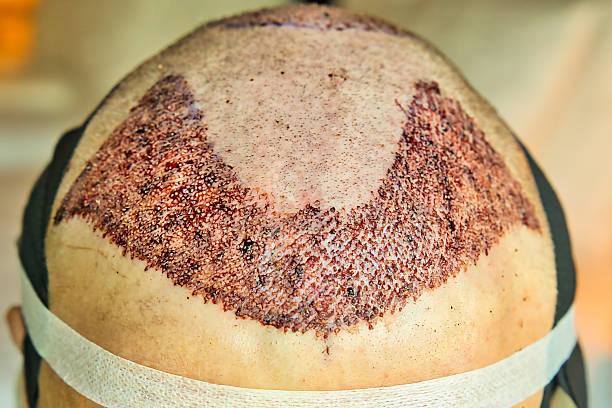
A successful hairline is not simply a straight row of transplanted follicles. The leading edge generally requires careful placement of finer grafts, followed by progressively stronger grafts behind it.
The surgeon must consider:
- Facial proportions
- Existing hairline position
- Temple recession
- Hair caliber
- Graft characteristics
- Direction and angle of growth
- Future hair-loss progression
- Available donor supply
Creating excessive density at the front can also consume grafts that may be needed elsewhere later.
Crown restoration is about coverage and direction
The crown presents a different technical challenge. Hair normally rotates around a whorl, meaning grafts cannot simply be implanted in parallel rows.
The surgeon must account for:
- Crown diameter
- Existing native hairs
- Whorl direction
- Hair shaft thickness
- Angle of emergence
- Surrounding density
- Degree of scalp visibility
A relatively large number of grafts may be required before a thinning crown appears substantially fuller.
Why the Same Graft Budget Can Produce Different Results
One of the most important budgeting concepts is that graft numbers do not translate into identical visual coverage across different parts of the scalp.
For example, 1,000 carefully selected grafts placed along a moderately recessed frontal zone can produce a noticeable change in facial framing. The same 1,000 grafts distributed across a broad crown may produce a more modest reduction in visible scalp.
This does not mean the crown is less important. It means the relationship between graft quantity and visible coverage differs according to anatomy.
Hairline vs Crown Budget Comparison
| Planning factor |
Hairline |
Crown |
| Main objective |
Facial framing |
Reduce visible scalp |
| Growth pattern |
Usually directional |
Circular/whorl-based |
| Leading-edge grafts |
Often finer grafts |
Not normally treated as a straight edge |
| Area characteristics |
More defined frontal zone |
Can expand substantially |
| Density requirement |
Graduated density |
Coverage and visual blending |
| Cosmetic visibility |
Usually very high |
Depends on hairstyle and lighting |
| Graft efficiency |
Can be high in a focused area |
May require more grafts for broad coverage |
| Main planning challenge |
Natural design |
Whorl and coverage |
| Donor consideration |
Must preserve future options |
Must balance coverage against area size |
How a 1 AED-per-Graft Model Changes the Calculation
Under a 1 AED-per-graft promotional model, the basic calculation is simple:
Estimated graft cost = number of grafts × 1 AED
So, purely as an arithmetic example:
- 800 grafts = 800 AED
- 1,200 grafts = 1,200 AED
- 1,800 grafts = 1,800 AED
- 2,500 grafts = 2,500 AED
However, these examples should not be interpreted as fixed treatment quotations. The clinically appropriate graft count must be established after examining the recipient area and donor supply.
The number of grafts required can also vary considerably between patients with apparently similar hair-loss patterns.
When the Hairline May Take Priority
A frontal-first strategy can make sense when the hairline is significantly recessed while the crown still retains reasonable native coverage.
Facial framing can create a large visual improvement
The front of the scalp is closely connected to how the face is perceived. Restoring an excessively recessed hairline can change the apparent proportions of the forehead and facial frame without requiring treatment of every thinning area.
Preserving donor hair may be important
A patient with limited donor capacity may not be able to restore every affected area at high density.
In such cases, allocating grafts strategically to the frontal region can sometimes provide a more noticeable cosmetic improvement than spreading the same graft count thinly across the entire scalp.
When Crown Treatment May Deserve More Grafts
Crown restoration can become more demanding when the thinning area is broad or the central whorl has become highly visible.
Crown size matters
A small vertex thinning zone and a large diffuse crown are not equivalent treatment areas.
As the diameter of the affected region increases, more grafts may be necessary to create meaningful visual coverage. Existing native hairs can also influence how many additional grafts are appropriate.
Hair characteristics influence coverage
Thicker hair shafts can provide more visual coverage per follicle than very fine hair. Curl or wave can also influence how much scalp is visible.
This is why a graft estimate should not be based only on measuring the bald or thinning area.
How Donor Limitations Affect the Budget
The donor area is a finite resource. Follicles removed from the donor region cannot simply be replaced with additional native grafts later.
A sensible plan therefore considers both the current cosmetic objective and possible future hair loss.
Front and crown together
A patient experiencing both frontal recession and crown thinning may need a staged strategy.
The options can include:
- Prioritizing the frontal region
- Treating the crown first when clinically appropriate
- Dividing grafts between both areas
- Treating the most visible area initially
- Reserving donor grafts for future progression
There is no universal percentage that should automatically be assigned to the hairline or crown.
Why Splitting the Budget Evenly Can Be a Mistake
It may seem logical to divide a fixed graft budget equally between the front and crown. Clinically, that approach can be inefficient.
Suppose a patient has a strongly recessed hairline but only mild crown thinning. An equal allocation could leave the hairline underdeveloped while using grafts on an area that may not yet require substantial restoration.
The opposite can also happen. A patient with a stable frontal zone and extensive crown loss may benefit from concentrating more grafts toward the vertex.
The allocation should follow the patient's anatomy rather than an arbitrary 50/50 formula.
Planning Hairline Density Without Overspending
Hairline density needs to be considered in relation to the surrounding native hair.
The leading edge should look natural
The frontmost portion of a transplanted hairline is generally designed to avoid an artificial wall of uniform density. Fine grafts and irregular positioning can help create a softer transition.
Behind this transition, density can progressively increase.
Density has a donor cost
Increasing density requires additional grafts. But maximum density is not always the best objective.
The surgeon must balance:
- Desired visual density
- Existing native hair
- Donor availability
- Future hair loss
- Hair caliber
- Patient expectations
A conservative but well-designed hairline can sometimes produce a more natural long-term result than an aggressively dense design.
Planning Crown Density Within a Fixed Budget
Crown restoration requires another type of compromise.
Existing hair can influence the graft requirement
If native hairs remain throughout the crown, transplanted follicles may be used to increase overall density rather than completely reconstructing an empty surface.
If the area is substantially bald, the graft requirement may increase.
The whorl must remain anatomically believable
The crown should not be treated as a simple circular patch.
Grafts need to follow the changing direction around the natural whorl. Incorrect orientation can make transplanted hair appear unnatural even when the graft count is technically sufficient.
Example Budget Scenarios
Consider three hypothetical patients using a 1 AED-per-graft calculation.
| Patient situation |
Possible planning priority |
Example graft allocation |
| Receding hairline, minimal crown thinning |
Hairline |
1,200 grafts |
| Moderate frontal and crown thinning |
Balanced strategy |
1,800 grafts |
| Stable hairline, extensive crown thinning |
Crown |
2,000 grafts |
These are illustrative examples rather than recommended graft counts. Actual planning depends on examination, donor density, hair characteristics, scalp dimensions, and the expected progression of hair loss.
For more detailed hair transplant planning in Dubai, the assessment should connect the graft estimate to the patient's actual donor capacity and recipient-area measurements rather than relying on a price calculation alone.
Dubai-Specific Recovery Considerations
Budget planning should also account for practical recovery requirements.
Dubai's heat and strong sunlight can make postoperative scalp protection particularly important. Patients may need to plan time away from intense outdoor exposure and follow the clinic's instructions regarding washing, physical activity, headwear, and sun protection.
Air-conditioned environments can also contribute to scalp dryness or discomfort for some patients during recovery. These practical factors do not necessarily change the graft price, but they can influence how a patient schedules the procedure around work and daily activities.
Questions About Hairline vs Crown Budget
Is the hairline always more important than the crown?
No. Priority depends on the patient's pattern of hair loss, facial framing, crown visibility, donor capacity, and long-term restoration goals.
Does the crown always need more grafts?
Not always. A large crown may require more grafts, but the required number depends on its dimensions, existing hair, density, and hair characteristics.
Can I divide my grafts equally between the hairline and crown?
You can, but an equal split is not automatically clinically appropriate. Graft allocation should reflect where they can provide the greatest useful coverage.
Does 1 AED per graft mean the total price is fixed?
No. The arithmetic may be based on graft count, but the appropriate number of grafts must first be established. Any additional treatment or service terms should also be confirmed with the clinic.
Which area should be treated first when donor supply is limited?
The answer depends on the individual pattern. In many cases, the frontal region receives strong consideration because it has a major effect on facial framing, but crown-first or staged treatment can be appropriate in selected patients.
A Better Way to Think About the Budget
The most useful question is not simply, “How many grafts can I afford?”
A better question is, “Where will each available graft create the most meaningful long-term improvement?”
For the hairline, that may mean prioritizing a natural transition and appropriate facial framing. For the crown, it may mean using grafts efficiently around the whorl while working with existing native hair.
A carefully planned 1 Dirham Hair Transplant in Dubai should therefore combine price transparency with donor preservation, anatomical design, graft quality, and long-term planning. The goal is not to place the maximum possible number of grafts, but to use the available donor resource intelligently for the patient's pattern of hair loss.
For an individualized assessment, Tajmeels Clinic can evaluate the donor area, recipient zones, hair characteristics, and restoration priorities before determining an appropriate graft strategy.




 English
 Arabic
 French
 Spanish
 Portuguese
 Deutsch
 Turkish
 Dutch
Dutch
 Italiano
 Romaian
 Portuguese (Brazil)
 Greek
Greek