


Luggage Repair Dubai: 9 Suitcase Problems You Should Fix Before Traveling
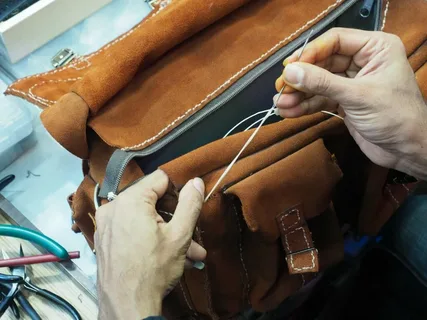
A suitcase can look usable even when several parts are already showing signs of wear. A loose handle, damaged wheel, broken zipper, or cracked corner may not seem serious at home, but these problems can become frustrating during a trip. If you are looking for luggage repair Dubai, checking your suitcase before traveling can help you avoid last-minute problems.
You do not always need to replace a suitcase because of one damaged component. In many cases, the problem may be limited to a part that can be repaired or replaced.
1. Check the Wheels First
Suitcase wheels receive a lot of stress during travel.
Rolling luggage across airport floors, pavements, hotel entrances, and uneven surfaces can gradually wear down the wheels.
Look for:
-
Cracks
-
Uneven movement
-
Loose wheels
-
Excessive noise
-
Wheels that no longer rotate properly
Try rolling the suitcase on a flat surface before your trip. If it pulls to one side or one wheel repeatedly gets stuck, it is worth having it checked.
A wheel problem that seems minor at home can become much more annoying when you are carrying the suitcase through a busy airport.
2. Test the Telescopic Handle
The extendable handle is another component that can fail with repeated use.
Pull it up and push it back down several times. It should move smoothly and lock into position properly.
If the handle feels loose, gets stuck, or refuses to stay extended, do not rely on it for your next trip.
A damaged handle can make a suitcase difficult to move, particularly when the bag is fully packed.
3. Inspect the Zipper
Zippers are often overlooked until they stop working.
Check whether the zipper moves smoothly around the entire suitcase. Look for missing teeth, damaged stitching, or a slider that repeatedly separates the zipper.
Do not pull aggressively if the zipper gets stuck.
Excessive force can damage the surrounding fabric and turn a small zipper problem into a larger repair.
For bags with valuable contents, a properly functioning closure is especially important.
4. Look at the Corners
Suitcase corners often receive impacts during transportation.
Hard-shell luggage may develop cracks or visible damage around corners, while soft luggage can show worn fabric or damaged stitching.
Inspect all four corners before packing.
If the damage affects the structure of the suitcase, it is better to have it assessed rather than assuming it will remain stable throughout the trip.
5. Check the Main Seams
Soft luggage depends heavily on stitching.
Repeated loading and unloading can place pressure on seams, handles, pockets, and attachment points.
Look for loose threads, separating seams, or areas where the fabric appears unusually weak.
A small opening can become larger when the suitcase is packed tightly.
Repairing a weak seam before traveling may help prevent the bag from opening or tearing further.
6. Test the Locks
If your suitcase has a built-in combination lock or another locking mechanism, test it before leaving home.
Make sure the lock opens and closes normally.
Do not wait until you are at the airport to discover that the mechanism is stuck.
If the lock is damaged, avoid forcing it with excessive pressure. A repair professional can determine whether the mechanism can be adjusted or needs replacement.
7. Inspect the Interior
Luggage problems are not always visible from the outside.
Open the suitcase and check the lining, straps, pockets, and internal zippers.
Loose straps may affect how your belongings stay in place, while damaged interior material can continue tearing when the suitcase is used.
This is particularly useful when preparing older luggage for another trip.
8. Check the Wheels After Cleaning
Cleaning your suitcase can reveal problems that were previously hidden by dirt.
After removing dirt from the wheel area, rotate each wheel and check whether it moves freely.
Small objects can sometimes become lodged around moving parts.
If cleaning does not solve the problem and the wheel remains stiff or unstable, professional attention may be necessary.
For travelers who need a broader inspection of their luggage, a luggage repair service in Dubai can help identify which components need attention.
9. Do Not Ignore a Damaged Handle or Attachment Point
Handles are connected to the suitcase through mounting points that experience repeated pulling forces.
If you notice cracks, loose screws, damaged fittings, or movement around the attachment area, have the problem checked.
Simply tightening one visible screw may not solve the underlying issue.
The attachment point itself may be worn or damaged.
Repair or Replace the Suitcase?
The decision depends on the condition of the bag.
If only one component is damaged, repairing or replacing that part may make more sense than buying a completely new suitcase.
For example, a suitcase with good wheels, a strong body, and a working zipper may still be worth keeping if its handle needs attention.
On the other hand, extensive structural damage may make replacement more practical.
Consider the suitcase's age, construction, condition, and repair cost before making a decision.
What to Do Before a Flight
Do not wait until the night before traveling to inspect your luggage.
Ideally, check your suitcase several days before departure.
This gives you time to arrange repairs if you find a problem.
A simple pre-trip check should include the wheels, handle, zipper, locks, seams, corners, and interior.
For a suitcase that has already experienced several trips, a professional inspection can also help identify hidden wear.
Final Thoughts
Luggage problems are easier to deal with before a journey than during one.
Loose wheels, damaged handles, broken zippers, weak seams, and cracked corners can all affect how comfortably you travel.
If you are considering luggage repair Dubai, inspect your suitcase early and determine whether the damaged component can be repaired or replaced.
Taking care of a small problem before your flight can help you avoid unnecessary stress and keep your luggage usable for future trips.
And if you are also preparing outdoor equipment at home, you can separately arrange trampoline assembly service when professional setup is needed.

 English
 Arabic
 French
 Spanish
 Portuguese
 Deutsch
 Turkish
 Dutch
Dutch
 Russian
 Romaian
 Portuguese (Brazil)
 Greek
Greek