


CSRF Protection: Understanding and Preventing Cross-Site Request Forgery
Web applications handle a large amount of sensitive information, including user accounts, personal details, payment information, and private messages. Because of this, web security is an essential part of modern application development. One security threat that developers need to understand is Cross-Site Request Forgery, commonly known as CSRF.
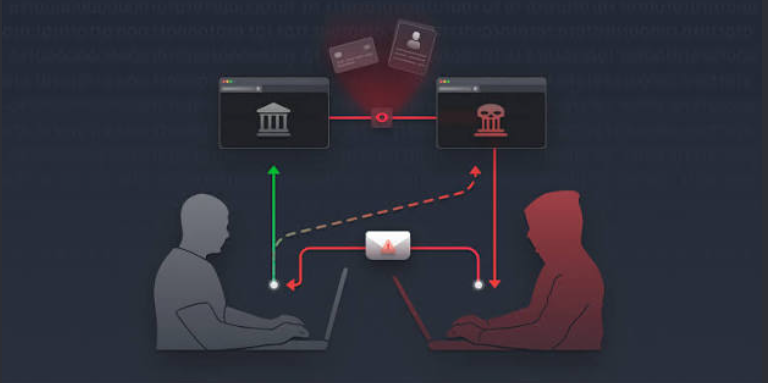
CSRF is an attack in which an attacker tricks a user's browser into sending an unwanted request to a website where the user is already authenticated. If the application does not properly verify that the request was intentionally made by the user, the attacker may be able to perform actions on the user's behalf.
CSRF protection refers to the techniques used to prevent these unauthorized requests and ensure that important actions are genuinely initiated by the legitimate user.
What Is CSRF?
Cross-Site Request Forgery occurs when a malicious website or other source causes a victim's browser to send a request to another website. The target website may automatically include the user's authentication information, such as session cookies, with that request.
For example, imagine that a user is logged into an online account. The user then visits a malicious website in another browser tab. That website could attempt to cause the browser to submit a request to the account service.
If the target application only checks whether the request contains a valid session cookie, it may assume that the request came directly from the user. The application could therefore perform an action without the user's knowledge.
The key problem is that authentication alone does not always prove that a request was intentionally initiated by the user.
How Does a CSRF Attack Work?
A typical CSRF attack involves three main components: the victim, the trusted website, and the malicious website.
First, the victim logs into a trusted web application. The application creates an authenticated session, and the browser stores the necessary authentication information.
Next, the victim visits another website controlled by an attacker. The malicious website attempts to make the victim's browser send a request to the trusted application.
Finally, the trusted application receives the request. If it does not have an effective CSRF defense, it may process the request because the browser automatically included the user's authentication credentials.
The attacker does not necessarily need to know the user's password or session information. Instead, the attacker attempts to take advantage of the browser's existing authenticated state.
Why CSRF Protection Is Important
CSRF protection is particularly important for applications that allow users to perform actions that change data or account settings.
Without adequate protection, an attacker could potentially cause unauthorized actions such as changing account information, modifying settings, submitting forms, or performing other operations available to the authenticated user.
The seriousness of a CSRF vulnerability depends on what the affected application allows users to do. An application that only displays public information may have relatively little CSRF risk, while an application that manages sensitive accounts may face much greater consequences.
For this reason, developers should carefully protect actions that modify data or otherwise have meaningful effects.
CSRF Tokens
One of the most common defenses against CSRF is the use of a CSRF token.
A CSRF token is a unique, unpredictable value associated with the user's session or request context. The server expects the token to be included with requests that perform protected actions.
The general process works like this:
-
The server generates a CSRF token.
-
The token is provided to the legitimate application interface.
-
The browser submits the token when the user performs a protected action.
-
The server verifies that the submitted token is valid.
-
If the token is missing or incorrect, the server rejects the request.
The important security property is that an attacker's external website should not be able to obtain the legitimate token needed to create a valid request.
CSRF tokens are especially useful for applications that use cookie-based authentication.
SameSite Cookies
Another important CSRF defense involves the SameSite attribute of cookies.
SameSite controls when browsers send cookies with requests originating from other sites. By restricting cross-site cookie transmission, applications can reduce the opportunity for attackers to abuse a user's authenticated session.
Cookies can generally be configured with different SameSite behaviors depending on the application's requirements.
Using an appropriate SameSite policy can provide an important layer of protection. However, cookie configuration should be considered as part of a broader security strategy rather than treated as the only defense for every application.
Checking the Origin and Referer
Applications can also examine request headers such as Origin and, where appropriate, Referer to determine where a request originated.
For sensitive operations, a server may verify that a request originated from an expected website or application.
For example, if a legitimate application is hosted on a particular trusted origin, the server can reject requests whose origin does not match the expected value.
Header-based validation can provide another useful defense, but developers should carefully account for legitimate requests and deployment configurations so that security checks do not accidentally block normal application behavior.
Protecting State-Changing Requests
CSRF protection is most important for requests that change server-side state. These include operations such as updating account information, changing preferences, creating records, or performing administrative actions.
Applications should distinguish between requests that simply retrieve information and requests that cause changes.
A good security design avoids using methods intended for retrieving information to perform important state-changing operations. Instead, state-changing operations should use appropriate request methods and receive suitable CSRF protections.
Framework-Based CSRF Protection
Many modern web development frameworks provide built-in mechanisms for CSRF protection. These mechanisms can automatically generate tokens, include them in forms, and validate them when requests reach the server.
Using established framework functionality can reduce the chance of implementation mistakes. However, developers still need to understand how the protection works.
Simply enabling a security feature without understanding its configuration can lead to unexpected vulnerabilities or broken functionality. Developers should ensure that all relevant endpoints are protected and that special application interfaces, such as APIs or asynchronous requests, are handled correctly.
CSRF and APIs
CSRF protection requirements can differ depending on how an application handles authentication.
For example, applications that authenticate users through cookies need to consider the fact that browsers may automatically attach those cookies to requests.
Some APIs instead use credentials that are explicitly included by application code rather than automatically supplied by the browser. In such architectures, traditional CSRF risks may be different, but other security concerns still need to be addressed.
Developers should therefore consider the application's complete authentication architecture rather than applying one security technique universally.
Common CSRF Protection Mistakes
Several mistakes can weaken CSRF defenses.
One common mistake is using predictable tokens. A CSRF token must provide sufficient unpredictability so that an attacker cannot reasonably guess it.
Another mistake is protecting some sensitive endpoints while leaving others exposed. Security controls should be applied consistently to relevant state-changing operations.
Developers should also avoid assuming that checking a user's login status is sufficient. A valid session confirms authentication, but it does not necessarily confirm that the request was intentionally initiated by the user.
Finally, CSRF protection should be tested regularly. Changes to application architecture, authentication, routing, and frontend code can unintentionally affect existing security controls.
Best Practices for CSRF Protection
A strong CSRF defense should combine appropriate techniques rather than relying on a single mechanism.
Important practices include:
-
Use framework-provided CSRF protection when available.
-
Generate strong, unpredictable CSRF tokens.
-
Validate tokens on protected state-changing requests.
-
Configure authentication cookies appropriately.
-
Consider SameSite cookie protections.
-
Validate request origins when appropriate.
-
Avoid using state-changing actions through inappropriate request methods.
-
Protect administrative and sensitive operations carefully.
-
Test CSRF defenses during security reviews.
-
Keep authentication and authorization controls separate from CSRF protection.
Conclusion
CSRF is a web security vulnerability that takes advantage of the trust a website places in a user's authenticated browser. By causing a browser to send unauthorized requests, an attacker may be able to perform actions that the user never intended to initiate.
Fortunately, effective CSRF protection can significantly reduce this risk. CSRF tokens, appropriate cookie settings, origin validation, secure request design, and framework-level security features can work together to protect applications.
For developers, understanding CSRF is an important part of building secure web applications. Security should be considered throughout the development process rather than added only after an application is complete. With thoughtful design and consistent security practices, organizations can make it much harder for attackers to abuse authenticated user sessions.

 English
 Arabic
 French
 Spanish
 Portuguese
 Turkish
 Dutch
Dutch
 Italiano
 Russian
 Romaian
 Portuguese (Brazil)
 Greek
Greek