


Can You Get a Tarmac Driveway in a Colour Other Than Black?
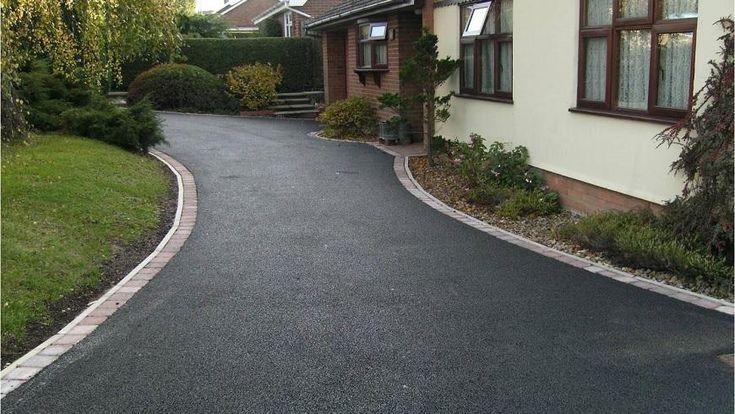
What is tarmac made of?
Tarmac is graded stone aggregate bound together with bitumen. The aggregate provides the structural strength and the bitumen holds it in place.
The full name is tarmacadam, and in modern use it describes a bituminous macadam surface rather than the traditional tar-based material the name originally referred to. It belongs to the same family of surfacing used on roads, which is why it copes with repeated vehicle weight without rutting.
Two properties follow from that composition. It forms a continuous surface with no joints, so weeds have nowhere to establish. And it covers a large area more economically than block paving or resin, which is why it remains the most common choice for wider driveways.
How does coloured tarmac get its colour?
The colour comes from the stone in the mix, not from a coating on top.
Bitumen is black, which is why standard tarmac is black. But the aggregate suspended within it is what your eye registers once the surface has settled and worn in. Granite, basalt and limestone each produce different tones, so changing the aggregate changes the finished appearance.
There are three common approaches:
- Aggregate selection. A different stone produces a different tone through the whole mix.
- Pigmented binder. A coloured binder replaces standard black bitumen, used for reds in particular.
- Decorative dressing. Aggregate is rolled into the surface while it is still hot, leaving the stone visible on top rather than buried in the mix.
Because the colour is structural rather than applied, it does not peel, flake or wear off in patches the way a surface coating would.
What tarmac driveway colours are available?
The main finishes fall into four groups.
Dark finishes. Charcoal and slate suit properties where the driveway should recede rather than draw attention. Both read as deliberate choices rather than default black, particularly against grey render or stone.
Warm finishes. Buff, natural and autumn gold work with brick, cream render and Purbeck stone. On period properties these usually look more settled than a dark surface, which can appear stark against older brickwork.
Red. Red tarmac gives clear definition against lawns and planted borders, and it is one of the few finishes that still looks intentional after a decade of weathering.
Multi-tonal finishes. Brindle, heather, silver haze, grey cobbles and sienna graphite vary in tone across the surface rather than presenting a single flat colour. Bronze fleck introduces a metallic aggregate that catches light differently through the day.
Which colour is most practical for daily use?
Multi-tonal finishes such as brindle and heather hide marks best, because tyre rubber, oil spots and general dirt disappear into the variation rather than standing out against a uniform background.
Very pale finishes show contamination most readily. If you park a work vehicle, or the driveway takes heavy daily use, this matters more over ten years than the appearance on day one does.
Every tarmac surface also lightens slightly over time as the binder oxidises and the aggregate becomes more exposed. Ask to see completed work of varying ages rather than relying on fresh samples alone.
Does edging matter as much as colour?
Edging affects both appearance and structural life, and it is the detail most often underestimated.
Tarmac needs lateral restraint at its perimeter. Without it, vehicles gradually push the material outwards and the edges crumble, working inwards year on year. Edge restraint is doing structural work, not decoration.
Three common options:
- Bullnosed edgings give a soft, rounded boundary suited to informal frontages.
- Kerb setts create a defined visual line and allow deliberate contrast, for example a charcoal surface with a buff sett border.
- Block paved borders perform the same function while tying the driveway to existing paving elsewhere on the property.
Does the colour affect how long the driveway lasts?
No. Lifespan is determined entirely by what sits beneath the surface.
A tarmac driveway is a layered structure. The ground is excavated, a compacted stone sub-base is installed to carry the load, a binder course spreads the weight, and a wearing course forms the finished surface. If the sub-base is too shallow or inadequately compacted, the most attractive finish available will still fail within a few years.
Drainage carries equal weight. Every driveway should be laid with a deliberate fall so water runs off rather than standing. Standing water seeps into hairline cracks, freezes, expands and widens them. Once water reaches the sub-base the structure begins to move, and the surface follows.
A properly installed tarmac driveway typically lasts 15 to 25 years. That figure depends on the groundwork, not the colour.
How long before you can use a new tarmac driveway?
New tarmac is firm enough for foot traffic after roughly 24 hours, and ready for vehicles after two to three days.
Curing time varies with air temperature and weather conditions, so allow longer in cold or damp spells, and longer again before parking heavier vehicles on it.
Do you need planning permission for a tarmac driveway?
Usually not, provided the surface is permeable or drains to a border or soakaway within your own boundary.
A non-permeable driveway larger than five square metres that drains directly onto the public highway normally does require permission. Rules can be affected by local conditions, so confirm with your local authority before work begins.
How do you maintain a coloured tarmac driveway?
Maintenance is minimal and identical regardless of finish.
Sweep the surface periodically, keep the edges clear of moss and weed growth, and address small cracks before water finds its way into them. Localised damage can usually be repaired without replacing the whole driveway, which is one of tarmac's practical advantages over jointed surfaces.
How to choose a finish you will still like
Four checks worth making before you commit.
- View samples outdoors in daylight. Aggregate colour shifts noticeably between artificial and natural light, and again between wet and dry.
- Consider the house, not the driveway in isolation. The surface sits against your brickwork or render for two decades.
- Ask what the finish looks like weathered. Fresh samples and five-year-old driveways look different.
- See it physically. Aggregate colour and texture do not reproduce accurately on screen, so photographs narrow a shortlist but should not settle the decision.
CW Stanley is a fourth-generation family business surfacing across Dorset and Hampshire since 1956. Its tarmac driveways service includes a sample selector covering silver haze, brindle, buff, charcoal, natural, tegula, grey cobbles, red, bronze fleck, autumn gold, sienna graphite, heather and slate, along with bullnosed edgings and kerb sett options.
FAQs
Is coloured tarmac more expensive than black tarmac?
Decorative and coloured finishes generally cost more than standard black, because they use specific aggregates, pigmented binders or an additional dressing stage. The difference varies by finish, so ask your contractor to quote the options side by side.
Does coloured tarmac fade?
All tarmac lightens slightly as the binder oxidises and the aggregate becomes more exposed. Because the colour comes from the stone rather than a coating, it does not peel or wear away in patches.
Can you lay coloured tarmac over an existing driveway?
Only where the existing base is structurally sound. If the driveway has sunk, cracked widely or holds water, the base has already failed and an overlay will mask the problem rather than solve it. A site assessment determines which applies.
Is tarmac or block paving better?
They suit different priorities. Block paving offers pattern, colour and individually replaceable units. Tarmac provides a continuous joint-free surface and covers a larger area for the same outlay, which is usually the deciding factor on wider driveways.
Can tarmac be laid in winter?
Yes, though cold and wet conditions affect how the material compacts and how long it takes to cure. Your contractor should advise on timing rather than laying regardless of conditions.
Does a new driveway add value to a house?
A well-finished driveway improves kerb appeal and off-street parking, both of which buyers notice. The effect on value depends on the property and the local market, so treat any specific figure with caution.

 English
 French
 Spanish
 Portuguese
 Deutsch
 Turkish
 Dutch
Dutch
 Italiano
 Russian
 Romaian
 Portuguese (Brazil)
 Greek
Greek