


Insect Protein Market Size, Share and Trends Forecast 2026-2034
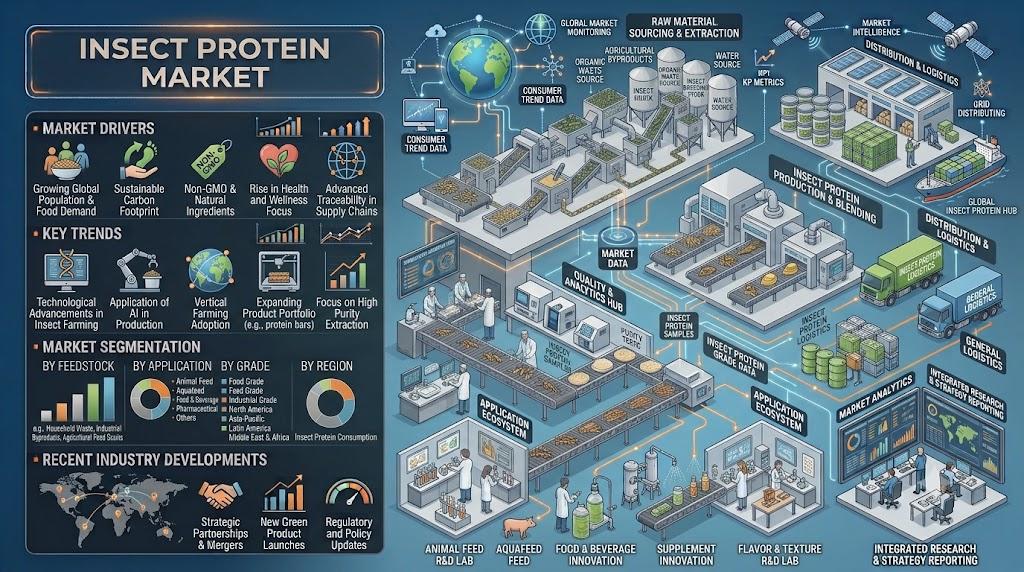
Market Overview:
According to IMARC Group's latest research publication, "Insect Protein Market: Global Industry Trends, Share, Size, Growth, Opportunity and Forecast 2026-2034", The global insect protein market size reached USD 1,391.9 Million in 2025. Looking forward, IMARC Group expects the market to reach USD 6,477.5 Million by 2034, exhibiting a growth rate (CAGR) of 18.07% during 2026-2034.
This detailed analysis primarily encompasses industry size, business trends, market share, key growth factors, and regional forecasts. The report offers a comprehensive overview and integrates research findings, market assessments, and data from different sources. It also includes pivotal market dynamics like drivers and challenges, while also highlighting growth opportunities, financial insights, technological improvements, emerging trends, and innovations. Besides this, the report provides regional market evaluation, along with a competitive landscape analysis.
How Insect Protein Is Reshaping the Future of Sustainable Nutrition
- Europe leads the global insect protein market, accounting for approximately 36% of market share, supported by robust regulatory frameworks, including European Union novel-food approvals for four insect species, and strong consumer awareness of environmental issues.
- Orthoptera, which includes crickets, grasshoppers, and locusts, maintains the largest insect protein market share at 33.28%, driven by established farming practices and widespread use across food and feed sectors.
- The Diptera segment, primarily driven by black soldier fly larvae, demonstrates the highest growth rate owing to its efficient organic waste-to-protein conversion capability, making it a cornerstone of the circular economy model in protein production.
- In September 2025, French retail group Auchan partnered with BioMar and Innovafeed to integrate insect meal usage across the full aquaculture value chain, connecting Innovafeed's insect farming operations in Ecuador, BioMar's feed manufacturing, and Auchan's distribution of insect-fed shrimp to European consumers.
- In March 2025, Aspire Food Group secured support from Next Generation Manufacturing Canada to build a new, technology-advanced cricket protein facility in London, Ontario, incorporating AI and IoT systems to boost efficiency and scale in cricket protein production.
Download a sample PDF of this report: https://www.imarcgroup.com/insect-protein-market/requestsample
Key Trends in the Insect Protein Market
- Growing Awareness About the Nutritional Benefits of Insect Protein: Insects offer a highly concentrated source of nutrition, with crickets containing between 60% and 75% protein by dry weight, which is comparable to or higher than that of conventional beef or chicken. Beyond protein, insects deliver essential minerals such as iron, magnesium, selenium, and zinc, alongside healthy fats including omega-3 and omega-6 fatty acids that support cardiovascular health and brain function. This rich nutritional profile makes insect protein attractive to athletes, bodybuilders, and consumers following ketogenic or paleo diets, broadening its consumer base well beyond niche sustainability circles.
- Rising Demand for Alternative Proteins Amid Global Population Growth: With the global population projected to reach 10 billion by 2050, the strain on conventional protein supply chains, including land degradation, overfishing, and the environmental costs of livestock farming, is accelerating interest in alternative proteins. Insect protein stands out for its exceptional efficiency: insects can be raised on organic waste, require minimal land and water, and convert feed into body mass at significantly higher rates than traditional livestock. A survey by the Food Standards Agency in the United Kingdom found that 37% of people were willing to try edible insects ground into food formats such as bread, burgers, and falafel, signaling measurable consumer openness.
- Expansion of Insect Protein in Animal Nutrition and Aquaculture: The animal nutrition segment dominates the insect protein market, driven by rising demand for sustainable, high-quality feed across the aquaculture and poultry industries. Insect protein from black soldier fly and mealworm species serves as a premium alternative to fishmeal and soybean meal, with the protein meal containing low-fat content and high protein levels suitable to replace up to 75% of fishmeal in aquaculture feeds. This shift is reinforced by the growing focus on reducing the environmental footprint of aquaculture operations globally.
- Regulatory Support Unlocking New Market Opportunities in Europe: The European Union has been at the forefront of regulating and promoting insect use as food and feed, with novel-food approvals covering four insect species creating a clear legal pathway for commercial expansion. Europe is anticipated to hold a leading regional market share of approximately 36%, underpinned by sustainable agriculture investments, advanced research and development infrastructure, and a proliferating startup ecosystem in the insect farming sector.
- Technological Advancements Driving Scale and Cost Efficiency: Rapid innovation in insect farming, processing, and genetics is enabling greater yields, reduced production costs, and improved product quality across the insect protein supply chain. Companies are integrating AI-powered automation and IoT systems into farming operations, with Aspire Food Group's Ontario facility being a landmark example. In May 2026, Innovafeed completed its industrialization phase and reorganized its commercial activities around its Nesle site, reflecting the industry's transition from experimental production to full-scale commercialization.
We explore the factors propelling the insect protein market growth, including technological advancements, consumer behaviors, and regulatory changes.
Growth Factors in the Insect Protein Market
- Increasing Prevalence of Chronic Conditions Supporting Protein-Rich Diets: According to the Centers for Disease Control and Prevention, 6 in 10 adults in the United States are suffering from chronic diseases, and 4 out of 10 have more than two chronic conditions. Additionally, approximately 21% of geriatric adults in India have at least one chronic disease. Insect protein, with many species containing between 50% and 80% protein by dry weight, is recognized as a nutrient-dense dietary component that can support the management of diet-linked chronic conditions such as obesity, diabetes, and cardiovascular disease.
- Growth in Pet Food Applications Expanding End-Use Demand: Pet food is emerging as a high-growth application segment for insect protein, driven by growing interest in hypoallergenic and sustainable pet nutrition. In early 2026, the pet food brand Cosmopet launched a complete range of dry food containing insect proteins for dogs and cats in the United Arab Emirates, with 10 to 20% of total protein content derived from insects. MaxBites also introduced insect-protein pet products into Canadian retail and online outlets, announcing plans to enter the United States market later in 2026, signaling the category's transition from development to mainstream retail distribution.
- North American Market Growth Supported by Strategic Corporate Alliances: North America is emerging as a significant market, driven by increasing demand for sustainable protein alternatives in animal feed, pet food, and specialty nutrition. Tyson Foods has partnered with Protix to develop insect-based feed solutions, reflecting the growing involvement of major agricultural corporations in advancing sustainable protein production. Strong investment in research, automation, and scalable production technologies is improving efficiency and supporting broader commercialization across the region.
- Circular Economy Integration Creating Cost and Sustainability Advantages: Insects such as black soldier fly larvae can efficiently convert low-quality organic waste including agricultural byproducts, food processing residues, and organic matter into nutrient-rich protein, creating a closed-loop production model that reduces input costs and waste. This circular economy alignment makes insect protein production attractive to policymakers, institutional investors, and food manufacturers seeking to meet sustainability targets and reduce operational waste simultaneously.
- Asia Pacific Accelerating Adoption Through Cultural Acceptance and AI Farming: Asia Pacific demonstrates significant growth potential in the insect protein market, bolstered by established cultural acceptance of edible insects in countries including China, Thailand, and Vietnam. The region is also integrating advanced AI-driven automation systems that optimize breeding conditions, resource efficiency, and yield predictability in insect farming operations. This technological adoption, combined with traditional consumption patterns, positions Asia Pacific as a key expansion market for both feed and food applications of insect protein.
Leading Companies Operating in the Global Insect Protein Industry:
- Aspire Food Group
- Chapul LLC
- Entomo Farms
- EnviroFlight LLC (Darling Ingredients)
- Goterra
- Hexafly
- InnovaFeed SAS
- Jimini's
- nextProtein
- Protenga
- Protix B.V.
Insect Protein Market Report Segmentation:
Breakup By Source:
- Coleoptera
- Lepidoptera
- Hymenoptera
- Orthoptera
- Hemiptera
- Diptera
- Others
Orthoptera accounts for the largest share, driven by established farming practices and widespread use of crickets, grasshoppers, and locusts across food and feed sectors, with the segment holding approximately 33.28% of market share.
Breakup By Distribution Channel:
- Offline
- Online
Offline holds the largest share of the industry due to consumers' preference for physically inspecting food products before purchase, the availability of immediate product access, and the role of specialty and health food stores in driving consumer education and trial.
Breakup By Application:
- Animal Nutrition
- Aqua Feed
- Poultry Feed
- Others
- Food and Beverages
- Pharmaceutical and Supplements
- Personal Care and Cosmetics
Animal nutrition represents the leading market segment, driven by the rising demand for sustainable, high-quality feed in the aquaculture and poultry industries, and insect protein's ability to replace up to 75% of conventional fishmeal in feed formulations.
Breakup By Region:
- North America (United States, Canada)
- Asia Pacific (China, Japan, India, South Korea, Australia, Indonesia, Others)
- Europe (Germany, France, United Kingdom, Italy, Spain, Others)
- Latin America (Brazil, Mexico, Others)
- Middle East and Africa
Europe leads the market, accounting for approximately 36% of global market share, supported by strong regulatory frameworks including European Union novel-food approvals for four insect species, advanced research and development infrastructure, and robust consumer awareness of sustainable food choices.
Recent News and Developments in the Insect Protein Market
- January 2026: Japan saw the launch of novel insect protein snack products specifically targeting health-conscious consumers, reflecting the growing integration of insect-based ingredients into mainstream food retail formats across Asia Pacific.
- February 2025: Entomo Farms unveiled a new production facility in Ontario, Canada, expanding its operational capacity to meet rising demand for sustainable, insect-based protein solutions across North American food and feed markets.
- May 2026: Innovafeed, in collaboration with Ambiotis, announced promising results demonstrating the anti-inflammatory potential of its Hilucia ingredient for pets, further expanding the functional health positioning of insect protein in the rapidly growing pet food segment.
Note: If you require specific details, data, or insights that are not currently included in the scope of this report, we are happy to accommodate your request. As part of our customization service, we will gather and provide the additional information you need, tailored to your specific requirements. Please let us know your exact needs, and we will ensure the report is updated accordingly to meet your expectations.
About Us:
IMARC Group is a global management consulting firm that helps the world's most ambitious changemakers to create a lasting impact. The company provides a comprehensive suite of market entry and expansion services. IMARC offerings include thorough market assessment, feasibility studies, company incorporation assistance, factory setup support, regulatory approvals and licensing navigation, branding, marketing and sales strategies, competitive landscape and benchmarking analyses, pricing and cost research, and procurement research.
Contact Us:
IMARC Group
134 N 4th St. Brooklyn, NY 11249, USA
Email: sales@imarcgroup.com
Tel No: (D) +91 120 433 0800
United States: +1-201-971-6302

 English
 Arabic
 French
 Spanish
 Portuguese
 Deutsch
 Turkish
 Dutch
Dutch
 Italiano
 Russian
 Portuguese (Brazil)
 Greek
Greek