


How to Save Energy and Reduce Electricity Bills at Home
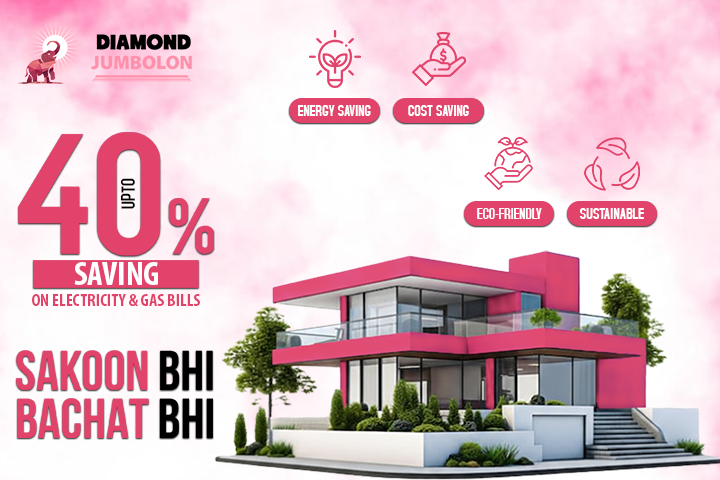
How to Save Energy and Reduce Electricity Bills at Home
Learning How to Save Energy starts with understanding where a home uses and loses the most energy. In hot climates, air conditioning can account for a significant share of electricity consumption because heat constantly enters through roofs, exterior walls, windows, and other exposed surfaces. Improving the building envelope, reducing unnecessary heat gain, using cooling systems efficiently, and choosing energy-efficient appliances can help lower energy demand while maintaining a comfortable indoor environment.
Why Is Home Energy Consumption So High?
Electricity consumption in a home depends on its size, construction, appliances, cooling requirements, insulation, and daily usage.
During hot weather, air conditioners often work harder because outdoor heat continuously enters the property. An inadequately insulated roof or wall can make this problem worse.
Concrete rooftops absorb solar radiation throughout the day and transfer heat into rooms underneath. Exterior walls can behave similarly when exposed to direct sunlight.
When indoor temperatures rise, the cooling system needs to remove more heat. This increases its operating time and can lead to higher electricity consumption.
Reducing heat transfer through the building structure is therefore an important part of energy efficiency.
Improve Insulation to Reduce Heat Gain
Thermal insulation slows the movement of heat between areas with different temperatures.
During summer, it helps prevent external heat from entering indoor spaces. During winter, it helps retain indoor warmth.
Suitable insulation can help:
- Reduce unwanted heat transfer
- Improve indoor temperature stability
- Lower cooling demand
- Improve thermal comfort
- Support more efficient energy use
Insulation does not replace air conditioning, but reducing the amount of heat entering a room can reduce the cooling load placed on the system.
Start With the Roof
The roof is often one of the biggest sources of heat gain in a home.
An exposed concrete roof can become extremely hot under direct sunlight. Without adequate thermal insulation, that heat gradually moves into rooms below.
Roof insulation creates resistance against this heat flow.
XPS, or extruded polystyrene, is a rigid insulation material used in suitable roof applications. Its closed-cell structure provides thermal resistance, moisture resistance, and compressive strength.
A properly designed roof insulation system can help reduce solar heat gain and improve temperature stability, particularly in upper-floor rooms.
Don't Overlook Exterior Walls
Walls can also contribute significantly to indoor heat gain.
An exterior wall exposed to strong sunlight can absorb heat throughout the day and gradually transfer it indoors.
Suitable wall insulation increases thermal resistance and reduces this transfer.
Using roof and wall insulation together creates a more complete thermal barrier around occupied spaces. This approach can be particularly useful in homes located in regions with prolonged hot weather.
The appropriate insulation material and thickness should be selected according to the wall construction, climate, moisture exposure, and required thermal performance.
Use Air Conditioning More Efficiently
Improving insulation should be combined with efficient AC operation.
Simple changes can help reduce unnecessary cooling demand:
- Clean AC filters regularly
- Maintain indoor and outdoor units
- Keep doors and windows closed while cooling
- Avoid unnecessarily low temperature settings
- Use timers or appropriate operating schedules
- Consider energy-efficient AC equipment
When less heat enters the room, these measures can become more effective because the cooling system has less heat to remove.
Improve Windows and Doors
Windows and doors are another potential source of heat transfer.
Gaps around frames can allow conditioned air to escape while allowing warm outdoor air to enter. Direct sunlight through windows can also increase indoor temperatures.
Homeowners can improve performance by:
- Sealing visible gaps
- Maintaining door and window seals
- Using curtains or blinds
- Adding suitable shading
- Protecting sun-facing windows during peak sunlight
These improvements can complement a well-insulated roof and wall system.
Choose Energy-Efficient Appliances
The building envelope is only one part of household energy consumption.
Refrigerators, washing machines, water pumps, air conditioners, and other appliances can contribute significantly to electricity usage.
When purchasing or replacing appliances, consider energy-efficiency ratings and expected operating costs rather than focusing only on the initial purchase price.
Efficient appliances combined with effective insulation can reduce overall energy demand.
Insulate Rooftop Water Tanks and Pipes
Rooftop water tanks are often exposed directly to sunlight. During hot weather, the tank surface can absorb solar heat and transfer it into the stored water.
Water tank insulation slows this heat transfer and helps maintain more stable water temperatures.
Exposed water pipes can also absorb heat from direct sunlight. Pipe insulation can reduce this additional heat transfer as water travels through the system.
These measures are particularly relevant for properties where tanks and pipework are installed on exposed rooftops.
Reduce Unnecessary Electricity Consumption
Energy efficiency also depends on everyday habits.
Turn off lights and appliances when they are not required. Make use of natural daylight where practical and avoid leaving electronic devices operating unnecessarily.
It is also useful to identify appliances or systems that consume electricity continuously and determine whether their operating time can be reduced.
The goal is not simply to use less electricity, but to eliminate energy consumption that does not provide a useful benefit.
Create a More Efficient Building Envelope
A building envelope includes the roof, walls, floors, windows, doors, and other components separating indoor and outdoor environments.
Improving its performance can have a significant effect on heating and cooling requirements.
A comprehensive approach may include:
- Roof insulation
- Exterior wall insulation
- Floor insulation
- Proper window sealing
- Water tank insulation
- Pipe insulation
- Suitable shading
Addressing several heat-transfer pathways is generally more effective than relying on a single improvement.
Choose Insulation According to the Application
Different parts of a building have different requirements.
Roof insulation may need strong thermal resistance, moisture performance, and compressive strength. Wall insulation may require consideration of cavity dimensions, moisture movement, structural design, and available space.
XPS insulation boards are suitable for many applications requiring rigid thermal insulation, but the correct specification should always be selected according to the building system.
Professional installation is equally important. Gaps, incomplete coverage, and poorly treated joints can create thermal bridges and reduce the effectiveness of insulation.
A Smarter Approach to Energy Savings
Reducing household electricity consumption is not simply about switching appliances off. Improving the building itself can reduce the amount of energy required to maintain comfortable indoor temperatures. Roof and wall insulation can limit heat gain, while efficient AC operation, sealed openings, energy-efficient appliances, and insulated water systems can further improve performance. For homeowners searching for practical ways on How to Reduce Electricity Bills, combining suitable insulation with efficient equipment and sensible energy-use habits provides a more comprehensive approach to managing electricity consumption and improving long-term home efficiency.

 English
 French
 Spanish
 Portuguese
 Deutsch
 Turkish
 Dutch
Dutch
 Italiano
 Russian
 Romaian
 Portuguese (Brazil)
 Greek
Greek