


How to Match Your Center Table Runner With Your Sofa and Interior
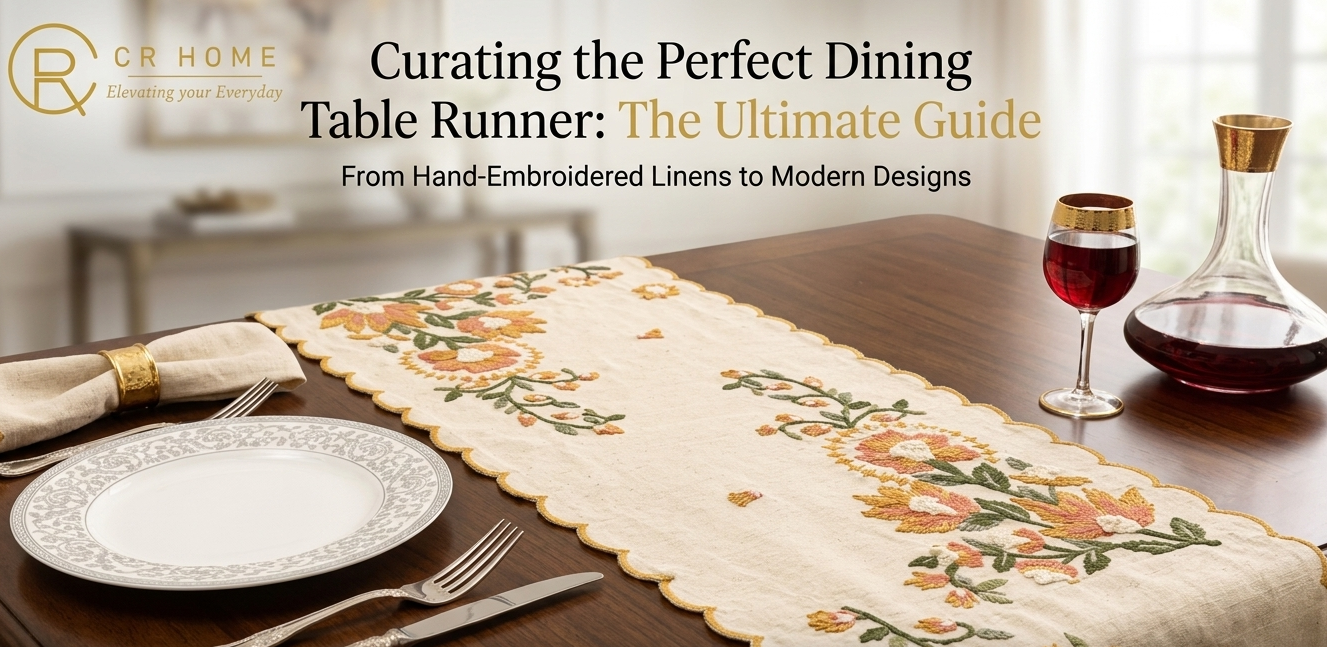
A living room rarely announces its colour story through the sofa alone. It comes together in smaller, easily overlooked layers — the cushions on the armchair, the rug underfoot, and the narrow strip of fabric running down the centre of the coffee table. That last piece carries more weight than its size suggests. A well-chosen Center table Runner can pull a room's separate elements into conversation with each other, while the wrong one can leave even a carefully furnished space feeling disconnected. The goal isn't to match every surface in the room — it's to let the table textile echo the room without repeating it exactly.
Start With the Room's Undertones, Not the Obvious Colour
Before thinking about the sofa, look at what's already influencing the room's temperature. Warm oak flooring, brass fixtures, or terracotta paint push a space toward warmth, even with neutral furniture. Cool grey walls, chrome fittings, or polished concrete do the opposite. A Table Runner chosen purely to match the sofa's colour name can still clash if it ignores this undertone.
For example, a beige sofa sitting on warm walnut flooring calls for a Table Runner in a similarly warm beige, sand, or soft terracotta — not a stark, cool-toned ivory that will look slightly out of place against the wood. Reading the room's undertone first, then choosing the runner, produces a more settled result than matching to the sofa in isolation.
Let the Sofa Guide the Runner, Not Dictate It
The sofa is a useful starting point, but treating it as the only reference tends to backfire. If the sofa is a deep olive green, repeating that exact green on the table can make the room look overly planned. A Center table Runner in warm beige, muted sage, or a subtle botanical print creates a visual link without duplicating the sofa outright.
The same logic applies elsewhere. A charcoal sofa with light oak furniture suits a runner in warm taupe or soft camel, bridging the two tones. A cream sofa against a marble coffee table can take a Table Runner in muted stone grey or soft blush, picking up the marble's cooler veining. A blue sofa in an otherwise neutral room often benefits from a runner that stays neutral too, letting the blue remain the room's one confident colour statement.
When the Room Already Has Pattern, Let Texture Carry the Table
Patterned interiors need a different approach. If the sofa is upholstered in a bold print, or the rug carries a strong geometric design, adding another pattern to the table usually overloads the room. In these cases, a Table Runner in a simple woven texture — linen, waffle-weave cotton, or a subtly ribbed blend — gives the table its own presence without competing for attention.
Texture does quiet work here. A neutral interior with plain walls and simple upholstery can start to feel flat over time. Introducing a textured Table Runner, whether a raw linen weave or a lightly embroidered edge, adds depth without a single new colour in the room — often the easiest way to make a minimal space feel considered rather than empty.
Building a Thread Between Cushions, Rugs and the Table
A room feels connected when two or three elements share a quiet reference point, not when everything matches. If the cushions carry a rust-coloured thread or the curtains have a faint check, picking up that same undertone in the runner creates a subtle thread through the room — a rust cushion and a terracotta runner read as related without looking coordinated on purpose.
This is also where accent colours are worth using with restraint. One accent, repeated in two or three places — a cushion, a vase, the runner — reads as intentional. The same colour showing up in five spots starts to feel like a decorating exercise rather than a considered room.
Matching vs. Coordinating: Knowing When Contrast Wins
There's a meaningful difference between matching and coordinating. Matching means repeating the same colour or pattern across surfaces. Coordinating means choosing pieces that relate in tone, warmth, or texture without being identical. A Table Runner that matches the sofa fabric exactly can flatten a room's visual interest, while one that coordinates — same warmth, related but not identical shade — tends to hold attention longer.
Contrast has its place too. A patterned sofa paired with an understated, solid Dining Table Runner often looks more resolved than trying to match the pattern, and a dark wood dining table with a pale, textured Dining Table Runner creates definition rather than blending in. Contrast works best when it's deliberate — one clear point of difference, not several competing ones.
Reading the Table Surface Before You Choose
The material under the runner changes how a fabric reads. Wood tables, especially warmer tones like walnut or teak, tend to suit natural-fibre Table Runners in linen or cotton, since both share an organic quality. Marble and glass surfaces behave differently — their cool, reflective quality can make a heavily textured runner look busy, so a smoother weave or finer embroidered detail sits better. Metal-framed tables, common in contemporary interiors, pair well with a Center table Runner that leans slightly structured, such as woven cotton with a defined edge, rather than something loose.
This matters just as much at the dining table. A Dining Table Runner chosen for daily use should hold its shape and colour through regular washing, while one reserved for entertaining can lean into finer, more delicate textiles — embroidery, subtle metallic thread, or a heavier linen weave that photographs well under evening light.
Different Interior Styles Need Different Approaches
Contemporary interiors, with their clean lines and restrained palettes, generally suit a Center table Runner with minimal pattern and a strong sense of proportion — one that doesn't overhang the table too much on either side. Classic interiors, with panelled walls, traditional silhouettes, or richer wood tones, tend to carry embroidered or jewel-toned Table Runners well, since the room already has the visual weight to support them.
The same logic carries over to the dining room. A contemporary dining space usually calls for a simple Dining Table Runner with little pattern, while a more classic dining room can carry a richer, more decorative Dining Table Runner without looking overdone.
Minimalist interiors ask for the most restraint. A plain linen Center table Runner in a soft neutral, with perhaps one row of understated stitching, is usually enough — adding pattern or strong colour here can undo the calm the rest of the space is working to create.
What to Check Before You Buy a Table Runner Online
Buying a Table Runner Online has become the default for most people, since comparing colours and weaves on screen is easier than visiting several shops. Even so, shopping for a Table Runner Online removes the ability to feel the fabric or see it against your sofa and flooring, so a few checks matter. Confirm the fabric composition — linen, cotton, or a blend behaves differently in look and care. Check the listed dimensions against your table, since a runner that's too short reads as an afterthought, while one too long overwhelms a smaller table. This matters even more for a Dining Table Runner, since dining tables vary widely in length and a poor fit is far more noticeable once the table is set.
Colour accuracy is another common issue when buying a Table Runner Online — screens render warm and cool tones differently, so it helps to check a few product photos taken in natural light rather than relying on a single styled image — something CR Home's listings account for by showing multiple close-up angles of each weave.
For anyone building out a room from scratch, CR Home's range of table textiles makes it easier to compare weaves and tones side by side, which helps when the Center table Runner needs to relate to a sofa or rug that's already chosen. CR Home's neutral linen options suit warm, wood-heavy interiors, while its more textured or embroidered pieces tend to suit rooms that already lean classic. CR Home's Dining Table Runner options run from washable everyday cotton to finer embroidered pieces kept for entertaining, so the choice can follow how the table actually gets used.
A Simple Styling Check Before You Commit
Before finalising a Center table Runner, lay it across the table with two or three items already in the room nearby — a cushion, a throw, or a small object from a shelf. If the combination looks composed without looking rehearsed, it's the right call. If everything matches too precisely, swap the runner for something a shade off, or with a touch more texture.
CR Home approaches table styling with this same principle: a Dining Table Runner or Center table Runner should feel like it belongs to the room, not like it was chosen to complete a colour chart. That distinction is what separates a table that looks styled from one that simply looks new. Treating the runner as one thread in a larger colour story, rather than the final matching piece, tends to produce the most lived-in result — and for anyone still comparing options before buying a Table Runner Online, CR Home's current table linen edit is worth browsing first.

 English
 Arabic
 French
 Spanish
 Portuguese
 Deutsch
 Turkish
 Italiano
 Russian
 Romaian
 Portuguese (Brazil)
 Greek
Greek