


Is PRP Hair Treatment in Abu Dhabi Suitable for Thin Hair
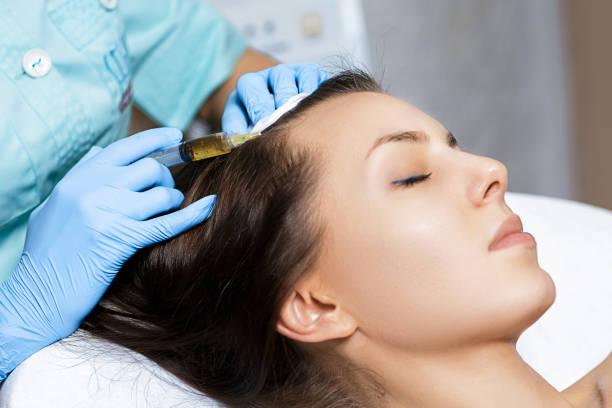
Thin hair can describe naturally fine strands, progressive miniaturization, reduced coverage, or a combination of these factors. PRP Hair Treatment in Abu Dhabi may be suitable for selected patients whose thin hair is associated with weakened or miniaturizing follicles, particularly when sufficient existing hair remains for a regenerative approach to be considered.
What Clinicians Mean by Thin Hair
The phrase “thin hair” can describe several different situations, and identifying the distinction is important before selecting treatment.
Naturally Fine Hair
Some people have naturally narrow hair shafts without experiencing active hair loss. Their scalp may have stable coverage, but individual strands simply appear delicate or less substantial.
PRP is not automatically necessary in this situation. The first step is determining whether the hair has always been fine or whether its caliber has changed over time.
Progressively Finer Hair
A more significant concern occurs when previously thicker strands gradually become smaller. This can indicate follicular miniaturization, where individual follicles continue producing hair but the resulting shafts become less substantial.
When this pattern is present, supporting the existing follicular environment may be more relevant than treating the visible hair shaft alone.
Thin Hair With Reduced Coverage
Some patients notice both finer strands and increased scalp visibility. In this situation, the concern is not simply hair texture; it involves the relationship between shaft caliber and overall coverage.
A clinical assessment can determine which areas have the greatest change and whether PRP is an appropriate component of treatment.
How PRP May Benefit Thin Hair
PRP uses platelet-rich plasma prepared from the patient's own blood and delivered through scalp injections. Its purpose is to support the biological environment surrounding targeted hair follicles.
Focusing on Existing Follicles
The treatment is most relevant to areas where follicles remain capable of producing hair. The goal is to encourage a healthier growth environment rather than mechanically adding new follicles.
This distinction is particularly important for patients who expect PRP to function like a hair transplant. The two procedures have fundamentally different roles.
Supporting Hair Quality
When follicles are producing increasingly fine strands, improvement in hair quality can make the scalp appear more covered even without a dramatic change in the total number of follicles.
This is one reason clinicians assess both density and shaft caliber rather than relying on scalp visibility alone.
Treating the Scalp Rather Than the Hair Shaft
PRP is injected into the scalp because the target is the follicular environment beneath the visible hair. Applying a product to the hair shaft cannot address the same biological structures.
The treatment therefore requires accurate scalp mapping and injection placement.
Thin Hair Requires More Than a Visual Diagnosis
A person may describe their hair as thin when the actual issue is breakage, low density, miniaturization, or naturally fine hair.
| Appearance | Possible Explanation | What Assessment Should Clarify |
|---|---|---|
| Fine but stable hair | Naturally narrow shafts | Whether caliber has changed |
| Finer hair over time | Progressive miniaturization | Whether follicles are weakening |
| Visible scalp between strands | Reduced density or shaft caliber | Distribution of coverage loss |
| Short broken strands | Hair-shaft damage | Whether the problem is breakage rather than follicular loss |
| Wider parting | Central density reduction | Whether thinning is localized or diffuse |
| Crown transparency | Reduced vertex coverage | Whether the change follows a progressive pattern |
| Hairline becoming finer | Frontal miniaturization | Whether the hairline is actively changing |
This differentiation helps prevent inappropriate treatment selection.
How Thin Hair Is Evaluated Before PRP
A proper assessment should examine the scalp at both normal and magnified levels where appropriate.
Hair Shaft Caliber
Comparing thicker and finer strands can reveal whether the patient has a broad range of shaft diameters.
A significant variation in caliber may provide more useful information about miniaturization than simply estimating the number of hairs visible from a distance.
Distribution of Thin Areas
The location of fine hair matters. Thinning concentrated around the crown may suggest a different pattern from changes centered around the frontal scalp or distributed across multiple regions.
Treatment mapping should follow the actual pattern rather than applying one standardized injection field to every patient.
Scalp Visibility
Scalp visibility should be evaluated under consistent lighting. Strong overhead lighting can make even healthy hair appear sparse, while certain hairstyles can conceal genuine thinning.
Standardized photographs provide a more reliable reference for subsequent comparisons.
PRP Injection Planning for Fine Hair
The technique used to administer PRP can influence how precisely the treatment reaches the intended areas.
Identifying the Treatment Field
The practitioner can map regions where hair has become finer or where coverage has declined. The treatment field may include the surrounding transition zone rather than only the most visibly sparse point.
This is particularly useful when thinning gradually spreads across adjacent areas.
Maintaining Consistent Distribution
The prepared PRP is delivered through multiple small injections across the selected scalp region. The exact distribution should reflect the individual's pattern rather than a fixed grid.
Careful mapping can help ensure that areas with different levels of thinning receive appropriately planned attention.
Considering Scalp Anatomy
Scalp thickness and sensitivity vary between individuals and anatomical regions. Injection depth and placement should therefore be controlled by the treating practitioner.
The objective is accurate delivery into the intended scalp tissue while minimizing unnecessary trauma.
When PRP May Be Suitable for Thin Hair
PRP may be considered when the patient has evidence of active thinning but still has existing hair throughout the affected region.
Fine Hair With Progressive Changes
A person who notices that their hair has become noticeably finer over time may benefit from an assessment focused on follicular miniaturization.
The treatment decision should be based on the examination rather than the word “thin” alone.
Diffuse Fine Hair
When fine hair occurs throughout several scalp regions, the practitioner may assess whether the pattern represents diffuse thinning, a temporary shedding episode, or naturally fine hair.
A broader treatment field may be considered if the clinical findings support it.
Localized Fine Hair
If only one region has become thinner, treatment can be mapped more specifically. For example, the crown, frontal scalp, or temporal region may each require different assessment because hair direction and density vary by location.
For patients exploring hair restoration options in Dubai, understanding whether the concern is localized or diffuse can help determine whether a targeted or broader approach makes sense.
When PRP May Have Limited Value
Not every form of thin hair is likely to respond in the same way.
Long-Standing Follicular Absence
If an area has been completely devoid of hair for a prolonged period, PRP cannot be expected to reproduce the function of missing donor follicles.
A surgical restoration procedure may need to be considered when substantial permanent loss has occurred and adequate donor hair is available.
Hair Shaft Damage
If the main problem is chemical damage, excessive heat, repeated traction, or mechanical breakage, scalp injections do not directly repair damaged hair shafts.
Hair-care practices and treatment of the source of breakage may therefore be more relevant.
Temporary Hair Changes
Hair can become temporarily finer or less full following periods of illness, significant physiological stress, or other changes. The underlying cause should be assessed before assuming that PRP is required.
The UAE Environment and Fine Hair
Fine hair can be particularly noticeable in conditions where sweat, humidity changes, strong sunlight, and frequent air-conditioning affect how the strands sit against the scalp.
Heat and Sweat
High temperatures in Abu Dhabi can increase perspiration, causing fine strands to separate and making the scalp appear more visible.
This can create the impression of reduced density even when the actual follicular situation has not changed substantially.
Sun Exposure
Strong sunlight can make the contrast between the scalp and fine hair more obvious. Patients undergoing scalp treatment should also follow post-treatment guidance regarding direct sun exposure.
Air Conditioning
Frequent indoor air-conditioning can contribute to a dry-feeling scalp or hair shaft. Gentle washing and avoiding excessive heat styling can help protect already delicate strands.
These environmental considerations do not establish the cause of hair thinning, but they can influence its appearance and day-to-day management.
Monitoring Whether Thin Hair Is Improving
A successful assessment should measure changes rather than relying on memory.
Photographing Consistent Areas
Photographs should use similar lighting, distance, angle, and hair positioning. The same scalp zones can then be compared over time.
Looking at Hair Caliber
A change in the apparent thickness of individual strands can be as important as a change in overall scalp coverage.
This is particularly relevant when the primary concern is fine hair rather than extensive baldness.
Assessing Coverage
The clinician can evaluate whether less scalp is visible in the treated region and whether density appears more uniform.
Several months may be needed before meaningful changes can be assessed because hair growth follows a biological cycle rather than an immediate cosmetic timeline.
What to Expect From PRP for Thin Hair
PRP should be approached as a gradual treatment rather than an instant thickening procedure.
Immediately After Treatment
Temporary redness, tenderness, swelling, or itching may occur following injections. These short-term effects do not represent the final hair response.
During the Following Months
The treatment page for PRP describes visible improvement developing over several months, with more noticeable changes commonly assessed around the three-to-six-month period. Individual response varies according to the patient's condition and treatment plan.
Long-Term Assessment
If the underlying hair-loss process remains active, continued monitoring may be appropriate. A clinician can determine whether maintenance treatment or another intervention should be considered.
Questions About PRP Hair Treatment in Abu Dhabi for Thin Hair
Is PRP Suitable for Naturally Thin Hair
It depends on whether the hair is naturally fine or has become progressively thinner. Stable naturally fine hair may require a different approach from active follicular miniaturization.
Can PRP Make Fine Hair Look Thicker
It may improve the quality and appearance of hair produced by responsive follicles. Results vary and should not be considered guaranteed.
Can PRP Treat Thin Hair From Breakage
PRP targets the scalp and follicles rather than damaged hair shafts. If breakage is the primary issue, the cause of shaft damage should also be addressed.
How Many PRP Sessions Are Needed for Thin Hair
The number of sessions depends on the extent and pattern of thinning and the clinician's treatment plan. There is no single schedule appropriate for every patient.
Can Thin Hair Eventually Need a Hair Transplant
Yes. If progressive loss produces areas with insufficient follicular coverage, surgical restoration may eventually be considered depending on donor supply and the individual's goals.
The Strategic Investment
Thin hair should not be treated as a single diagnosis. The important distinction is whether the strands are naturally fine, becoming progressively finer, breaking along the shaft, or accompanied by genuine loss of scalp coverage.
For patients considering a non-surgical approach to progressive thinning, Tajmeels Clinic offers PRP hair treatment with individualized assessment of follicular condition, scalp distribution, and treatment requirements.

 English
 Arabic
 French
 Portuguese
 Deutsch
 Turkish
 Dutch
Dutch
 Italiano
 Russian
 Romaian
 Portuguese (Brazil)
 Greek
Greek