


Hair Transplant Surgeon in India: How to Choose the Right Specialist
By Dr. Mayank Singh, Hair Transplant Surgeon & Founder, Crown – The Hair Transplant Experts
Hair loss can affect much more than appearance. For many people, it can influence confidence, hairstyle choices, and the way they feel about themselves. A hair transplant can provide a long-term solution for suitable candidates, but the quality of the result depends significantly on the surgeon, planning, technique, and donor-hair management.
As a hair transplant surgeon in India, I believe patients should look beyond clinic advertisements and focus on the surgeon’s qualifications, experience, approach to hairline design, and understanding of hair restoration.
What Does a Hair Transplant Surgeon Do?
A hair transplant surgeon evaluates the cause and pattern of hair loss, assesses the donor area, designs the hairline, plans graft distribution, and performs or supervises the transplantation procedure.
The objective is not simply to move hair from one area to another. A successful procedure should aim for a natural-looking hairline, appropriate density, and long-term use of the available donor hair.
Every patient has different hair characteristics, including:
- Hair-loss pattern and severity
- Donor-area density
- Hair thickness and texture
- Age and future hair-loss potential
- Hairline shape and facial proportions
- Number of grafts that can be safely harvested
These factors need to be considered before deciding whether a transplant is appropriate.
Why Is Choosing the Surgeon Important?
Hair transplantation is a procedure where planning matters as much as technique. Donor hair is a limited resource, so unnecessary graft extraction or poor planning can affect future options.
When choosing a hair transplant surgeon in India, I recommend patients consider the following:
1. Medical Qualifications and Credentials
Start by understanding the surgeon’s medical education and professional credentials. Patients should be able to verify the surgeon’s qualifications and experience rather than relying solely on marketing claims.
2. Experience in Hair Restoration
Hair transplantation involves several decisions, from graft harvesting and handling to recipient-site creation and placement. Experience allows a surgeon to adapt the procedure to the individual patient rather than following the same approach for everyone.
3. Natural Hairline Design
A hairline should complement the patient's age, facial structure, existing hair, and expected future hair loss.
Creating an excessively low or artificially straight hairline may look unnatural over time. I prefer designing a hairline that is appropriate for the individual patient and preserves donor resources for the future.
4. Appropriate Technique
Depending on the patient's condition, techniques such as FUE (Follicular Unit Extraction) or FUT (Follicular Unit Transplantation) may be considered.
FUE involves harvesting individual follicular units from the donor area, while FUT involves removing a strip of donor tissue from which follicular units are prepared.
There is no single technique that is ideal for every patient. The appropriate method depends on factors such as donor characteristics, hair-loss pattern, previous procedures, and individual goals.
5. Donor-Area Management
The donor area is extremely important because the available follicular units are limited.
A responsible hair transplant plan should consider not only the patient's current baldness but also the possibility of future hair loss. Overharvesting can compromise the appearance of the donor area and limit future treatment options.
Is Hair Transplant Suitable for Everyone?
No. A hair transplant is not automatically appropriate for every person experiencing hair loss.
Before recommending surgery, I assess the patient's hair-loss pattern, donor supply, scalp condition, age, expectations, and likely progression of hair loss.
In some cases, medical management or other non-surgical treatments may need to be considered before surgery.
This is why a consultation and proper diagnosis are important before deciding on transplantation.
What Makes a Hair Transplant Look Natural?
A natural result involves more than achieving high hair density.
Important factors include:
- Appropriate hairline position
- Irregular and natural-looking hairline design
- Correct graft direction and angle
- Strategic graft placement
- Appropriate use of single-hair grafts in the frontal zone
- Efficient management of the donor area
- Planning for possible future hair loss
The goal should be to restore hair in a way that integrates with the patient's existing hair rather than making the transplanted area appear separate.
Choosing a Hair Transplant Surgeon in India
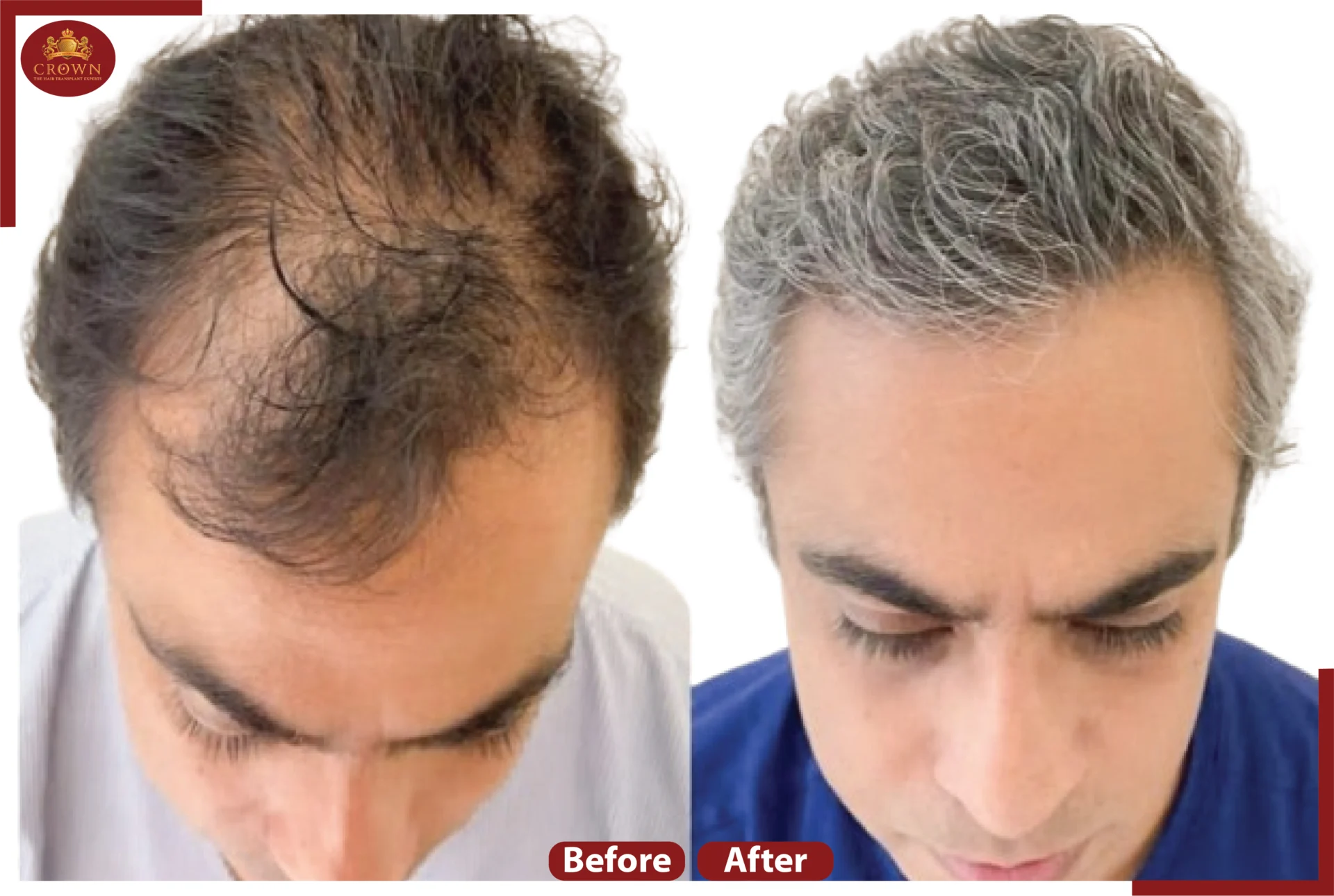
India has a large number of hair restoration clinics and surgeons. Patients researching a hair transplant surgeon in India should take time to verify credentials, understand the proposed treatment plan, discuss realistic expectations, and review relevant before-and-after cases.
It is also important to understand who will actually perform the key surgical steps. Patients should ask the clinic about the surgeon's involvement throughout the procedure rather than choosing a clinic based only on the brand name or promotional offers.
My Approach at Crown – The Hair Transplant Experts
At Crown – The Hair Transplant Experts, I focus on individualized treatment planning rather than using the same transplant strategy for every patient.
My approach begins with evaluating the patient's hair loss and donor area, followed by planning the hairline and graft distribution according to the individual's characteristics.
As a surgeon, I believe the objective of hair transplantation should be natural restoration with responsible donor-hair management, while maintaining realistic expectations about what surgery can achieve.
Final Thoughts
Choosing a hair transplant surgeon in India is an important decision because the procedure involves your existing donor hair, appearance, and long-term hair-restoration plan.
Before proceeding, look at the surgeon's qualifications, experience, surgical approach, hairline-design philosophy, donor management, and ability to explain realistic outcomes.
A properly planned hair transplant is not simply about the number of grafts transplanted. It is about using limited donor hair intelligently to create a result that looks natural and remains appropriate as you age.
— Dr. Mayank Singh
Hair Transplant Surgeon & Founder
Crown – The Hair Transplant Experts

 English
 Arabic
 French
 Spanish
 Portuguese
 Deutsch
 Turkish
 Dutch
Dutch
 Italiano
 Russian
 Romaian
 Portuguese (Brazil)