


Why Church Website Templates Should Make Event Details Easy to Access
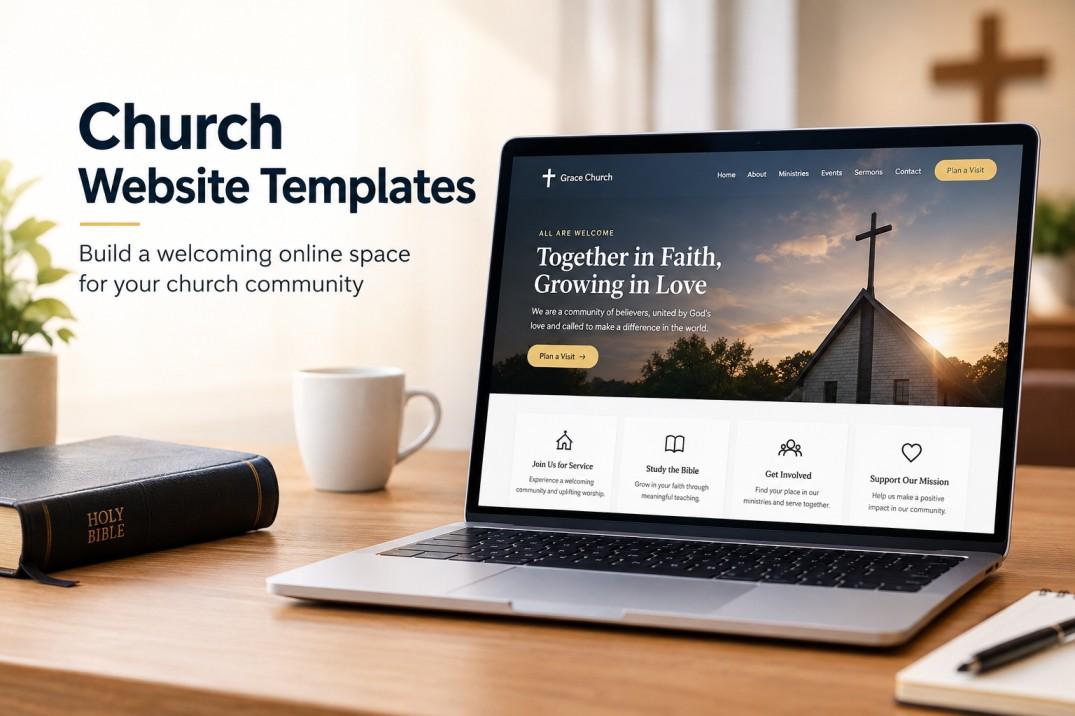
Someone hears about a church potluck from a friend, remembers roughly when it is, and goes to the website to confirm the exact time and whether they need to bring anything. Instead, they find a flat calendar icon with no actual date attached, or an event listed with a title and nothing else- no time, no location, no idea what to expect. Church website templates can help churches present event details more clearly, including dates, times, locations, registration information, and what attendees should bring. That gap between "we mentioned it exists" and "here's everything you actually need to know" is where a lot of church websites quietly fail their own community.
Making event details genuinely easy to access isn't a minor convenience, it directly affects whether people actually show up prepared and on time.
Why Event Accessibility Matters More Than It Might Seem
Church communities run on a steady rhythm of gatherings, services, small groups, outreach events, fellowship activities, and each one depends on people actually knowing the specific details well enough to attend.
Incomplete Information Leads to Confusion and No-Shows
A vague event listing missing key details, exact time, specific location, what to bring, often results in people either not attending at all or showing up unprepared, undermining the effort that went into planning the event in the first place.
Different Audiences Need to Find Different Events Easily
A parent looking for a children's program, a young adult searching for a small group, and a longtime member checking on a committee meeting all need to find their specific relevant event without wading through unrelated listings.
Structuring Event Listings With Complete Information
Including Every Essential Detail Consistently
Every event listing benefiting from the same core information- date, time, location, cost if applicable, contact person- ensures visitors never have to guess or follow up just to get basic logistics.
Explaining What to Expect or Bring
For events involving specific preparation, a dish for a potluck, or comfortable clothing for an outdoor activity, clearly noting this prevents confusion and helps attendees show up genuinely prepared.
Clarifying Who the Event Is For
Explicitly noting the intended audience- all ages, specific age groups, members only, visitors welcome- helps people quickly determine relevance without uncertainty.
Making the Events Calendar Genuinely Usable
Displaying Events Chronologically and Clearly
A clean, well-organized calendar view showing upcoming events in clear date order helps visitors quickly scan what's coming up without confusion.
Offering Both Calendar and List Views
Since some visitors prefer a visual calendar while others prefer a straightforward chronological list, offering both formats accommodates different browsing preferences.
Allowing Filtering by Event Category
Letting visitors filter events by type, worship gatherings, youth programs, and community outreach helps people quickly find events genuinely relevant to their specific interests.
Supporting Easy Event Discovery From Multiple Entry Points
Highlighting Upcoming Events on the Homepage
Featuring a few upcoming, significant events directly on the homepage ensures visibility beyond only visitors who specifically navigate to a dedicated events page.
Linking Related Events From Relevant Ministry Pages
Connecting a children's ministry event directly from the children's ministry page, for example, helps interested visitors discover relevant events exactly where they're already looking.
Including Events in Regular Communication
Referencing upcoming events within email newsletters or announcements, alongside a direct link to the full details, extends visibility beyond the website alone.
Making Registration and RSVP Processes Simple
Straightforward Registration Forms
For events requiring signup, keeping registration forms simple and quick to complete respects people's time and reduces the likelihood of abandoned registration attempts.
Clear Confirmation After Registration
A simple, immediate confirmation message or email reassures attendees that their registration actually went through, preventing uncertainty about whether they successfully signed up.
Addressing Capacity and Waitlist Information
For events with limited space, clearly communicating capacity limits and waitlist procedures manages expectations and prevents frustration if an event fills up.
Visual Features That Support Event Clarity
Consistent Formatting Across All Event Listings
Using the same visual template for every event, regardless of type, helps visitors quickly learn where to find specific details on any given listing.
Icons Representing Event Categories
Simple, recognizable icons distinguishing different event types help visitors quickly scan the calendar and identify categories of interest at a glance.
Photos From Past Similar Events
Where appropriate, including photos from previous instances of a recurring event helps potential attendees visualize what to expect and builds enthusiasm for participation.
Addressing Recurring Events Clearly
Explaining Recurring Schedules Simply
For events that happen weekly or monthly, clearly stating the recurring pattern prevents the need to manually list every individual occurrence indefinitely.
Noting Exceptions to Regular Schedules
Clearly flagging any changes to a normal recurring schedule, holiday breaks, special format changes prevents confusion for attendees expecting the standard routine.
Providing a Simple Way to Add Events to Personal Calendars
Supporting easy calendar integration, letting visitors add an event directly to their own personal calendar app, reduces the chance of someone simply forgetting despite initial interest.
Visit Our Website: Church Website WordPress Theme with Donation Features
Making Event Information Accessible to Different Visitor Types
Clear Event Details for First-Time Visitors
Ensuring event listings provide enough context for someone unfamiliar with the church, not just assuming existing member knowledge, helps newcomers feel genuinely welcome to attend.
Accessible Information for Families
For family-oriented events, clearly addressing children's programming or age-appropriate activities helps parents make informed decisions about attending as a family.
Considering Accessibility Needs Within Event Details
Where relevant, noting accessibility accommodations available at a specific event location helps ensure genuine inclusivity for attendees with different needs.
Keeping Event Information Current
Promptly Updating or Removing Outdated Listings
Establishing a routine for removing past events and promptly updating any schedule changes prevents the common, trust-undermining problem of outdated information lingering on the site.
Assigning Clear Responsibility for Event Updates
Designating specific staff or volunteers responsible for maintaining accurate event information helps ensure this content doesn't become neglected simply because no one felt clearly responsible.
Mobile Access to Event Details
Since many people check event details from their phones, often while already on their way or trying to confirm last-minute logistics, ensuring this information displays clearly and remains easy to navigate on mobile is genuinely essential.
Conclusion
Making event details genuinely easy to access respects the time and effort community members and visitors invest in planning to attend, ensuring they arrive prepared, at the right time, in the right place. Through complete, consistent event listings, easy discovery from multiple entry points, and simple registration processes, church websites can support the steady rhythm of gatherings that keep a community connected. This kind of accessibility-focused approach is exactly what you'll find supported in premium HTML Website Templates designed for churches and religious organizations, helping your events reach the people who genuinely want to attend them.
Frequently Asked Questions
1. What essential details should every church event listing include?
Date, time, location, cost if applicable, and a contact person at minimum, ensuring visitors never need to follow up separately just to confirm basic logistics.
2. Should churches offer both a calendar view and a list view of events?
Yes, since different visitors have different browsing preferences, offering both formats accommodates a wider range of people trying to find relevant event information.
3. How important is it to highlight upcoming events on the homepage?
Quite important, since this increases visibility beyond only the visitors who specifically navigate to a dedicated events page, helping more people discover relevant gatherings.
4. Should recurring events be listed individually or explained as a pattern?
Explaining the recurring pattern simply, with any exceptions clearly flagged, works better than manually listing every individual occurrence indefinitely.
5. Why does keeping event listings current matter so much for a church website?
Outdated or incorrect event information undermines trust in the website overall and can lead to genuine confusion or missed attendance, making regular updates a meaningful priority.

 English
 Arabic
 French
 Spanish
 Portuguese
 Deutsch
 Turkish
 Dutch
Dutch
 Italiano
 Russian
 Romaian
 Portuguese (Brazil)