


Is Eyebrow Hair Transplant in Dubai Right for Patchy Brows?
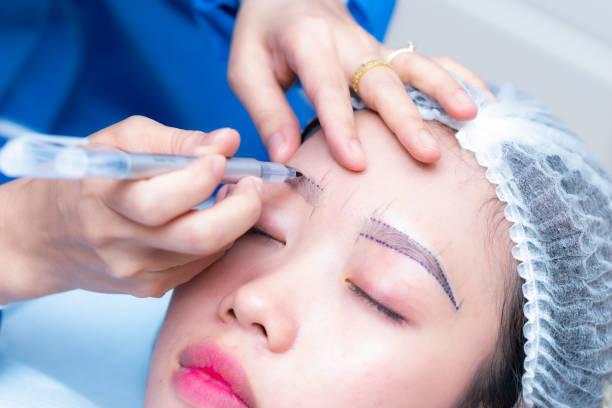
Patchy eyebrows are different from uniformly thin brows because isolated areas may have little or no hair while neighboring sections remain intact. Eyebrow Hair Transplant in Dubai may be suitable when these patches result from permanent follicular loss and the surrounding eyebrow can be used as a guide for precise restoration.
Why Patchy Eyebrows Need Targeted Planning
A patchy brow can contain several different follicular conditions within the same eyebrow. One section may have healthy native hairs, another may contain weakened follicles, and a third may have permanent loss.
Treating all three areas in the same way can produce unnecessary grafting or an unnatural density pattern. The first objective is therefore to identify what is actually missing.
Isolated Gaps Versus Diffuse Thinning
An isolated patch usually has a defined boundary between areas with hair and areas without visible growth.
Diffuse thinning is more gradual and may leave follicles distributed throughout the brow. These patterns require different approaches to density planning.
Native Hair Is Part of the Restoration
Existing eyebrow follicles already have the correct biological characteristics for that location.
When they are healthy, preserving them can make the final restoration more natural because transplanted hairs can be positioned around an established framework.
Patch Location Changes the Technique
A patch near the inner brow does not have the same directional requirements as one near the arch or tail.
The location determines how the new follicles should be angled and how their density should transition into surrounding hair.
Common Reasons Eyebrows Become Patchy
Patchiness can develop through several mechanisms, so the cause should be established before permanent restoration.
Repeated Plucking
Removing individual hairs from the same areas over a long period can reduce visible density.
Some follicles may recover after grooming stops, while follicles that have been permanently damaged may require another method of restoration.
Trauma and Burns
An injury can destroy follicles within a specific section while leaving the surrounding brow unaffected.
This can produce a sharply localized patch that remains stable after the tissue has healed.
Aging-Related Changes
Gradual reduction in hair caliber can make certain areas appear patchier as the surrounding brow becomes less dense.
A clinical examination can help distinguish reduced hair thickness from complete follicular loss.
Medical and Treatment-Related Causes
Eyebrow loss can also occur in association with medical conditions or treatment-related changes. When the cause is active or uncertain, addressing the underlying issue may need to precede transplantation.
How Eyebrow Hair Transplant in Dubai Can Restore Patchy Areas
The purpose of targeted transplantation is to replace follicles where permanent loss has occurred while retaining the patient's existing eyebrow structure.
Mapping Each Patch
The deficient areas are assessed individually rather than treating the eyebrow as a single uniform surface.
The clinician can identify the beginning and end of each patch and evaluate how it relates to nearby native hairs.
Establishing Natural Density
The goal is not necessarily to make every section equally dense.
Natural eyebrows have variations in density, so graft placement should reproduce a believable distribution rather than create a uniform block of hair.
Matching the Direction of Neighboring Hairs
The direction of eyebrow hair changes across the brow.
New grafts need to follow these local patterns so that the restored patch connects visually with the surrounding follicles.
The official treatment information describes preparing donor hairs according to the desired eyebrow shape, direction, and size before individual implantation into fine recipient sites.
For patients researching patchy eyebrow restoration in Dubai, this type of targeted planning is particularly relevant when only selected sections require additional follicles.
Patchy Brow Restoration by Location
The anatomical position of a patch affects how the grafts should be integrated.
| Patch Location | Main Challenge | Restoration Consideration |
|---|---|---|
| Inner brow | Maintaining a natural starting edge | Avoid an abrupt or heavy beginning |
| Central brow | Blending with surrounding density | Match neighboring follicle spacing |
| Arch | Reproducing directional changes | Follow the curve and shallow angle |
| Outer brow | Preserving the taper | Avoid creating a blunt endpoint |
| Multiple patches | Maintaining overall continuity | Coordinate density across sections |
This approach allows the restoration to address the actual pattern of loss rather than applying one design to every eyebrow.
The Role of Facial Mapping
Eyebrow reconstruction should be considered in relation to the rest of the face.
A patch can sometimes make one brow appear shorter or lower even when the underlying shape has not changed.
Comparing Both Brows
The opposite eyebrow provides useful anatomical information, but it should not simply be copied.
Normal facial asymmetry means each side has to be evaluated individually.
Identifying the Original Contour
The clinician can use remaining hairs and facial landmarks to establish the natural brow trajectory.
This is particularly important when a patch affects the arch or changes the apparent transition toward the tail.
Avoiding Overcorrection
Adding too many grafts to compensate for a small patch can make the restored area more prominent than the original eyebrow.
Selective placement allows the clinician to improve continuity without unnecessarily increasing overall brow density.
Donor Hair Selection for Patchy Brows
Eyebrow restoration commonly relies on donor follicles from the scalp, but donor selection requires careful consideration.
Scalp hair can be different from eyebrow hair in thickness, growth cycle, and length.
Selecting Compatible Follicles
Fine donor hairs can be useful for achieving a closer visual match with native eyebrow hair.
The available donor characteristics should be assessed individually rather than assuming every scalp follicle will behave identically.
Maintaining Follicular Integrity
Each extracted follicle needs appropriate handling during harvesting and preparation.
The treatment information describes individual donor-hair extraction and preparation before placement into the eyebrow.
Planning for Long-Term Grooming
Transplanted scalp follicles retain their original growth characteristics.
As a result, mature eyebrow grafts may require periodic trimming to maintain the intended shape.
Why Graft Direction Matters in Patch Restoration
Patchy eyebrows make directional errors particularly noticeable because new hairs sit immediately beside existing ones.
Matching the Emergence Angle
Eyebrow hairs generally emerge at shallow angles relative to the skin.
The recipient sites need to reflect this orientation so the new hairs lie naturally against the brow.
Following the Local Pattern
The direction through the inner brow differs from the direction around the arch and outer brow.
A graft's position therefore determines the orientation it should receive.
Blending the Patch Edges
The boundary between transplanted and native hair should be visually subtle.
Controlled spacing around the edges can help prevent the appearance of a clearly defined transplanted rectangle.
What Happens During the Procedure
Eyebrow transplantation is performed in a small recipient area where precision is especially important.
The Tajmeels treatment information describes local anesthesia and an approximate two-to-four-hour procedure involving individual donor-hair extraction, graft preparation, and implantation into fine eyebrow recipient sites.
Donor Extraction
Suitable follicles are individually harvested from the donor area.
The selection takes into account the characteristics needed for delicate eyebrow reconstruction.
Recipient-Site Creation
Fine openings are created according to the mapped patch and the surrounding natural hair direction.
The position, angle, and depth of each site influence the eventual appearance.
Individual Implantation
Prepared follicles are inserted individually into the planned recipient sites.
This allows the clinician to vary placement according to the density and direction required by each patch.
Recovery After Patchy Brow Restoration
The early recovery period involves skin healing, while the longer process involves follicular growth and maturation.
The treatment information describes a roughly five-to-seven-day early recovery period, with possible redness, swelling, tenderness, and scabbing.
The First Few Days
The recipient area should be protected from rubbing, scratching, and unnecessary touching.
Patients should follow the prescribed cleansing and aftercare instructions carefully.
Temporary Shedding
Transplanted hairs may shed during the weeks following implantation.
This can be part of the normal growth cycle and does not necessarily mean that the underlying follicle has failed.
Gradual Regrowth
The treatment information indicates that new growth may become visible around four to five months, with fuller results developing toward approximately one year.
This makes patience important when assessing whether individual patches have been adequately restored.
Dubai Considerations During Recovery
Dubai's environment can affect how patients plan their early postoperative routine.
Intense Sunlight
The eyebrow is directly exposed to sunlight, so unnecessary direct exposure should be minimized during early healing.
Patients should follow the treating clinician's instructions regarding when appropriate sun protection can be resumed around the treated area.
Heat and Perspiration
Outdoor heat and exercise can increase perspiration and discomfort.
Strenuous activity should be limited and resumed according to the individualized aftercare plan.
Indoor Air Conditioning
Frequent air conditioning can make facial skin feel dry.
A simple clinician-approved routine is preferable to using multiple cosmetic products near newly implanted follicles.
When Patchy Brows May Not Need a Transplant
Not every patch indicates permanent follicular loss.
The Follicles Are Still Recovering
If the cause is temporary, natural regrowth may occur and transplantation may not be necessary.
The Patch Is Caused by Grooming
A period of stopping aggressive plucking or shaping may be appropriate before considering permanent restoration.
The Underlying Cause Is Unclear
Progressive or unexplained eyebrow loss should be clinically assessed before donor follicles are transplanted.
Questions About Patchy Eyebrow Restoration
Can an eyebrow transplant treat individual patches?
Yes. When a specific area has permanent follicular loss, grafts can potentially be concentrated within that deficient region.
Does patchy restoration require both eyebrows to be treated?
No. Treatment can be limited to one eyebrow or selected sections when the deficiency is localized.
Can transplanted hairs blend with existing eyebrow hair?
The aim is to achieve this through compatible donor selection and careful control of angle, direction, spacing, and density.
How soon will the patches fill in?
Not immediately. Early shedding can occur, followed by new growth over subsequent months. Fuller maturation can take around a year.
Will the new eyebrow hairs need maintenance?
Yes. Transplanted scalp-derived hairs can continue growing and may require regular trimming after they mature.
What Patients With Patchy Brows Should Do Next
The first step is to determine whether each patch represents permanent follicular loss or a temporary reduction in growth.
A specialist assessment can examine the individual patches, surrounding native follicles, skin condition, donor hair, facial proportions, and directional pattern. This information can then be used to decide whether targeted transplantation is appropriate.
Patients should also describe previous plucking, trauma, burns, surgery, medical treatment, or changes in eyebrow growth. A detailed history can help distinguish different causes that may otherwise look similar in photographs.
The Strategic Investment
Patchy eyebrow restoration requires precision because each transplanted area must disappear into the natural structure surrounding it. The quality of the result depends on identifying genuine follicular deficits, selecting compatible donor hairs, reproducing local growth direction, controlling density, and preserving healthy native follicles.
For patients considering permanent eyebrow restoration in Dubai, an individualized consultation can establish which patches require follicular replacement and how they should connect with the existing brow. Tajmeels Clinic provides personalized assessment and restoration planning based on the patient's eyebrow anatomy, donor characteristics, and specific pattern of patchy hair loss.

 English
 Arabic
 French
 Spanish
 Portuguese
 Deutsch
 Turkish
 Dutch
Dutch
 Italiano
 Romaian
 Portuguese (Brazil)
 Greek
Greek