


Can FUSS Hair Transplant in Dubai Preserve Donor Hair
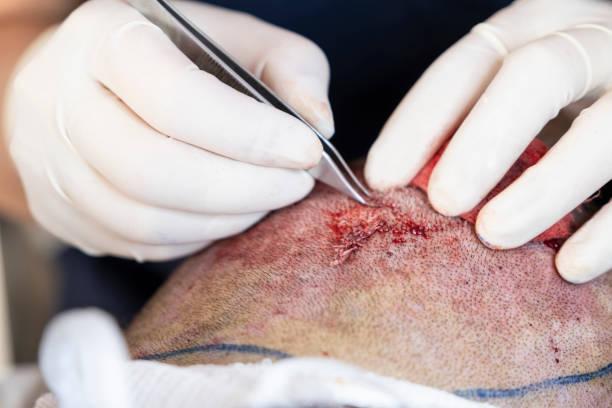
For patients with substantial hair loss, donor management becomes just as important as recipient coverage. A FUSS Hair Transplant in Dubai—also referred to as FUT or Follicular Unit Strip Surgery—removes a carefully planned strip of donor scalp and allows individual follicular units to be dissected under magnification for transplantation. The technique can provide a substantial graft harvest from a defined donor area, but long-term planning is essential because donor resources are finite.
Why Donor Preservation Matters in FUSS Hair Transplant in Dubai
Hair restoration is not simply about replacing the hair that has already disappeared. A surgeon must consider how much donor hair may be available over the patient's lifetime and how progressive hair loss could change the recipient requirements.
The Donor Area Is a Limited Resource
The back and sides of the scalp generally provide the donor region for strip surgery. A suitable donor area needs adequate density and favorable characteristics relative to the size of the recipient area.
Removing too much donor tissue or planning around an unrealistic graft requirement can compromise future options. Good donor management therefore starts before the first incision.
Why Advanced Hair Loss Requires Long-Term Thinking
A patient with extensive frontal, mid-scalp, and crown loss may require substantial coverage. However, the visible bald area can be much larger than the available donor supply.
The treatment plan should prioritize the areas that create the greatest improvement in overall scalp coverage while maintaining enough donor capacity for possible future needs.
How FUSS Harvesting Works
FUSS is the term used for follicular unit strip surgery. The International Society of Hair Restoration Surgery notes that FUSS and FUT are used interchangeably for the strip-harvesting approach in which follicular units are microscopically dissected from a linear scalp strip.
Donor Strip Removal
After scalp preparation and local anesthesia, a strip of hair-bearing scalp is removed from a selected donor region. The donor wound is then closed, leaving a linear scar that is generally concealed by surrounding hair when donor planning and closure are appropriate.
Microscopic Graft Dissection
The removed strip is examined under magnification and divided into individual follicular-unit grafts. This preserves the natural groupings of follicles rather than transplanting large, artificial plugs.
Recipient-Site Preparation
The surgeon then creates recipient sites according to the planned hairline, direction, angle, spacing, and density. The prepared grafts are inserted into these sites while protecting the surrounding native follicles.
The Donor-Preservation Advantage of Strip Harvesting
Strip harvesting has a different donor-area footprint from FUE. Instead of removing individual follicular units throughout the donor region, a defined strip is excised and the remaining scalp is closed.
Concentrated Harvesting
This approach can provide a substantial number of follicular units from a single strip. The medical literature describes maximum follicular-unit harvest and reduced follicular transection as important technical advantages of strip harvesting when appropriately performed.
A Single Linear Donor Scar
FUSS produces a linear scar rather than the multiple small extraction sites associated with FUE. The scar's appearance depends on factors including surgical technique, closure, healing, scalp characteristics, and future donor-area changes.
Why Hair Length Matters
Patients who prefer very short hairstyles may need to give greater consideration to the visibility of a linear donor scar. Conversely, patients who normally keep adequate hair length may find the scar easier to conceal.
Which Patients May Benefit From FUSS Hair Transplant in Dubai
Technique selection should be individualized rather than based solely on the severity of baldness.
Patients Requiring Larger Graft Numbers
FUT/FUSS can be useful when a substantial number of follicular units are required and the donor area is suitable. Clinical references describe strip harvesting as particularly useful in advanced alopecia because a relatively large number of grafts can be obtained from the strip.
Patients With Favorable Donor Density
Adequate donor density and sufficient donor surface area are important prerequisites for successful strip harvesting.
Patients Comfortable With a Linear Scar
The donor scar should be discussed before surgery. Patients should understand how the scar may interact with their preferred hairstyle and whether future procedures could affect its appearance.
How Donor Planning Changes With Hair Loss Pattern
| Hair-loss pattern | Main donor-planning issue | Recipient strategy |
|---|---|---|
| Predominantly frontal recession | Preserve donor supply for future progression | Prioritize a natural, age-appropriate hairline |
| Frontal and mid-scalp thinning | Larger coverage requirement | Balance hairline density with central coverage |
| Advanced diffuse loss | Limited donor-to-recipient ratio | Allocate grafts to the most visually important regions |
| Extensive crown loss | Large recipient surface | Avoid using disproportionate donor supply on the crown |
| Progressive pattern with uncertain future loss | Future demand may increase | Preserve donor capacity for later restoration |
The purpose of this planning is not to promise a particular density. It is to make the available donor supply work efficiently across the patient's actual pattern of hair loss.
How the Hairline Uses Donor Resources
The frontal hairline requires particularly careful graft selection because it is the most visible transition between forehead and scalp.
Single-Hair Grafts at the Front
Fine single-hair follicular units can be used strategically along the leading edge to create a softer transition. Larger follicular units can then be positioned behind the hairline where greater density is appropriate.
Directional Control
The angle of implantation changes as the hairline moves into the frontal scalp. Poorly controlled angles can create an unnatural upright appearance even when graft survival is satisfactory.
Density Behind the Hairline
A natural hairline is not created by maximizing density at its leading edge. The transition needs to move from fine, irregular single hairs toward progressively stronger density behind it.
Why Graft Quality Matters More Than a Simple Graft Count
Two procedures using the same number of grafts can produce different coverage because follicular units vary in the number of hairs they contain and in their quality.
Follicular Unit Composition
A follicular unit may contain one or several hairs. Microscopic dissection allows the surgical team to identify these natural groupings and allocate them according to the recipient area's needs.
Protecting the Graft During Dissection
The follicle is a delicate biological structure. Excessive handling, dehydration, or mechanical trauma can compromise graft quality.
Strip harvesting allows grafts to be dissected under magnification after removal of the donor strip, supporting controlled preparation.
For patients researching hair transplant treatment options in Dubai, this distinction is important: donor preservation is not simply about how many follicles are removed, but how intelligently those follicles are selected, dissected, allocated, and implanted.
FUSS Versus FUE for Donor Management
FUSS and FUE use different donor-harvesting mechanisms. Neither should be selected solely because one technique is considered universally superior.
FUSS Donor Harvesting
FUSS removes a strip of donor scalp and separates follicular units from it under magnification. Its main donor-area trade-off is the resulting linear scar.
FUE Donor Harvesting
FUE removes individual follicular units through small punch excisions distributed throughout the donor region. It avoids a linear strip scar but can produce multiple small scars.
The Patient-Specific Decision
Donor density, scalp laxity, hair-loss stage, desired coverage, hairstyle, previous surgery, and future restoration requirements can all influence technique selection.
The ISHRS notes that the surgical method and instruments should be tailored to the surgeon's experience and the individual characteristics of the patient.
Scalp Laxity and Strip Planning
Strip surgery requires enough scalp mobility to allow the donor wound to close appropriately.
Why Scalp Laxity Matters
The surgeon needs to remove a strip that can be closed without excessive tension. Excessive tension can affect scar quality and wound healing.
Donor-Site Assessment
A proper consultation should evaluate donor density, scalp laxity, previous scars, and the direction of existing hair. These factors help determine whether strip harvesting is appropriate.
Previous Hair Transplants
Patients who have already undergone transplantation require additional assessment. Existing donor scars or previous strip removals can alter the available donor area and influence subsequent planning.
Recovery After FUSS Hair Transplant in Dubai
Recovery includes both the recipient scalp and the linear donor incision.
Early Donor Healing
Tajmeels' published FUT information describes early redness, swelling, tenderness, tightness, and scabbing as possible postoperative effects. It also notes that donor-site stitches may be removed around day ten, depending on the clinical plan.
Protecting the Recipient Area
Patients are advised to avoid touching or scratching the transplanted area, limit strenuous physical activity during early recovery, and follow the prescribed washing instructions.
Hair Growth Timeline
Tajmeels reports that early visible growth can appear around months four to five, followed by progressive thickening and coverage, with mature results developing around ten to twelve months.
The exact timeline varies between patients.
Dubai's Environment and Donor-Site Recovery
Dubai's climate creates practical considerations during the postoperative period.
Desert Heat
Heat and outdoor exposure can make postoperative activity management more demanding. Patients should follow the treating surgeon's instructions regarding exercise, sweating, and outdoor exposure.
Strong Sunlight
Direct sunlight should be avoided during early healing. Tajmeels specifically advises patients to protect the scalp from direct sun following FUT treatment.
Indoor Air Conditioning
Extended exposure to air-conditioned environments can contribute to scalp dryness. Postoperative cleansing and topical care should follow the clinician's prescribed regimen rather than adding cosmetic products prematurely.
Planning for Future Hair Loss
Donor preservation becomes especially important when the patient's native hair may continue thinning.
Treating the Visible Problem Without Spending the Entire Donor Supply
A strong treatment plan considers both present appearance and future progression. If every available graft is used during the first procedure, later options may become more limited.
Protecting Existing Native Hair
Transplantation does not prevent untreated native hair from continuing to thin. The official Tajmeels hair-transplant information notes that transplanted follicles are designed to provide long-lasting growth, while untreated areas can still experience natural thinning over time.
Building an Age-Appropriate Hairline
A hairline that is excessively low can consume donor resources without necessarily providing the most sustainable long-term design. Conservative planning can preserve grafts for areas that may become more affected later.
Questions to Ask Before Choosing FUSS
Is FUSS the same as FUT?
Yes. The ISHRS uses FUSS, or Follicular Unit Strip Surgery, as a more specific term for the strip-harvesting method commonly called FUT.
Does FUSS leave a scar?
Yes. Strip harvesting produces a linear donor scar, although its visibility varies according to surgical technique, healing, hair length, and individual scar characteristics.
Is FUSS suitable for advanced hair loss?
It can be appropriate for selected patients with advanced loss and a favorable donor area. Clinical references identify strip harvesting as useful when a larger number of grafts are required, but candidacy must be determined individually.
Are FUSS results permanent?
Transplanted follicles are generally intended to provide long-lasting growth, but the untreated native hair can continue to thin. Long-term planning therefore remains important.
What Patients in Dubai Should Do Next
A consultation for FUSS Hair Transplant in Dubai should begin with donor-area analysis rather than immediately deciding how many grafts to transplant. The surgeon can evaluate donor density, scalp laxity, current hair-loss distribution, recipient requirements, existing scars, and the likelihood of future progression before recommending a harvesting strategy.
Tajmeels describes its FUT process as involving scalp assessment, donor-strip removal, microscopic follicular-unit dissection, recipient-site preparation, and individual graft implantation. This structured approach allows the available donor supply to be considered as a long-term resource rather than simply a source for one procedure.
The Strategic Investment
The value of FUSS lies not only in obtaining a substantial number of follicular units but in using the donor area intelligently over the patient's longer hair-restoration journey. Careful strip planning, microscopic graft dissection, recipient-site design, scar management, and preservation of future donor capacity all influence the usefulness of the procedure. For patients considering FUSS Hair Transplant in Dubai, Tajmeels Clinic provides a pathway for individualized donor assessment and treatment planning based on the patient's current and anticipated hair-restoration needs.

 English
 Arabic
 French
 Spanish
 Portuguese
 Deutsch
 Turkish
 Dutch
Dutch
 Italiano
 Russian
 Romaian
 Greek
Greek