


What Should Investors Check Before Buying Tokenized Real Estate?
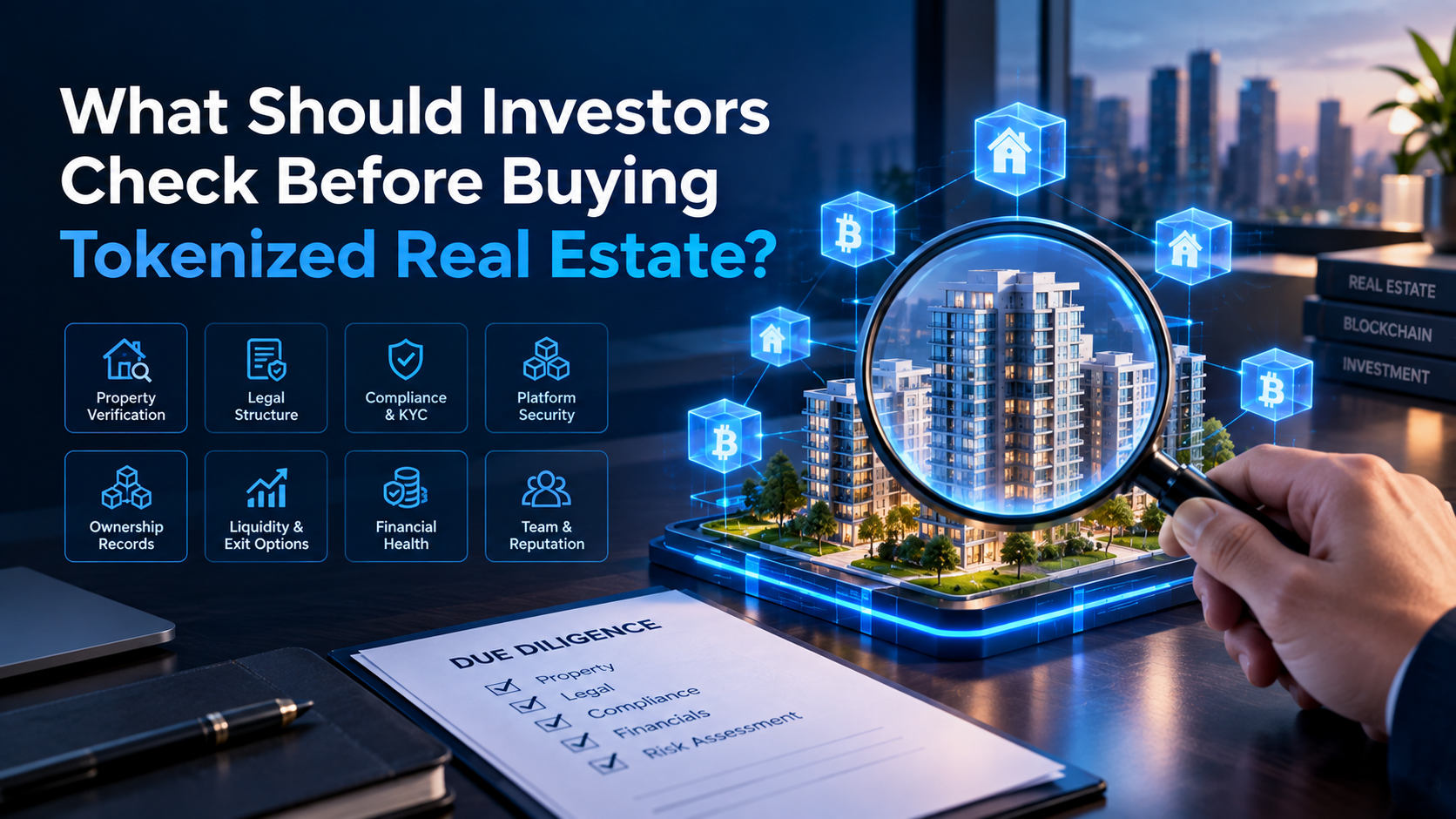
Tokenized real estate is creating new ways for investors to gain exposure to property-related assets through blockchain-based digital tokens. Instead of requiring investors to purchase an entire property, tokenization can represent fractional interests or other rights connected to an underlying real estate asset.
However, purchasing a token does not automatically mean purchasing direct ownership of a physical property. The legal structure, investor rights, property documentation, platform infrastructure, and exit mechanisms can vary significantly between projects.
Before investing in tokenized real estate, investors should understand what they are actually buying and carefully evaluate the systems supporting the investment.
1. Understand What the Token Actually Represents
The first question investors should ask is simple: What does this token represent?
A token could represent an interest in a property-holding company, a contractual claim, a share of rental income, a debt instrument, or another economic right.
For example, an investor may purchase tokens associated with a building but legally hold an interest in an entity that owns the building rather than direct title to the property.
Investors should therefore review the offering documentation and understand:
-
The rights attached to the token
-
The entity issuing the token
-
The relationship between the token and the property
-
Voting or governance rights
-
Income or distribution rights
-
Transfer and redemption conditions
Understanding these details can prevent confusion between digital token ownership and legal property ownership.
2. Verify the Underlying Property
Before evaluating the token itself, investors should examine the asset behind it.
Important information can include:
-
Property location
-
Ownership documentation
-
Property type
-
Current valuation
-
Occupancy status
-
Rental income
-
Existing debt
-
Mortgages or liens
-
Development or construction status
-
Property management arrangements
A blockchain ledger can provide transaction transparency, but it does not independently verify whether the underlying property exists, who legally owns it, or whether its valuation is accurate.
Investors should therefore consider the traditional due-diligence process alongside blockchain-based information.
3. Examine the Legal Structure
The legal structure determines how investors' rights are connected to the underlying property.
A tokenization project could use a special-purpose vehicle, company, trust, partnership, or another legal arrangement to hold the asset.
Investors should determine:
-
Who legally owns the property?
-
Who issues the tokens?
-
What rights does a token holder have?
-
What happens if the property is sold?
-
How are disputes handled?
-
Can ownership rights be transferred?
-
What happens if the issuing entity becomes insolvent?
Clear documentation should explain the relationship between the investor, token, issuing entity, and property.
4. Check Regulatory and Compliance Requirements
Tokenized real estate can involve securities, investment, property, financial-services, and data-protection regulations depending on the structure and jurisdiction.
Investors should understand whether the project has appropriate processes for:
-
Know Your Customer (KYC)
-
Anti-Money Laundering (AML)
-
Investor eligibility
-
Jurisdictional restrictions
-
Required disclosures
-
Transaction reporting
-
Data protection
A project operating across multiple countries may face additional regulatory complexity because investor requirements can differ between jurisdictions.
5. Evaluate the Tokenization Platform
The platform supporting the investment is another important part of due diligence.
Investors should examine:
-
Blockchain network
-
Smart-contract architecture
-
Platform security
-
Wallet infrastructure
-
Custody arrangements
-
Investor onboarding
-
Transaction records
-
Compliance controls
-
Platform operating history
A professionally designed platform should provide investors with clear information about transactions, ownership records, and relevant investment documentation.
Businesses building these ecosystems may use white label tokenization solutions to establish customizable infrastructure for issuing and managing tokenized assets.
6. Understand How Ownership Records Are Managed
Tokenized real estate generally involves both blockchain and traditional records.
On-chain systems can record:
-
Wallet addresses
-
Token balances
-
Transfers
-
Transaction history
Off-chain systems may contain:
-
Investor identities
-
KYC documents
-
Legal agreements
-
Property records
-
Tax information
-
Beneficial ownership details
Investors should understand how these two layers are connected.
If blockchain records and legal or investor records become inconsistent, resolving ownership questions can become complicated. A project should therefore have appropriate reconciliation, record-keeping, and correction procedures.
7. Investigate Liquidity and Exit Options
One of the most important questions for an investor is: How can I exit the investment?
Tokenization can make ownership interests digitally transferable, but that does not guarantee an active secondary market.
Investors should check:
-
Whether a secondary marketplace exists
-
Who can purchase the tokens
-
Whether transfers are restricted
-
Whether there is a lock-up period
-
Whether redemption is available
-
How buybacks are handled
-
What fees apply when selling
It is important to distinguish token liquidity from property liquidity. A digital token may be technically transferable while the underlying real estate remains difficult or time-consuming to sell.
8. Examine the Financial Economics
Investors should understand the complete financial model rather than focusing only on the expected return.
Relevant factors include:
-
Token purchase price
-
Property valuation
-
Rental income
-
Management fees
-
Platform fees
-
Property maintenance costs
-
Taxes
-
Distribution structure
-
Financing costs
-
Potential dilution
The offering documents should explain how income is generated and distributed and which expenses are deducted before investors receive returns.
9. Review the Property Valuation
Property valuation directly affects the economics of a tokenized investment.
Investors should investigate:
-
Who performed the valuation
-
When the property was last valued
-
The valuation methodology
-
Whether an independent party reviewed it
-
How frequently the property is revalued
-
Whether market conditions could materially affect the valuation
A token price should not be evaluated independently from the value and financial performance of the underlying asset.
10. Assess Smart-Contract and Cybersecurity Risks
Blockchain infrastructure introduces technical risks alongside traditional real estate risks.
Investors should look for information about:
-
Smart-contract audits
-
Security testing
-
Access controls
-
Wallet security
-
Private-key management
-
Administrative permissions
-
Incident-response procedures
A smart contract can automate transfers and other processes, but poorly implemented code can introduce vulnerabilities or unexpected behavior.
Security should therefore be considered throughout the investment lifecycle rather than only during token issuance.
11. Understand What Happens If the Platform Fails
Investors should consider scenarios that extend beyond normal operations.
For example:
What happens if the platform stops operating?
Important questions include:
-
Who maintains the investor records?
-
Who controls the underlying property?
-
Can tokens continue to be transferred?
-
What happens to investor rights?
-
Is there a recovery process?
-
What happens if the issuer becomes insolvent?
-
Can investors access relevant legal documentation independently?
A clearly documented contingency plan can help investors understand their position if the technology provider or platform operator experiences serious problems.
12. Research the Organizations Behind the Project
Tokenized real estate can involve several different organizations.
These may include:
-
Property owners
-
Developers
-
Token issuers
-
Technology providers
-
Custodians
-
Legal advisors
-
Property managers
-
Valuation firms
-
Compliance providers
Investors should understand what each organization does and how responsibilities are divided.
The credibility and transparency of the organizations involved can be just as important as the blockchain technology being used.
13. Watch for Common Red Flags
Investors should be cautious when important information is difficult to verify.
Potential warning signs include:
-
Guaranteed returns
-
Unclear ownership structures
-
Limited property documentation
-
No explanation of investor rights
-
Unverified property valuations
-
Unclear fees
-
No identifiable exit mechanism
-
Limited information about the issuer
-
Excessive marketing without supporting documentation
-
Unclear custody arrangements
A sophisticated website or blockchain interface should not substitute for proper investment documentation and due diligence.
14. A Practical Tokenized Real Estate Due-Diligence Checklist
Before investing, investors can use a simple checklist:
-
Property: Is the underlying asset verified?
-
Ownership: Who legally owns the property?
-
Token: What rights does the token provide?
-
Legal structure: How are investor rights established?
-
Compliance: Are appropriate KYC, AML, and regulatory processes in place?
-
Valuation: Is the property's value independently supported?
-
Financials: Are income, expenses, and fees clearly explained?
-
Liquidity: How can the investment be transferred or exited?
-
Security: Has the smart contract been appropriately tested?
-
Custody: Who controls the relevant assets and wallets?
-
Records: How are blockchain and legal ownership records synchronized?
-
Contingency: What happens if the platform or issuer fails?
Conclusion
Tokenized real estate can provide investors with new ways to access property-related opportunities, but blockchain transparency does not eliminate the need for traditional investment due diligence.
Investors should look beyond the token price and examine the underlying property, legal structure, investor rights, compliance framework, valuation, financial model, platform security, ownership records, and exit options.
The most important question is not simply whether a property has been tokenized. It is whether the investor can clearly understand what the token represents, what rights it provides, how those rights are protected, and how the investment can be managed throughout its lifecycle.
By evaluating these factors before investing, investors can make more informed decisions and better understand the opportunities and risks associated with tokenized real estate.

 English
 Arabic
 French
 Spanish
 Portuguese
 Deutsch
 Turkish
 Dutch
Dutch
 Italiano
 Russian
 Romaian
 Portuguese (Brazil)