


How to Choose a CRM Development Company for Your Business in 2026?
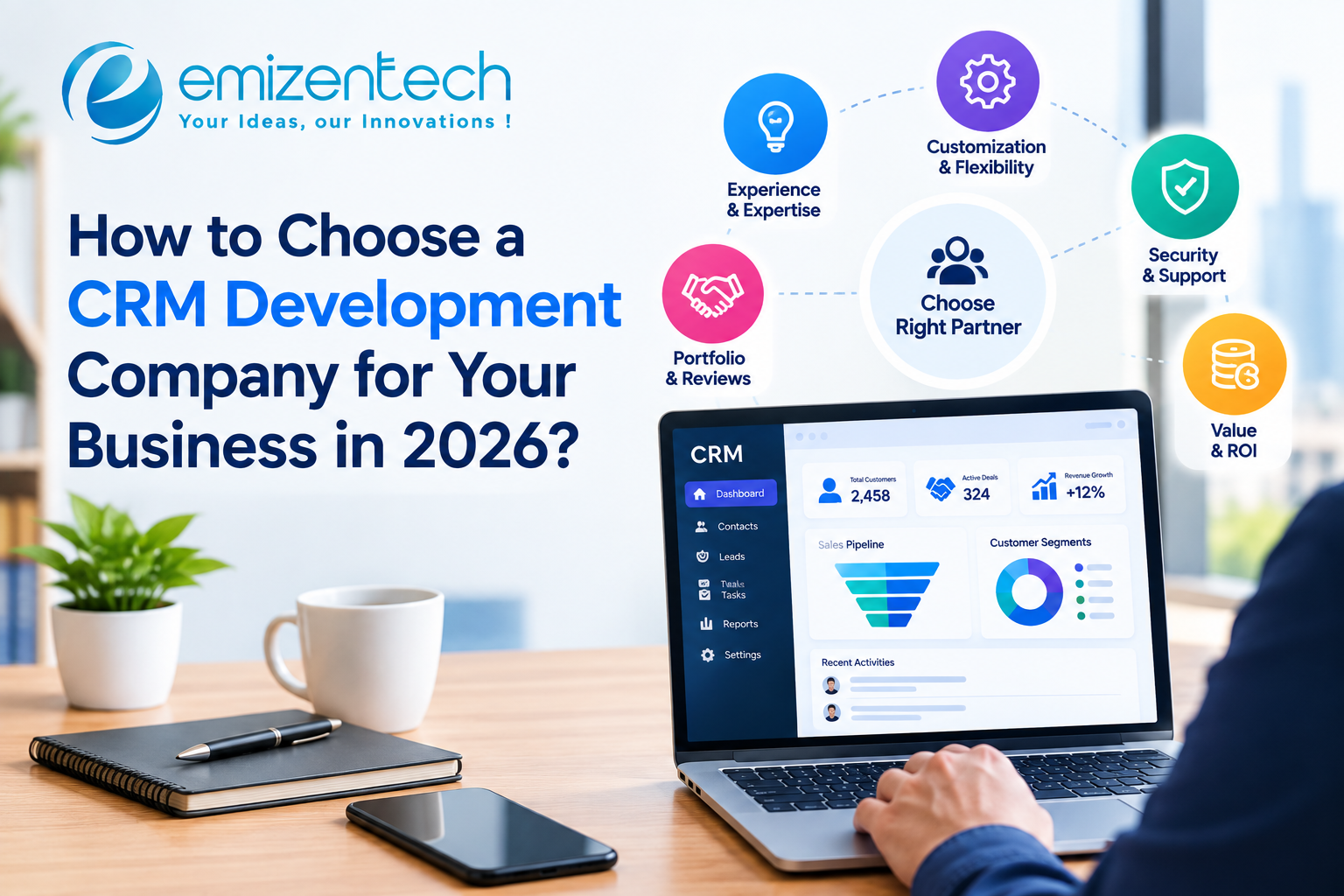
Managing customer relationships effectively has become one of the biggest challenges for growing businesses. As customer expectations rise and business processes become more complex, having the right system in place to track interactions, sales, and support can make a real difference. This is why more organizations are looking beyond generic software and exploring options tailored to their specific needs. Choosing the right partner for this task, however, requires careful thought, since the decision affects daily operations for years to come.
Why Businesses Need a Custom CRM Solution?
Most businesses start with a ready-made CRM platform because it's quick to set up and inexpensive. Over time, though, limitations start to show. Generic systems often come with rigid workflows, limited customization options, and features that don't quite match how a specific team actually works. A sales team in manufacturing, for instance, tracks deals very differently from a team selling subscription software, yet off-the-shelf tools tend to treat both the same way.
This is where custom development becomes valuable. A system built around actual business processes can accommodate specific sales cycles, unique reporting needs, and workflows that reflect how teams really operate. It also allows for better integration with existing tools, whether that's accounting software, marketing platforms, or internal databases. Instead of forcing a business to adapt to the software, the software adapts to the business.
Key Factors to Consider When Choosing a CRM Development Company
Several factors should be considered when evaluating a CRM development company, including technical capabilities, customization options, integration support, scalability, communication, and long-term maintenance. Looking at these aspects together can help businesses understand how well the development process may fit their operational needs and contribute to a useful, scalable CRM system.
Industry Experience & Domain Expertise
A team that has worked with businesses similar to yours will understand common pain points and won't need extensive hand-holding to grasp your requirements. A healthcare business, for example, has very different data handling needs compared to a real estate firm.
Technical Skills & Technology Stack
The company should be comfortable working with modern frameworks, databases, and cloud infrastructure, and should be able to explain their technical choices in plain terms rather than jargon.
Portfolio and Case Studies
Reviewing past work gives a sense of the kind of projects a company has delivered before. Look for examples with similar scale or complexity to what you need, and ask about the outcomes, not just the features built.
Client Reviews and Testimonials
Independent feedback offers an outside perspective on how a company communicates, handles deadlines, and resolves issues. Reviews on independent platforms are usually more reliable than testimonials listed only on a company's own website.
Customization and Scalability Capabilities
Since business needs change over time, the system should be built with growth in mind. A setup that works well for fifty users should ideally be able to handle five hundred without a complete rebuild.
Integration Support
Most businesses already use email marketing platforms, invoicing tools, or communication apps, and the CRM needs to connect with these smoothly through APIs and third-party integrations.
Data Security and Compliance Standards
Given how much sensitive customer data a CRM holds, security cannot be an afterthought. Ask about encryption practices, access controls, and compliance with relevant data protection regulations for your industry and region.
Post-Development Support and Maintenance
A good CRM software development company doesn't disappear after launch. Ongoing support ensures bugs get fixed, updates roll out smoothly, and the system continues to perform as your team grows.
Pricing and Engagement Models
Understanding how costs are structured, along with how the company handles communication and project management, helps set realistic expectations from day one.
Mistakes to Avoid While Selecting a CRM Development Partner
Some common mistakes can lead to disappointing results even when the intent behind the decision is right. Being aware of these pitfalls in advance can help avoid unnecessary setbacks later.
Choosing Based on Cost Alone
The cheapest option often cuts corners on testing, security, or long-term support, which can end up costing more in the long run through rework or downtime.
Ignoring Post-Launch Support Needs
Businesses sometimes focus only on getting the product launched and overlook what happens afterward, only to struggle later when something breaks and there's no one to call.
Ignoring Scalability for Future Growth
A system designed only for current needs can become a bottleneck within a year or two as the business expands and requirements change.
Not Checking Real Client Feedback
Skipping this step means missing out on honest insights. A quick conversation with a past client can reveal a lot that a sales pitch won't.
How to Evaluate a CRM Development Company?
A structured evaluation process makes it easier to compare options fairly and make a confident decision.
Reviewing Their Past Projects
Look closely at projects in your industry or with similar functional requirements, and ask specific questions about challenges they faced and how they resolved them.
Assessing Their Development and Consultation Process
Do they take time to understand your business before jumping into development, or do they offer a one-size-fits-all approach? A thoughtful discovery phase is usually a good sign.
Checking Team Expertise and Certifications
This helps confirm that the people actually working on your project have relevant experience, not just the sales team presenting the pitch.
Comparing Pricing vs. Value Offered
This matters more than comparing raw numbers. A slightly higher quote that includes thorough testing, documentation, and support may be a better investment than a lower one that skips these steps.
Emerging CRM Trends to Look for in 2026
The CRM landscape continues to evolve, and it helps to know what capabilities are becoming standard.
AI-powered features are increasingly common, helping teams with tasks like lead scoring, predictive analytics, and automated data entry, which reduces manual work and improves accuracy. Automation and workflow integration are also expanding, allowing repetitive tasks such as follow-up emails or status updates to happen without manual intervention.
Cloud-based and mobile-first design has become a baseline expectation rather than an added feature, since sales and support teams frequently work outside a traditional office setting. When evaluating CRM development services, ask how the provider incorporates these capabilities and whether their approach is genuinely useful for your team or added only to a feature list.
Conclusion
Choosing the right partner for CRM development is not a decision to rush. It involves balancing technical capability, industry understanding, communication style, and long-term support into one coherent choice. Taking the time to evaluate options carefully, asking the right questions, and avoiding common pitfalls can save considerable time and cost down the road.
CRM Development can help businesses create systems that fit their specific workflows, customer processes, and operational requirements. EmizenTech has experience developing tailored CRM systems across different industries, demonstrating how the right development approach can align closely with a business’s actual working style rather than forcing teams to adjust to rigid software.
FAQs
1. How long does it take to build a custom CRM?
Timelines vary based on complexity, but most projects take anywhere from a few weeks for a basic version to several months for a fully featured system.
2. Is a custom CRM more expensive than ready-made software?
Initial costs are usually higher, but a custom solution can save money over time by reducing the need for workarounds and third-party add-ons.
3. Can an existing CRM be upgraded instead of building a new one?
Yes, in many cases, you can enhance existing systems with new features, integrations, or improved workflows rather than starting from scratch.
4. What industries benefit most from custom CRM systems?
Industries with unique workflows such as healthcare, real estate, manufacturing, and financial services often see the biggest benefits from tailored solutions.
5. How do I know if my business needs a custom CRM?
If your team frequently works around limitations in existing software or relies on spreadsheets to fill gaps, it may be time to consider a custom approach.

 English
 Arabic
 French
 Spanish
 Portuguese
 Deutsch
 Turkish
 Italiano
 Russian
 Romaian
 Portuguese (Brazil)
 Greek
Greek