


Planning a Pilot Career: Costs, Training and DGCA
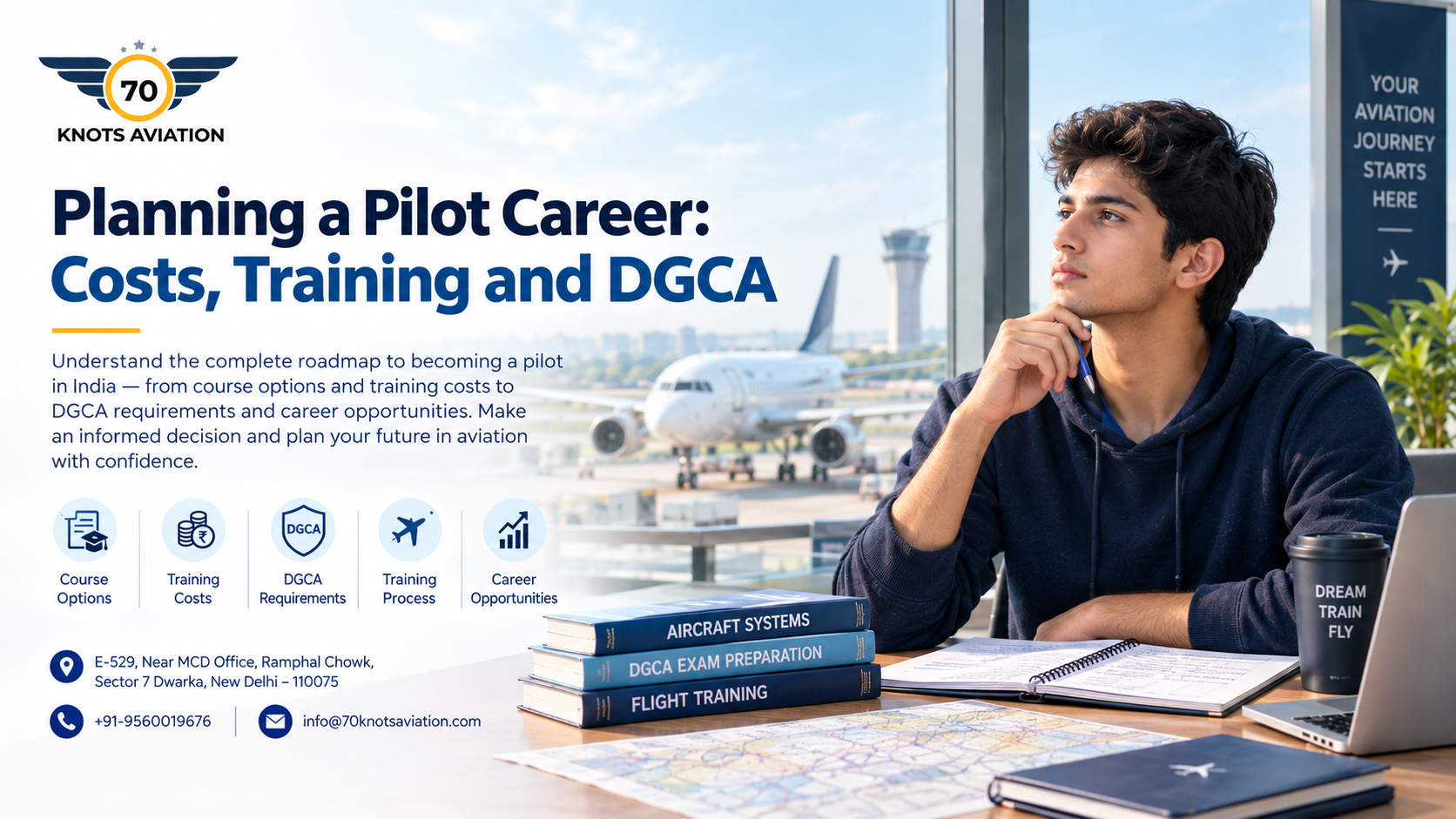
Choosing aviation as a career is a major decision for students who enjoy technology, travel, responsibility, and the idea of working in an aircraft cockpit. However, a successful pilot career begins long before a student enters the cockpit. Understanding the training pathway, financial requirements, examinations, and daily commitment can help aspiring pilots prepare more effectively.
For students and parents, researching these areas before enrolling can provide a clearer picture of what pilot training involves and what should be considered when selecting an aviation training institute.
Is Pilot Training the Right Career Path for You?
Aviation can be an exciting field, but professional flying also requires discipline and continuous learning. Pilots are responsible for following procedures, communicating effectively, understanding weather conditions, and making decisions based on established aviation practices.
Students considering this career should be comfortable with technical subjects and willing to maintain a consistent study routine. Flying training also requires patience because developing practical skills takes time and regular practice.
Before joining a programme, students should research the profession rather than making a decision based solely on the attraction of flying an aircraft.
The First Steps Towards Becoming a Pilot
Students researching How to become a pilot should begin by understanding the requirements associated with their intended licence.
Educational qualifications, medical fitness, theoretical knowledge, practical flying experience, and licensing requirements all form part of the broader journey.
It is useful to start by checking the current requirements and then creating a personal training plan. This can include deciding when to complete medical assessments, when to begin ground classes, how to prepare for examinations, and how to organise practical flight training.
Starting with a clear plan can prevent students from overlooking important stages.
Why Ground Knowledge Matters
A pilot's responsibilities extend far beyond controlling an aircraft. Professional pilots need knowledge of navigation, meteorology, aircraft systems, aviation regulations, communication procedures, and other technical subjects.
Ground training provides students with the theoretical foundation required to understand these areas.
Students should therefore take classroom training seriously. Building a strong knowledge base can make it easier to understand practical flying lessons and prepare for the applicable examinations.
Regular revision is particularly useful because aviation subjects contain technical terminology and concepts that students need to understand accurately.
Preparing for DGCA Pariksha
The examination stage is an important part of the aviation training journey. Students preparing for DGCA examinations should understand the current registration process, applicable subjects, examination schedules, and documentation requirements.
The DGCA Pariksha system is relevant to candidates preparing for DGCA examinations. Because procedures and schedules can change, students should check the latest official information when planning their examinations.
A sensible preparation approach is to divide the syllabus into smaller sections instead of attempting to cover everything immediately.
Students can also:
- Create a weekly study schedule.
- Revise completed topics regularly.
- Practise examination-style questions.
- Maintain notes for difficult concepts.
- Track examination-related updates.
- Seek additional guidance when a subject requires more attention.
Consistent preparation can help students manage the theoretical side of pilot training more effectively.
Understanding the Financial Side of Pilot Training
The cost of aviation education is an important consideration for most students. pilot course fees in india can differ from one training organisation to another because programmes may have different fee structures and training arrangements.
The overall expense may depend on factors such as:
- Number of flying hours
- Aircraft type
- Instructor charges
- Ground training
- Examination-related expenses
- Medical assessments
- Study materials
- Documentation and licensing
- Accommodation and transportation
Students should request a detailed cost structure before enrolling. Understanding what is included and what may be charged separately can make financial planning easier.
It is also worth remembering that the final cost can be influenced by the pace of individual training. Students may require additional flying practice depending on their progress and applicable requirements.
What to Look for in a Pilot Training Institute
Choosing an aviation training institute should involve careful research. Students should not rely on advertisements alone when comparing their options.
When searching for a Best Pilot training school in delhi, students can investigate several practical factors.
Training Environment
A structured learning environment can help students maintain consistency in both ground studies and practical training.
Faculty Support
Students can ask about the qualifications and experience of instructors and how academic questions are handled during training.
Examination Guidance
Proper guidance can be useful when students are preparing for applicable DGCA examinations and need help understanding difficult subjects.
Fee Details
A transparent fee structure allows students and parents to plan their finances more effectively.
Student Communication
Students should feel comfortable asking questions about schedules, training requirements, documentation, and other aspects of the programme.
Why Planning Ahead Can Help
Pilot training involves several stages that are connected to one another. A delay or misunderstanding at one stage can sometimes affect subsequent planning.
For example, students may need to coordinate their academic preparation with examination schedules and practical training. Understanding these relationships in advance can help them organise their time.
Financial planning is equally important. Families should consider not only the main course charges but also associated expenses that may arise during the training period.
Having a realistic plan allows students to focus on their studies and practical training without unnecessary confusion.
70Knots Aviation: Supporting Aspiring Aviation Students
At 70Knots Aviation, we understand that students need more than a course name when they begin exploring a career in aviation. They often have questions about examinations, training, costs, eligibility, and the overall journey towards becoming a professional pilot.
We provide guidance to students who want to understand pilot training and prepare for different stages of their aviation education. Our focus is on helping students understand the process clearly so they can plan their next steps with better information.
Students can visit us at:
E-529, Near MCD Office, Ramphal Chowk, Sector 7 Dwarka, New Delhi – 110075
For enquiries and further information:
Phone: +91-9560019676
Email: info@70knotsaviation.com
Questions Students Often Have
How early should I start planning for pilot training?
Students can begin researching eligibility, medical requirements, training options, and examination procedures before enrolling. Early research can make the transition into training easier to organise.
Can pilot training costs vary?
Yes. Training expenses can differ based on the institute, flying hours, aircraft, location, course structure, and additional requirements.
What is the purpose of ground classes?
Ground classes provide theoretical knowledge about aviation subjects and help students prepare for the applicable examinations.
Why should I research an institute before enrolling?
Different institutes can have different training structures, facilities, schedules, support systems, and fee arrangements. Research allows students to understand these differences before making a commitment.
Is aviation training only about flying?
No. Professional pilot training involves theoretical education, examinations, medical requirements, practical flying, documentation, and continued learning.
Building a Clear Path Towards Aviation
Aviation can offer a specialised career path for students who are prepared to invest time in learning and practical training. The best place to begin is with information: understand the requirements, research training options, examine the expected costs, and learn about the examination process.
Pilot training is a journey made up of multiple stages. By preparing for each stage individually and seeking reliable guidance when needed, students can approach their aviation education with a clearer understanding of the responsibilities and commitment involved.

 English
 Arabic
 French
 Spanish
 Portuguese
 Deutsch
 Turkish
 Italiano
 Russian
 Romaian
 Portuguese (Brazil)
 Greek
Greek