


How Online Reviews Guide Choosing the Right Inhaler Device
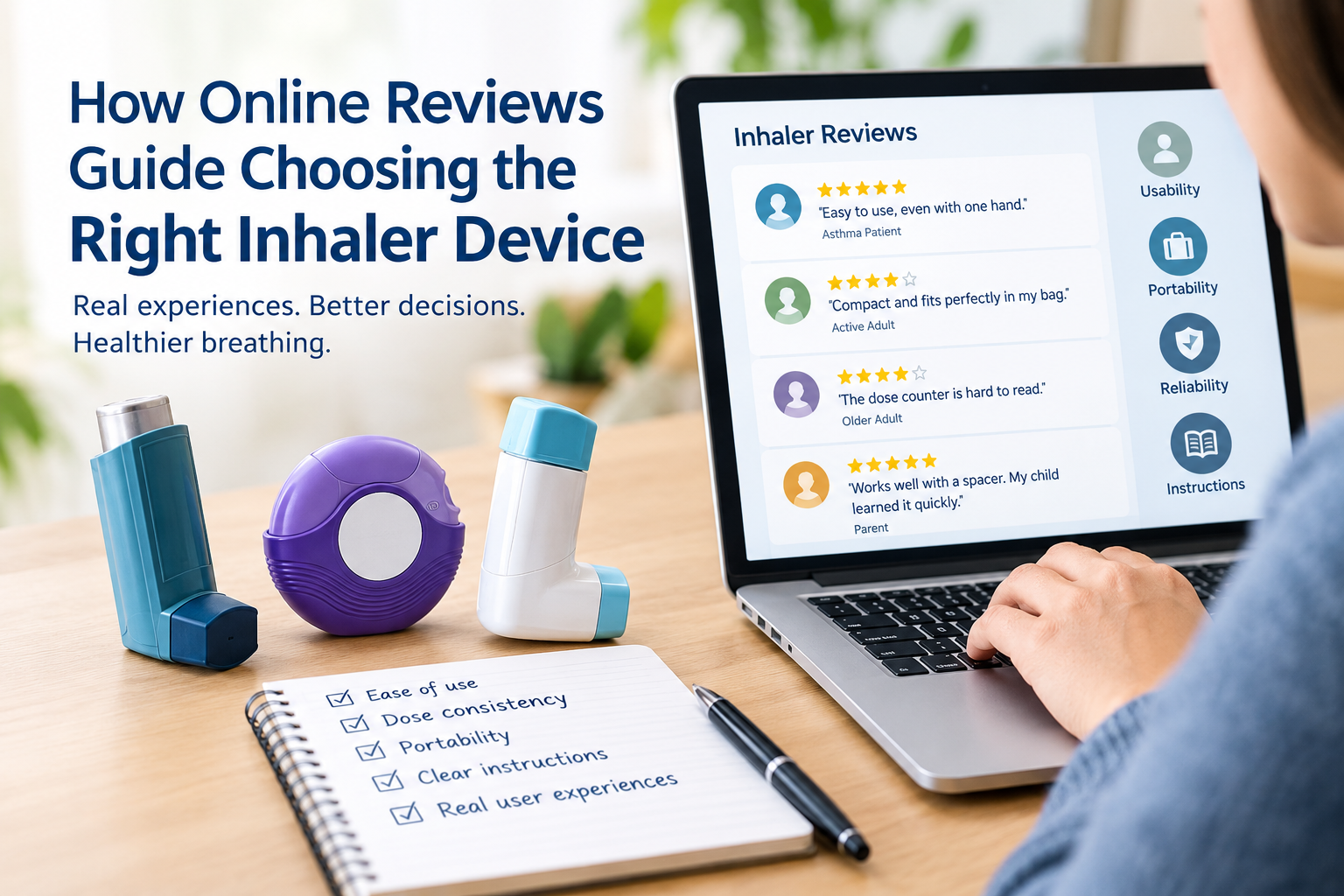
Choosing an inhaler device can feel overwhelming, especially when there are several types, brands, and features to compare. For people living with asthma or COPD, the right device can make daily management easier, improve medication delivery, and reduce frustration during an attack. Online reviews have become a practical resource because they reflect real experiences from patients, caregivers, and sometimes even healthcare professionals. When read carefully, they can help you understand how a device performs in everyday life, not just in a product description.
Many people also use online resources to coordinate care, compare device options, and manage medication needs. If you are trying to understand whether a refill or device change is appropriate, searching for inhaler prescription online can be one part of that process, especially when paired with medical guidance. Still, reviews should be used as a decision-support tool, not a replacement for professional advice. The best choice depends on your symptoms, your ability to use the device correctly, and your clinician’s recommendations.
This article explains how to read reviews with a critical eye, what details matter most, and how to separate helpful feedback from noise. The goal is to help you make a smarter, safer choice based on real-world information.
Key Points
- Online reviews can reveal how easy an inhaler is to use in real life.
- Look for comments on usability, portability, dose consistency, and cleaning.
- Reviews are most useful when they describe specific experiences instead of broad opinions.
- Match review insights with your own medical needs and your provider’s advice.
- Never rely on reviews alone when choosing a device for asthma or COPD management.
Why Online Reviews Matter When Choosing an Inhaler
Inhalers are not one-size-fits-all. A device that works well for one person may be difficult for another. Some people need a metered-dose inhaler, while others do better with a dry powder inhaler or a soft mist inhaler. The differences can affect how much coordination is required, how fast the medication is delivered, and whether a spacer is needed.
Online reviews help fill in the gaps that product labels often do not cover. For example, a review might mention that one inhaler is easier to hold with weak hands, while another has a dose counter that is easier to read. Someone else may point out that a device is hard to inhale from if they have low lung strength. These are the kinds of practical details that can make a major difference in daily use.
Real-world feedback often highlights everyday challenges
Medical instructions can explain how a device should work, but reviews often show how it performs in real life. People may discuss whether the cap is difficult to open, whether the dose feels consistent, or whether the inhaler fits easily in a pocket or purse. These details matter because inhaler use happens in busy, sometimes stressful situations.
For people with limited dexterity, arthritis, vision problems, or children learning proper technique, these small issues can determine whether a device is practical. Reviews can also reveal whether a product is intuitive or whether it requires repeated practice before it feels comfortable.
What to Look for in Helpful Reviews
Not every online review is equally useful. Some are emotional reactions, while others provide thoughtful detail. The best reviews usually explain how the device was used, what worked well, and what was frustrating. When comparing inhalers, look for patterns across many reviews rather than focusing on one opinion.
1. Ease of use
Pay attention to comments about setup, activation, and daily use. Was the inhaler easy to load? Did the user understand the instructions? Was the mouthpiece comfortable? Ease of use is especially important for people who need to take medication quickly or who may struggle with fine motor tasks.
2. Consistency of the dose
Some reviews mention whether the medication delivery feels reliable from one puff to the next. While users cannot test dose accuracy at home, repeated reports about weak sprays, clogging, or powder not releasing properly may be worth noting and discussing with a pharmacist or doctor.
3. Portability and design
Many inhalers are carried all day, so size and durability matter. Reviews may mention whether the device fits in a bag, whether it feels fragile, or whether it is easy to keep clean. For active users, these practical details can be just as important as medication type.
4. Clarity of instructions
Patients often comment on whether the directions were simple to follow. If multiple reviews say a device is confusing, that can be a sign that extra training or a different option may be needed. Clear instructions support correct use, and correct use helps the medicine work as intended.
How to Separate Useful Reviews from Noise
Online reviews can be helpful, but they can also be misleading. Some may come from people who did not use the inhaler correctly, while others may reflect unrelated issues like insurance coverage, shipping delays, or personal preferences. It is important to read carefully and think critically.
Watch for specific details
A useful review usually includes context. For example, someone might say they have asthma, have trouble with hand strength, and found a certain inhaler easy to use. That is more helpful than a vague statement like “This was terrible.” Specific details help you judge whether the experience applies to your situation.
Look for repeated themes
If many reviewers mention the same concern, such as a hard-to-press canister or unclear instructions, that pattern may be meaningful. One complaint may be an isolated problem, but repeated comments can signal a broader usability issue.
Be cautious with extreme opinions
Reviews that are overly positive or overwhelmingly negative may not reflect the average experience. Try to balance them with middle-of-the-road reviews that explain both strengths and weaknesses. Balanced feedback is usually more trustworthy than emotional extremes.
Matching Review Insights to Your Needs
What matters most in an inhaler depends on the person using it. A device that is perfect for an adult with strong hand coordination may not work well for a child, older adult, or someone with limited breathing strength. Reviews are most helpful when you use them to compare real-world features against your own needs.
For people with arthritis or weak grip
Comments about grip, button pressure, and cap design are important. A device that requires less force may be easier to manage over time. Reviews can help identify products that are easier to handle, especially during an urgent situation.
For older adults
Older adults may benefit from reviews that mention clear dose counters, simple steps, and easy cleaning. If a device is too complex, missed doses become more likely. Simplicity often improves adherence.
For parents choosing for children
Parents often value inhalers that are forgiving of technique errors and easy to teach. Reviews may mention whether the inhaler works well with a spacer or whether a child can learn the steps quickly. This can be especially helpful when comparing devices for school use or travel.
The Role of Healthcare Professionals
Even the best online review cannot replace medical advice. A clinician can help determine which inhaler type is appropriate based on diagnosis, symptom severity, age, breathing ability, and treatment goals. Pharmacists can also explain how to use the inhaler correctly and check whether your technique is likely to deliver the full dose.
Reviews should be used to prepare better questions, not to make a final decision alone. For instance, if reviews mention that a certain inhaler is hard to use without training, you can ask your healthcare provider whether a demonstration would help or whether another device may be more suitable.
Common Mistakes People Make When Reading Reviews
- Choosing a device based only on star ratings.
- Ignoring whether the reviewer has the same condition or physical limitations.
- Confusing shipping or insurance complaints with actual product performance.
- Assuming one bad review means the inhaler is ineffective for everyone.
- Overlooking the importance of proper technique and training.
A smarter approach is to use reviews as one part of a larger decision. Combine them with professional guidance, product instructions, and your own physical needs.
Practical Example of Using Reviews Wisely
Imagine two inhalers have similar medication options. One has reviews praising its portability but warning that the dose counter is hard to read. The other is slightly larger but is often described as easier to use and better for people with limited hand strength. If you have good vision and want something discreet, the first may seem appealing. If you struggle with grip or want a more straightforward device, the second may be a better fit.
This kind of comparison is exactly where reviews help. They do not tell you what to choose, but they help you understand trade-offs before you talk with your doctor or pharmacist.
Conclusion
Online reviews can be a valuable guide when choosing the right inhaler device, especially when they provide detailed, real-world experiences. They can help you understand ease of use, portability, instruction clarity, and other practical factors that matter in daily life. At the same time, reviews should never replace medical advice, proper training, or a personalized treatment plan.
The most effective approach is to read reviews carefully, look for patterns, and use what you learn to ask better questions. When you combine patient feedback with professional guidance, you are more likely to choose an inhaler that fits your needs and supports consistent use. That can make a meaningful difference in managing asthma or COPD with confidence.
FAQ
Are online reviews reliable for choosing an inhaler?
They can be helpful, but only when read critically. Reviews are best used to learn about usability and real-world experience, not to replace medical advice.
What should I focus on in inhaler reviews?
Look for comments about ease of use, dose consistency, portability, instruction clarity, and whether the device works well for people with similar needs.
Should I trust star ratings alone?
No. Star ratings can be misleading without context. Read the written comments to understand why someone rated the inhaler highly or poorly.
Can reviews help if I have trouble using inhalers correctly?
Yes. Reviews may point out devices that are simpler to use or easier to handle, but you should still ask a healthcare professional for technique training.
What if reviews conflict with my doctor’s recommendation?
Follow your doctor’s guidance first. If reviews raise concerns, bring them up during your appointment and ask whether another device may be appropriate.
Do reviews matter for children and older adults?
Yes, especially because ease of use, grip, and clarity of instructions can vary widely. Reviews can help identify devices that are more practical for these groups.

 English
 Arabic
 French
 Spanish
 Portuguese
 Deutsch
 Dutch
Dutch
 Italiano
 Russian
 Romaian
 Portuguese (Brazil)
 Greek
Greek