


Hair Transplant in Al Ain for Frontal Hairline Density Loss
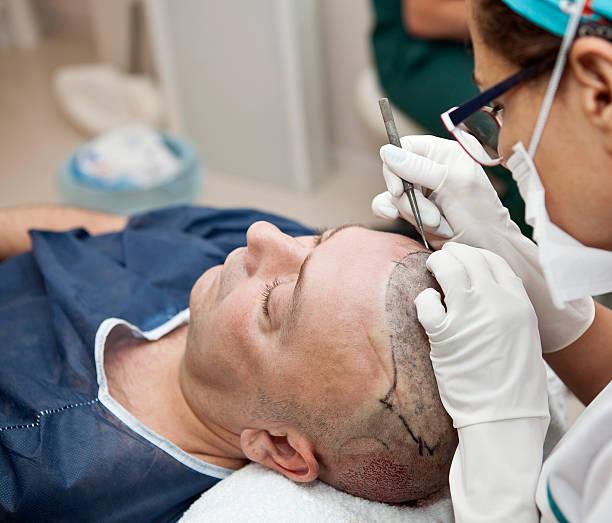
Frontal hairline density can decline without causing complete baldness. Hair Transplant in Al Ain may help suitable patients increase density in weakened frontal areas by introducing healthy donor follicles while working carefully around existing native hair.
This type of restoration is different from rebuilding a completely bald hairline. The surgeon has to place new grafts between or around existing follicles while preserving the hair that is already growing.
What Frontal Density Loss Looks Like
The hairline may still be present but appear thinner than it once did.
Patients often notice that the scalp becomes easier to see when hair is wet, under strong overhead lighting or after styling.
Density Loss Versus Recession
These are related but different concerns.
Recession moves the visible hairline backward. Density loss can make the hairline look weaker while its overall position remains relatively unchanged.
A patient can have one problem, the other, or both.
Why Existing Hair Changes the Surgical Plan
When native hair remains, recipient sites have to be positioned carefully.
The surgeon needs to avoid unnecessary trauma to existing follicles while creating enough additional density to improve the overall appearance.
Miniaturized Hair Requires Attention
Some follicles may still produce fine hairs.
These follicles can be difficult to see with the naked eye, which is why detailed scalp examination can be useful during planning.
The treatment should account for them rather than assuming the area is completely empty.
How Grafts Can Improve Frontal Density
The goal is usually gradual reinforcement.
Instead of creating a new wall of transplanted hair, the surgeon can distribute appropriate follicular units through areas where density has fallen.
Graft Selection
Different follicular units can serve different purposes.
Fine single-hair units can help maintain a soft frontal transition, while larger units may be positioned farther behind the leading edge to provide additional density.
Spacing Matters
Grafts need enough room to coexist with existing follicles.
Overcrowding can increase trauma and does not automatically produce better visual density.
FUE Hair Transplant in Al Ain for Frontal Density
FUE allows individual follicles to be harvested from the donor region.
The extracted grafts can then be positioned in selected areas of frontal thinning.
The treatment plan depends on the size of the affected zone and the amount of healthy donor hair available.
Preserving the Donor Reserve
Frontal density loss may look like a small problem, but future progression still needs to be considered.
Using a large number of grafts for an early-stage concern may leave fewer options if the patient later develops more extensive loss.
Natural Hairline Restoration Requires Gradual Density
A natural frontal transition usually becomes denser as it moves backward.
The Leading Edge
The front edge should remain refined rather than excessively packed.
This helps create a softer visual transition between forehead and hair.
Behind the Hairline
Greater density can often be introduced behind the leading edge where the surrounding hair naturally appears fuller.
The result should resemble the patient's existing growth pattern rather than a uniformly dense strip.
Common Patient Questions
“If I still have hair at the front, why would I need grafts?”
Because density can become insufficient even when follicles remain. Transplantation may be considered when additional follicles are needed to improve coverage.
“Can grafts be placed between my existing hairs?”
In suitable cases, recipient sites can be planned around existing follicles. The exact approach depends on scalp condition, hair density and the clinical assessment.
“Will one procedure permanently solve frontal thinning?”
Transplanted follicles can provide lasting growth, but surrounding native hair may continue to change. Long-term management therefore remains important.
Recovery After Frontal Hair Restoration
The recipient area needs careful handling during early healing.
Patients may experience temporary redness, swelling or crusting.
The recovery routine should include the clinician's specific instructions for washing, sleeping position, exercise and scalp protection.
For Dubai residents travelling to Al Ain, outdoor exposure deserves particular attention because intense sunlight can make the healing period less comfortable.
When Density Starts to Return
Patients should not expect the final result immediately.
Some transplanted hair can shed during the early post-procedure cycle. The follicle may remain intact before producing new growth later.
Density then develops gradually as the transplanted hair grows and matures.
Maintaining Native Hair
Frontal transplantation works best when the surrounding native hair is considered part of the long-term result.
If existing follicles continue to miniaturize, additional thinning can change the appearance of the restored area.
Depending on the diagnosis, medical hair-loss treatment may be discussed as part of ongoing management.
A Balanced Approach to Frontal Density
The aim is not to create the highest possible number of hairs in one session.
A more useful objective is to improve visible density while protecting existing follicles and preserving donor resources.
Patients exploring frontal hairline restoration in Al Ain can discuss the relationship between native hair, donor supply and graft placement during an individualized consultation.
Tajmeels Clinic provides personalized hair-restoration planning focused on natural density, appropriate graft distribution and long-term hair preservation.

 English
 Arabic
 French
 Spanish
 Portuguese
 Deutsch
 Turkish
 Dutch
Dutch
 Italiano
 Russian
 Portuguese (Brazil)
 Greek
Greek