


Can GFC Hair Treatment in Dubai Help With Excessive Hair Shedding?
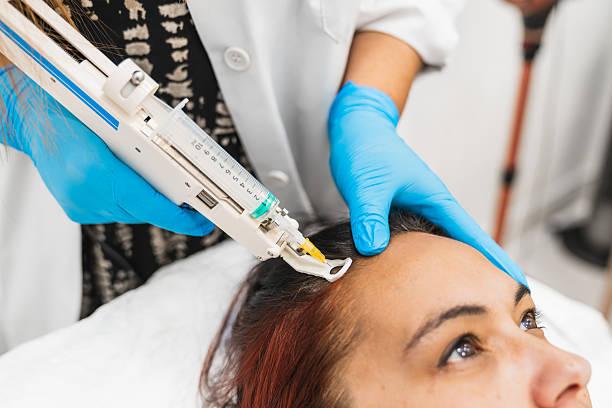
GFC Hair Treatment in Dubai may be considered when excessive shedding occurs alongside ongoing follicular thinning and viable hair follicles remain. However, heavy shedding does not automatically mean GFC is the right treatment because temporary shedding and progressive hair loss can look similar at first.
The important step is identifying whether the scalp is simply going through a temporary shedding phase or whether the follicles are gradually producing weaker hair.
Excessive Shedding Is Not Always Permanent Hair Loss
Finding more hair on a pillow, in the shower, or on a brush can be alarming. Yet shedding itself is not the same as permanent follicular loss.
Hair naturally moves through growth, transition, and resting phases. When more follicles enter the shedding phase around the same time, the amount of visible hair fall can temporarily increase.
When Shedding Becomes More Concerning
A professional assessment becomes more useful when shedding is accompanied by:
- Noticeable reduction in overall density
- Increasing scalp visibility
- Finer strands replacing thicker hairs
- Widening of the central part
- Crown or frontal thinning
- Persistent changes lasting beyond a short shedding period
These signs can indicate that the issue involves more than temporary hair fall.
How GFC Hair Treatment in Dubai Fits Into the Picture
GFC is a growth-factor-based treatment designed to support the local scalp environment around selected existing follicles.
It does not directly stop every form of shedding. Instead, it may be considered when the clinician identifies follicles that remain viable but are showing signs of weakening or miniaturization.
Shedding Versus Miniaturization
These two processes can occur together, but they are not identical.
Shedding refers to hair leaving the follicle. Miniaturization refers to the follicle producing progressively finer hair.
That distinction matters when deciding whether a follicle-supportive treatment has a role.
What Can Cause Increased Hair Shedding
Several factors may contribute to increased shedding.
Depending on the patient's history, clinicians may consider:
- Recent illness or physical stress
- Major emotional stress
- Significant nutritional changes
- Hormonal changes
- Certain medications
- Genetic hair-loss patterns
- Scalp conditions
- Recent changes in overall health
Not every patient requires laboratory testing. Further investigation is considered when the clinical history suggests an underlying contributor.
When GFC May Be Considered
GFC becomes more relevant when the assessment shows that the affected follicles remain present and the patient has a pattern of thinning that may benefit from supportive growth-factor treatment.
This is different from treating unexplained sudden shedding without first identifying what is causing it.
A Practical Assessment
A clinician may look at:
- Where shedding is occurring
- Whether density has changed
- Hair shaft thickness
- Distribution of miniaturized hairs
- Scalp condition
- Duration of the problem
- Previous hair-loss treatments
The objective is to match the treatment with the biology of the scalp.
GFC and Diffuse Hair Shedding
Diffuse thinning can be difficult to recognize because there may be no single bald patch.
Instead, density gradually decreases across a larger area.
Why Diffuse Loss Requires Careful Mapping
When thinning is spread across the scalp, treatment cannot simply focus on one obvious area.
The clinician may need to determine which regions show the strongest evidence of follicular weakening and whether GFC should be targeted selectively.
What GFC Cannot Do for Shedding
GFC should not be presented as a universal solution for hair fall.
It cannot guarantee:
- Immediate cessation of shedding
- Reversal of every underlying cause
- New follicle formation
- Permanent prevention of future hair loss
If an underlying condition is driving the shedding, that factor still needs appropriate clinical attention.
How to Know Whether You Should Seek an Assessment
Instead of counting every strand, look for changes in the overall appearance and behavior of the hair.
Consider an assessment if you notice:
- Persistent excessive shedding
- A measurable decrease in ponytail thickness
- Increasing scalp visibility
- New areas of thinning
- Hair becoming noticeably finer
- Continued shedding after recovery from a temporary trigger
The pattern over time is usually more informative than one unusually heavy shedding day.
Dubai Lifestyle Factors
Dubai's hot climate, strong sun, indoor air-conditioning, travel, and changing daily routines can affect scalp comfort and hair-care habits.
These factors should not automatically be blamed for excessive shedding. However, they are useful parts of the lifestyle history when evaluating changes in scalp and hair condition.
What Happens After GFC
GFC works within the biological timeline of the hair follicle.
That means patients should not expect an immediate visual reduction in hair shedding after treatment.
Focus on Long-Term Hair Quality
Follow-up assessment can consider whether there are changes in:
- Hair thickness
- Density
- Miniaturized strands
- Scalp visibility
- Overall progression
The response differs between patients, which is why treatment expectations should be individualized.
A More Informed Approach to Excessive Hair Shedding
Heavy shedding can be temporary, progressive, or related to another underlying issue. GFC may have a role when viable follicles are present and the clinical picture supports growth-factor treatment.
For patients exploring hair-loss treatment options in Dubai, the first priority should be understanding why the shedding is happening.
When to Discuss GFC
A consultation at Tajmeels Clinic can help distinguish excessive shedding from progressive follicular thinning and determine whether GFC belongs in the patient's personalized hair-restoration plan.

 English
 Arabic
 French
 Spanish
 Portuguese
 Deutsch
 Turkish
 Italiano
 Russian
 Romaian
 Portuguese (Brazil)
 Greek
Greek