


How to Improve CNC Machining Accuracy Through Better Spindle Maintenance
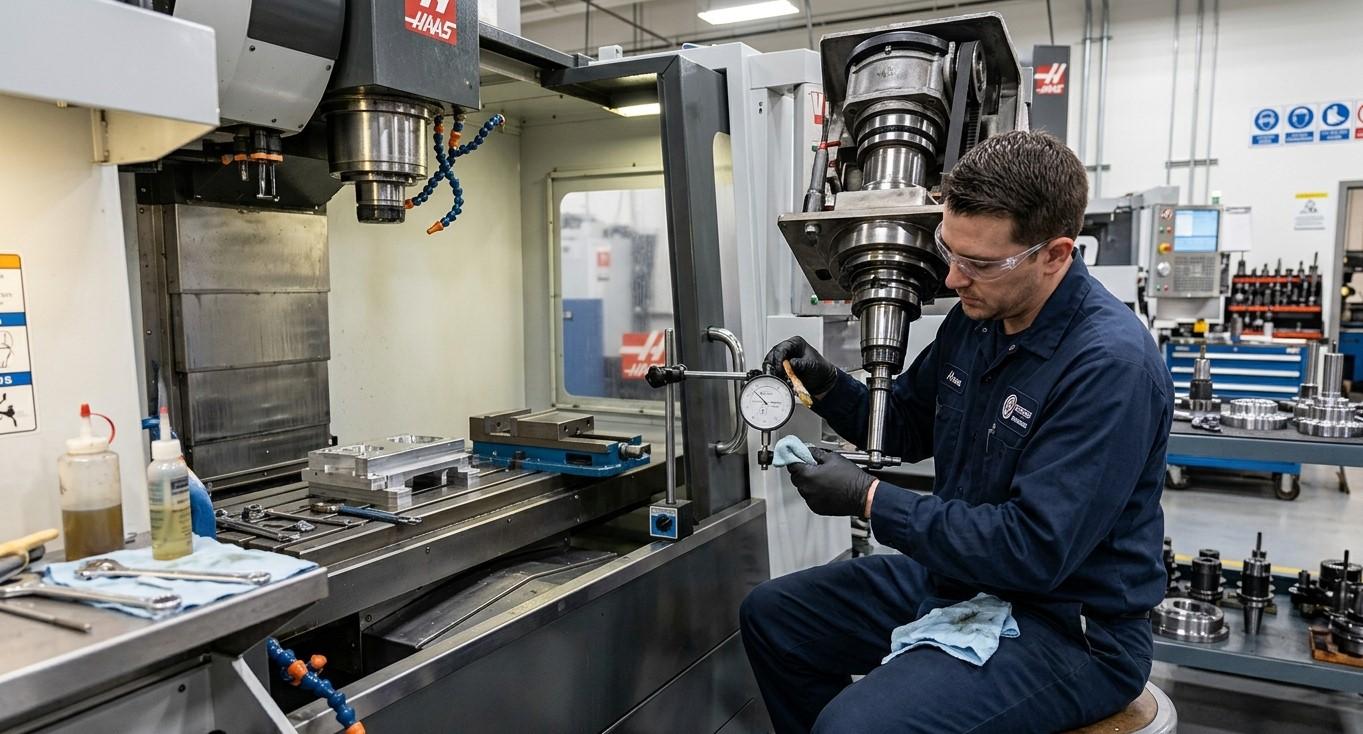
CNC machining accuracy depends on many factors, including cutting tool selection, workholding, machine calibration, programming, and operating conditions. Among these factors, spindle condition plays a particularly important role. The spindle provides the rotational motion required to drive cutting tools, and even small problems with spindle runout, vibration, alignment, bearings, or temperature can affect dimensional accuracy and surface finish.
For manufacturers and engineering workshops, proper spindle maintenance is therefore an important part of maintaining consistent CNC machining performance. A well-maintained spindle can help reduce vibration, improve tool stability, minimize runout, and support more predictable machining results.
For businesses sourcing reliable tooling and machining solutions, Khokhawala Trading LLC is an experienced Industrial Tools Supplier in Dubai, supporting CNC machining, manufacturing, engineering, fabrication, and industrial applications. Along with selecting suitable CNC machining tools, maintaining the machine spindle is essential for achieving reliable production quality.
Why Spindle Condition Matters in CNC Machining
The spindle rotates the cutting tool at controlled speeds while maintaining the position and stability required for machining. If the spindle is not operating correctly, the cutting tool may not follow its intended path accurately.
Spindle-related problems can contribute to:
- Tool runout
- Vibration and chatter
- Dimensional inaccuracies
- Poor surface finish
- Uneven tool wear
- Excessive cutting forces
- Tool breakage
- Reduced tool life
- Increased scrap and rework
These problems can become particularly noticeable in high-speed machining and precision applications where even small deviations can affect the finished component.
Understanding CNC Spindle Runout
Spindle runout refers to the amount by which the rotating spindle or tool deviates from its intended axis.
Excessive runout can cause one side of a cutting tool to remove more material than the other. This creates uneven cutting forces and can lead to inconsistent dimensions.
Runout may originate from:
- Spindle components
- Tool holders
- Collets
- Tool shanks
- Contamination
- Damaged mating surfaces
- Improper tool installation
- Worn components
Because the spindle and tooling system work together, spindle runout should not be evaluated separately from CNC tool holders and cutting tools.
Regular Spindle Inspection
Regular inspection is one of the most effective ways to identify spindle problems before they affect production.
A maintenance inspection should consider:
Spindle Noise
Unusual sounds such as grinding, squealing, or abnormal bearing noise can indicate a mechanical problem.
Vibration
Unexpected vibration during spindle operation may indicate bearing wear, imbalance, tool-holder problems, or other mechanical issues.
Temperature
Excessive spindle temperature can indicate lubrication problems, bearing issues, excessive loading, or cooling-system problems.
Runout
Spindle and tool-holder runout should be checked using appropriate precision measurement methods.
Taper Condition
The spindle taper and mating tool-holder surfaces should remain clean and free from damage.
Routine inspection allows workshops to identify developing problems before they result in significant machining errors.
Keep the Spindle Taper Clean
Cleanliness is extremely important for maintaining CNC machining accuracy.
Small amounts of chips, dust, coolant residue, or other contamination between the spindle taper and tool holder can prevent proper seating.
This can cause:
- Increased runout
- Poor tool alignment
- Vibration
- Inconsistent tool length
- Reduced machining accuracy
Before installing a tool holder, inspect the taper and mating surfaces. Use appropriate cleaning procedures recommended by the machine manufacturer.
Avoid practices that could damage precision surfaces or introduce contamination into the spindle assembly.
Maintain CNC Tool Holders Properly
A high-quality spindle can still produce inaccurate results if the tool holder is damaged or poorly maintained.
CNC tool holders should be inspected for:
- Wear
- Damage
- Contamination
- Corrosion
- Deformation
- Poor clamping
- Excessive runout
Tool holders should also be stored properly when not in use. Protective storage helps prevent damage to precision mating surfaces.
When tool holders are maintained correctly, they provide a more stable connection between the spindle and cutting tool.
Check Tool Holder Runout
Tool-holder runout can contribute significantly to machining inaccuracies.
A practical inspection can involve mounting a suitable reference tool or precision shank and measuring total indicated runout at specified positions.
Excessive runout may be caused by:
- Damaged tool holder
- Worn collet
- Dirty mating surfaces
- Incorrect assembly
- Damaged tool shank
- Spindle problems
Runout should therefore be checked systematically rather than assuming the spindle itself is responsible.
Monitor Spindle Bearings
Spindle bearings are critical components because they support high-speed rotation while maintaining the required stability.
Bearing problems can cause:
- Increased vibration
- Abnormal noise
- Heat generation
- Runout
- Reduced spindle performance
- Surface finish problems
Bearing maintenance requirements depend on the machine and spindle design. Some systems use specific lubrication methods, while others may have sealed or manufacturer-defined maintenance intervals.
Workshops should follow the machine manufacturer's maintenance recommendations rather than applying generic lubrication practices.
Control Spindle Temperature
Temperature changes can affect machining accuracy.
As machine components heat up, thermal expansion can alter the position of the spindle and other machine elements. This can lead to dimensional variation, particularly during long machining cycles.
Temperature management may involve:
- Proper spindle warm-up
- Coolant-system maintenance
- Adequate machine-room conditions
- Monitoring spindle temperature
- Following manufacturer-recommended operating procedures
A controlled warm-up cycle can help bring the spindle and related components into a more stable thermal condition before precision machining begins.
Use Proper Spindle Warm-Up Procedures
Running a spindle at high speed immediately after a long period of inactivity may not provide the same conditions as a controlled warm-up.
Many CNC machines use spindle warm-up routines that gradually increase spindle speed.
A typical procedure may involve:
- Starting at a lower speed.
- Operating for a specified period.
- Increasing spindle speed gradually.
- Allowing bearings and other components to reach a stable operating condition.
The exact procedure should follow the machine manufacturer's recommendations.
Proper warm-up can help distribute lubrication and stabilize thermal conditions.
Maintain Spindle Cooling Systems
Spindle cooling is particularly important in high-speed CNC machining.
Depending on the machine, cooling may involve air, oil, coolant, or dedicated temperature-control systems.
A maintenance program should check:
- Cooling lines
- Filters
- Pumps
- Heat exchangers
- Coolant levels
- Flow rates
- Temperature controls
If the cooling system is not functioning correctly, excessive heat can affect spindle performance and machining accuracy.
Check Spindle Balance
Spindle and tooling balance becomes increasingly important as rotational speed increases.
An unbalanced rotating assembly creates centrifugal forces that can generate vibration.
Possible causes include:
- Damaged tooling
- Unbalanced tool holders
- Uneven tool assemblies
- Contamination
- Incorrect assembly
- Worn components
In high-speed applications, properly balanced CNC machining tools and tool assemblies can help reduce vibration and improve machining stability.
Inspect Tooling Before Machining
Spindle maintenance should be combined with proper cutting-tool inspection.
A damaged or worn tool can create symptoms that may initially appear to be spindle problems.
Before machining, inspect:
- Tool cutting edges
- Tool shank
- Tool holder
- Collet
- Insert condition
- Tool length
- Tool diameter
- Tool seating
Using appropriate industrial cutting tools and carbide cutting tools helps establish a stable machining system when the tools are correctly selected for the application.
Control Tool Overhang
Tool overhang has a direct relationship with machining stability.
A longer tool assembly is generally more susceptible to deflection and vibration than a shorter, properly supported setup.
Where possible:
- Minimize unnecessary tool extension.
- Use appropriate tool holders.
- Select the correct tool length.
- Maintain adequate clearance.
- Avoid excessive unsupported length.
This is particularly important during deep-pocket machining, boring, drilling, and high-speed cutting.
Use Precision Measuring Tools to Verify Accuracy
Spindle maintenance should always be supported by measurement.
Precision measuring tools can help determine whether maintenance actions are producing the expected improvement.
Depending on the application, workshops may inspect:
- Tool runout
- Bore diameter
- Component dimensions
- Tool position
- Surface-related requirements
- Concentricity
- Hole location
Tools such as dial indicators, micrometers, bore gauges, and other precision measuring instruments can be used according to the required measurement range and tolerance.
Measurement is particularly important when diagnosing whether an accuracy problem originates from the spindle, tooling, workholding, programming, or another part of the machining process.
Create a Preventive Spindle Maintenance Schedule
A preventive maintenance program is more effective than waiting until accuracy problems become obvious.
A maintenance schedule can include:
Daily Checks
- Inspect spindle taper cleanliness.
- Check for unusual noise.
- Observe vibration.
- Check tool-holder condition.
- Follow recommended warm-up procedures.
Weekly Checks
- Inspect tool holders and collets.
- Review spindle operating conditions.
- Check cooling-system condition.
- Inspect for contamination or damage.
Periodic Checks
- Measure spindle runout according to manufacturer procedures.
- Check spindle performance.
- Inspect bearings where applicable.
- Verify cooling performance.
- Review machine alignment and calibration requirements.
The exact schedule should be based on machine manufacturer recommendations, operating hours, spindle type, machining conditions, and production requirements.
Common Spindle Maintenance Mistakes
Several maintenance mistakes can reduce CNC machining accuracy.
Ignoring Small Changes
Increasing vibration or unusual noise should not be ignored. Small changes can become larger mechanical problems.
Cleaning With Improper Methods
Aggressive cleaning methods can damage precision surfaces or introduce contamination.
Neglecting Tool Holders
A spindle can be in good condition while a damaged tool holder causes excessive runout.
Skipping Warm-Up
Precision machining immediately after extended inactivity may produce less consistent results if the machine requires a warm-up cycle.
Failing to Record Maintenance
Without maintenance records, it can be difficult to identify recurring spindle problems or determine when components require attention.
Best Practices for Improving CNC Accuracy Through Spindle Maintenance
For consistent CNC performance, workshops should:
- Follow the machine manufacturer's maintenance procedures.
- Keep spindle tapers and tool interfaces clean.
- Inspect CNC tool holders regularly.
- Monitor spindle vibration and noise.
- Check runout periodically.
- Maintain spindle cooling systems.
- Follow recommended warm-up cycles.
- Monitor spindle temperature.
- Use properly balanced tooling for high-speed applications.
- Minimize unnecessary tool overhang.
- Replace damaged or worn tooling.
- Use precision measuring tools to verify machining accuracy.
- Keep detailed maintenance and inspection records.
- Investigate recurring accuracy problems instead of repeatedly correcting finished parts.
Benefits of Proper Spindle Maintenance
A well-maintained spindle can contribute to:
- Improved CNC machining accuracy
- Better surface finish
- More consistent dimensions
- Reduced vibration
- Longer tool life
- Reduced tool-holder wear
- Lower scrap and rework
- Improved production reliability
- Better high-speed machining performance
- Reduced unexpected downtime
These benefits can make preventive spindle maintenance an important part of an overall CNC tooling and machine-maintenance strategy.
Conclusion
Spindle maintenance is an essential part of maintaining accuracy in CNC machining. Problems such as runout, vibration, bearing wear, thermal instability, contamination, imbalance, and poor tool-holder condition can all affect the final result.
Regular inspection, proper cleaning, spindle warm-up, cooling-system maintenance, tool-holder inspection, runout measurement, and appropriate tooling practices can help maintain stable machining conditions. Combining spindle maintenance with correctly selected industrial cutting tools, CNC machining tools, carbide cutting tools, CNC tool holders, machining accessories, and precision measuring tools provides a more complete approach to CNC accuracy.
For businesses looking for reliable industrial tooling solutions, Khokhawala Trading LLC supports manufacturing and engineering requirements as an experienced Industrial Tools Supplier in Dubai. By combining proper tooling with disciplined spindle maintenance, CNC workshops can improve consistency, protect equipment, reduce production problems, and achieve more reliable machining results.

 Arabic
 French
 Spanish
 Portuguese
 Deutsch
 Turkish
 Dutch
Dutch
 Italiano
 Russian
 Romaian
 Portuguese (Brazil)
 Greek
Greek