


Korean Sunscreen vs. Western Sunscreen: What's the Difference?
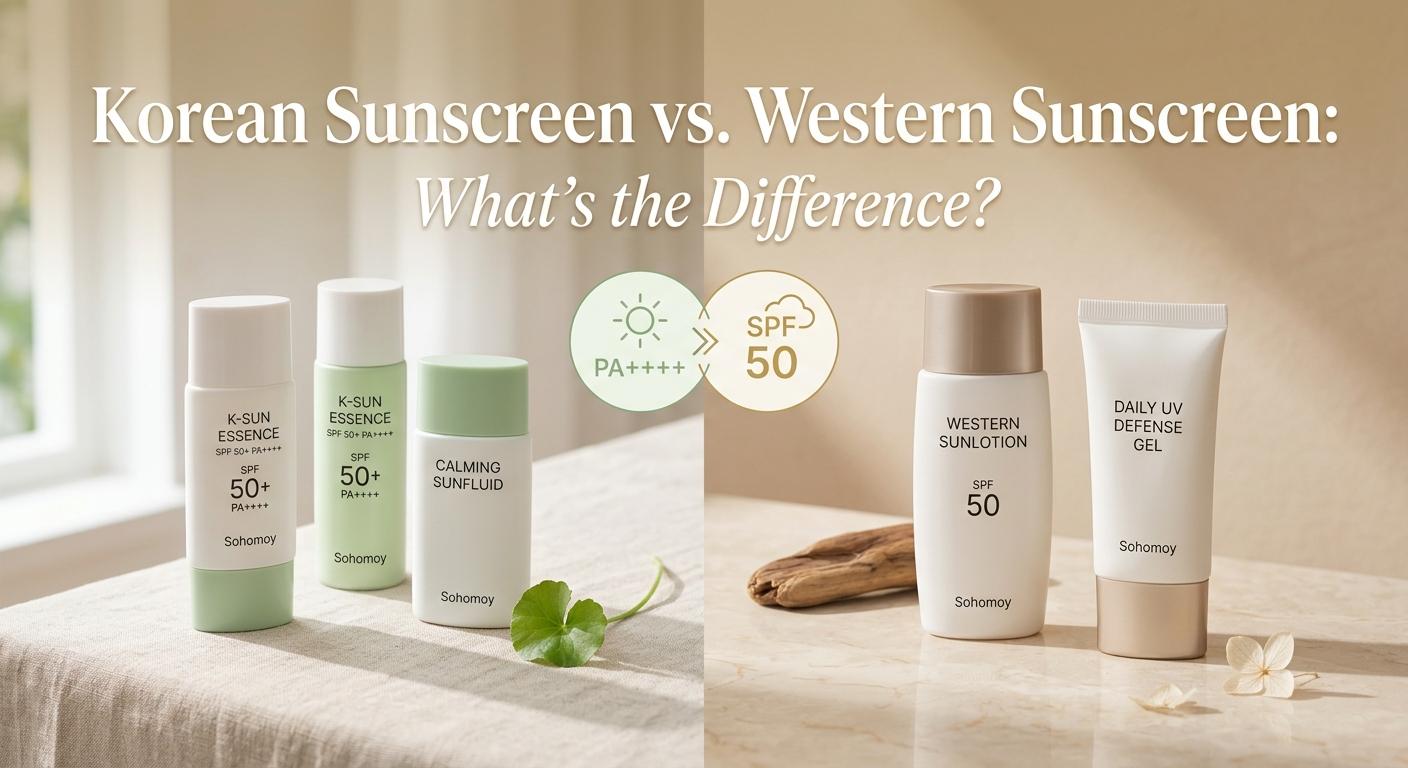
Korean sunscreens have developed something of a cult following in global beauty circles, often specifically praised for how they feel compared to many traditional Western sunscreen formulations. Here's a grounded look at what's actually different, and what isn't.
The Core Sun Protection Function Is The Same
It's worth starting with this: at a fundamental level, sunscreen's job — filtering or blocking UV radiation to protect skin — is the same regardless of where it's formulated. Korean sunscreens aren't offering a fundamentally different type of protection; the differences are mostly in formulation, texture, and specific filter combinations.
Formulation And Texture Differences
Korean sunscreen formulations have generally focused heavily on cosmetic elegance — how a product feels and looks on skin — leading to a reputation for lightweight, often nearly weightless textures that absorb quickly without the heavy, greasy, or white-cast finish some traditional Western sunscreens are known for, particularly on darker skin tones.
Filter Differences By Region
Sunscreen filters are regulated differently by region — the filters approved for use, and at what concentrations, vary between South Korea, the US, and the EU. Korean formulations often have access to certain UV filters not approved (or approved differently) in some other markets, which partly explains some of the textural and performance differences reported by users.
Chemical Vs. Mineral Sunscreen — A Distinction That Exists In Both Regions
It's worth clarifying that "chemical" (filter-based) and "mineral" (zinc oxide or titanium dioxide-based) sunscreen categories exist in both Korean and Western sunscreen markets — this isn't a difference between the two regions themselves, though Korean brands have built a particular reputation for making chemical sunscreens that feel notably lighter than some equivalents elsewhere.
No White Cast: Why This Matters
A common complaint about many mineral and some chemical sunscreens is a visible white or grey cast, particularly noticeable on medium to deeper skin tones. Korean sunscreen formulations are widely praised specifically for minimizing this effect, an important consideration for a diverse population like Saudi Arabia's.
Why Texture Matters More Than People Initially Assume
Sunscreen only works if it's actually applied, in adequate amounts, and reapplied through the day. A sunscreen that feels heavy, greasy, or leaves a visible cast is, in practice, less likely to be reapplied consistently — meaning a lighter-feeling, more cosmetically pleasant sunscreen can translate into genuinely better real-world sun protection, simply because people are more willing to use it as directed.
SPF And Reapplication In Saudi Arabia's Sun
Regardless of which region's sunscreen you choose, Saudi Arabia's intense year-round sun exposure calls for a high SPF (SPF 50 is commonly recommended for daily wear in intense sun climates) and genuine reapplication every couple of hours during extended outdoor exposure, not just a single morning application.
Choosing Between Gel, Fluid, And Cream Sunscreen Textures
Korean sunscreen lines typically offer multiple texture options — gel, fluid, cream, and stick formats — allowing you to match the texture to your skin type and how much time you spend outdoors, something worth exploring rather than assuming one format fits every situation.
Sourcing Genuine Korean Sunscreen
Given how much texture and filter formulation vary between products, and the risk of counterfeit sunscreen specifically (a category where an ineffective counterfeit genuinely matters for your health, not just cosmetic disappointment), buying from a verified retailer matters more for sunscreen than for many other skincare categories. Reem N Cream carries verified Korean sunscreen formulations from established brands, an important consideration given how much is riding on a sunscreen actually performing as labeled.
A Practical Comparison Checklist
Both Korean and Western markets offer chemical and mineral sunscreen options — this isn't the actual dividing line
Korean formulations are generally reputed for lighter textures and reduced white cast
Filter availability differs by region due to regulatory differences
A sunscreen you'll actually reapply consistently matters more than which region it's from
Prioritize verified, authentic sourcing given the real consequences of a counterfeit sunscreen
The Bottom Line
Korean sunscreen's reputation isn't hype without substance — the textural differences are real and meaningfully improve the odds that people actually wear and reapply sunscreen consistently. But the core function is the same as any well-formulated sunscreen from anywhere else; the real advantage is in how much more pleasant it makes a genuinely non-negotiable daily habit.

 Arabic
 French
 Spanish
 Portuguese
 Deutsch
 Turkish
 Dutch
Dutch
 Italiano
 Russian
 Romaian
 Portuguese (Brazil)
 Greek
Greek