


Which Details Matter in Gangnammould Plate Tray Mold Selection
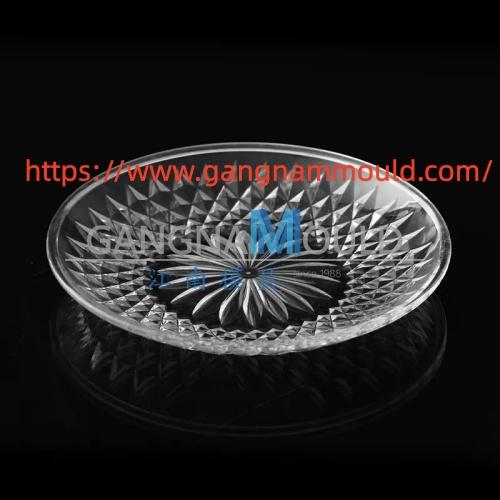
Plate Tray Mold selection involves several technical and production considerations that buyers should review before approving tooling. The evaluation should cover product geometry, resin compatibility, cavity configuration, cooling efficiency, ejection structure, surface requirements, expected output, and machine conditions. A detailed review at the beginning can help manufacturers identify potential concerns before machining begins. For companies producing household, catering, packaging, or food service components, the tooling approach should correspond with the intended application and production environment.
The first point to examine is the product drawing. Buyers should provide accurate CAD files, dimensions, tolerances, surface specifications, material information, and expected production quantities. These details allow engineers to study the component from different angles and consider how molten resin will fill the cavity. Features such as deep sections, narrow corners, ribs, openings, and changes in thickness may influence the filling process. Reviewing these details before manufacturing can reduce the need for later structural modifications.
Material selection is also closely connected with tooling design. Different thermoplastics have different flow characteristics, shrinkage behavior, processing temperatures, and cooling requirements. Polypropylene, polyethylene, ABS, and other commonly used materials may therefore require different engineering considerations. Buyers should confirm the intended resin grade before finalizing the tooling structure. If several materials may be used for the same component, this should be discussed during the development stage so the design can account for the expected processing conditions.
Wall thickness deserves careful attention because uneven sections can cool at different rates. This may influence shrinkage, warpage, sink marks, and dimensional stability. A more consistent section is often easier to manage during injection molding, while ribs or internal structures can provide additional stiffness without unnecessarily increasing mass. The suitable geometry depends on the resin, component size, functional requirements, and processing conditions, so the design should be reviewed according to the specific application rather than a fixed formula.
Draft is another important factor. Vertical surfaces need suitable taper to allow the finished component to separate from the cavity without excessive resistance. If the product includes textured areas, additional draft may be necessary because surface texture can increase friction during release. Deep ribs, recessed features, and internal structures should also be reviewed carefully. Proper release planning can help reduce scratches, deformation, and unwanted marks during production.
Gate location should be considered together with product appearance and flow requirements. The entry point determines how molten material travels through the cavity, and its position can influence weld lines, filling balance, packing, and visible surface quality. For components with large flat sections, engineers may need to examine the flow distance and feature arrangement before selecting the gate location. A suitable arrangement can make processing easier to control and may help maintain consistent results.
Cooling design is another major checkpoint for buyers. Heat needs to be removed efficiently from the cavity and core during each cycle. If some areas remain hotter than others, different cooling rates can contribute to dimensional variation or longer cycle times. Buyers can ask about channel placement, cooling access, connection design, and maintenance requirements. Areas with greater material thickness may require particular attention because they can retain heat for longer periods.
Ejection also deserves consideration before production begins. Pins, sleeves, lifters, and other release components need to provide adequate support while limiting visible marks. Their positions should correspond with the structural features of the finished component. If the product contains thin walls or delicate edges, an unsuitable ejection arrangement may increase the risk of deformation. Early engineering coordination allows these elements to be considered together instead of treating ejection as a separate step.
Cavity quantity should reflect the expected production schedule. A single cavity configuration may suit certain programs, while multi cavity tooling can be considered when output requirements justify it. Buyers should evaluate expected annual volume, machine capacity, cycle requirements, available installation space, and future product demand. The decision should focus on the actual production plan rather than simply increasing cavity quantity without considering the wider manufacturing system.
Maintenance planning can also influence long term usability. Replaceable wear components, accessible cooling connections, serviceable inserts, and practical disassembly can make routine maintenance easier. Buyers should ask how commonly serviced components can be accessed and whether replacement parts can be handled without unnecessary downtime. Clear maintenance planning is especially useful for projects expected to operate through many production cycles.
Gangnammould works with manufacturers that need customized tooling based on specific product drawings and production requirements. The development process can consider geometry, resin, cavity arrangement, cooling, ejection, and maintenance together rather than treating each point independently. Companies preparing a new project can review related capabilities and product information at https://www.gangnammould.com/ while considering the tooling structure that fits their application. This approach gives buyers a practical basis for discussing technical requirements and moving from product concept toward production.

 Arabic
 French
 Spanish
 Portuguese
 Deutsch
 Turkish
 Dutch
Dutch
 Italiano
 Russian
 Romaian
 Portuguese (Brazil)
 Greek
Greek