


Seiko Heritage: A Century of Japanese Watchmaking
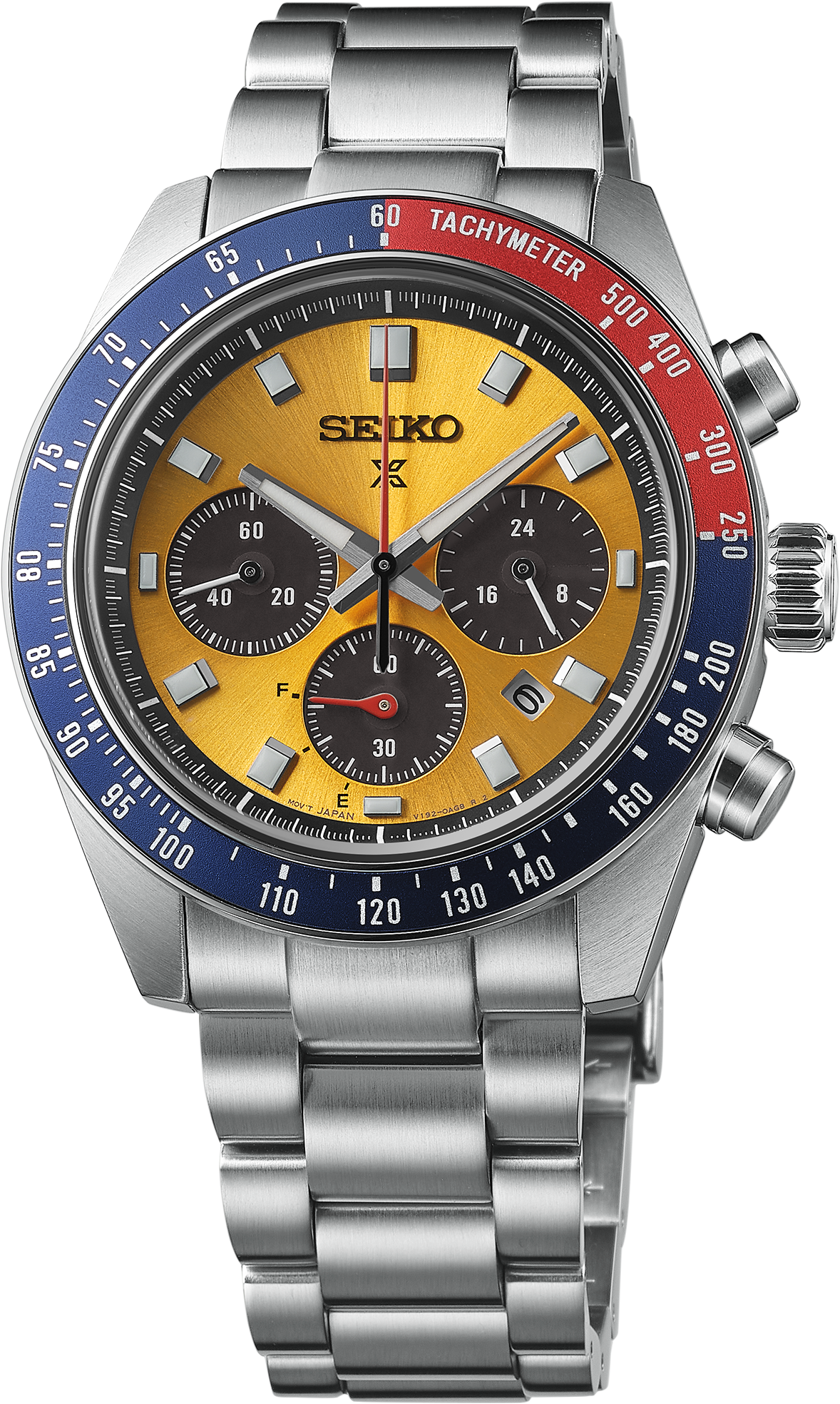
Seiko’s heritage is a story of practical ambition: a small Tokyo retailer becoming a manufacturer, a local watchmaker competing on the world stage, and a company repeatedly changing what a wristwatch can do. Its past is not limited to one famous invention or a single style. It includes clocks made in a new factory, Japan’s first wristwatch, rugged tools for divers, landmark electronic timepieces, and mechanical designs that remain part of the modern watch landscape. Across those chapters runs a consistent aim: to make precise, dependable watches and keep improving them.
A shop, a factory, and a founder’s ambition
The story begins in 1881, when 21-year-old Kintaro Hattori opened a watch and clock shop in Tokyo’s Ginza district. At the time, many timepieces sold in Japan were imported. Hattori wanted not only to sell and repair them, but eventually to make them himself. In 1892, he established a factory called Seikosha and began producing wall clocks. The name expressed a commitment to precise, exquisite manufacturing—a principle that would outlast the original workshop.
Seikosha broadened its work to pocket watches, including the Timekeeper in 1895. Hattori also saw that the wristwatch, then a relatively new and technically challenging product, could become important. In 1913, the company introduced the Laurel, recognized as Japan’s first wristwatch. Its small size demanded fine manufacturing, and early output was limited.
Rebuilding and the birth of the Seiko name
A defining test came with the Great Kanto Earthquake of 1923. The disaster and resulting fires destroyed Hattori’s factory, store, and residence, as well as watches entrusted to the company for repair. Hattori reopened within months and offered customers replacements for watches lost in the fire. That response became part of the firm’s reputation for honoring its commitments.
In 1924, the company released a wristwatch bearing the name “Seiko” on its dial for the first time. The choice marked a new beginning after the catastrophe. “Seiko” was associated with the ideas of precision and success that had informed the name Seikosha. In the years that followed, the company expanded its domestic manufacturing, and in 1929 a Seikosha pocket watch became Japan’s first made-in-Japan railway watch, an important endorsement of its timekeeping reliability.
Precision becomes a competitive ambition
After the Second World War, Seiko renewed its focus on quality and mechanical performance. In 1956 it introduced the Automatic, the first self-winding wristwatch commercialized in Japan, and the Marvel, a watch built around Seiko’s own design. A few years later, the Magic Lever system made automatic winding more efficient by using the motion of the rotor in both directions. Seiko also developed Diashock, a system that helped protect delicate movement components from shocks. These improvements were not always visible from the dial, but they made watches more practical and reliable.
The company’s ambitions extended to competition. Seiko entered Swiss observatory chronometer contests in the 1960s, where its mechanical watches earned strong results. It was a striking moment: a Japanese manufacturer challenging established Swiss expertise at its own traditional measure of precision. At the same time, Seiko was extending its watchmaking into specialized uses. The 1965 diver’s watch—the first made in Japan—offered 150-meter water resistance, and later models pushed further, incorporating robust construction for more demanding underwater conditions. Seiko’s diver heritage continues through contemporary Prospex watches.
The quartz revolution and beyond
On Christmas Day 1969, Seiko released the Quartz Astron 35SQ, the world’s first commercially available quartz wristwatch. Quartz oscillation made possible a major leap in accuracy compared with conventional mechanical watches. The original Astron was costly and scarce, but the broader technology would become central to everyday timekeeping around the world. Seiko’s engineers had spent years miniaturizing quartz technology, and the Smithsonian’s collection record describes the Astron’s early hybrid circuit and a claimed accuracy of about one minute per year. Seiko also shared important technical knowledge, helping quartz watchmaking spread beyond the company.
The innovation did not stop with quartz. Seiko Watch developed advanced digital watches, including a six-digit LCD model in 1973, and continued to pursue ways to reduce battery dependence. In 1988, its Kinetic watch converted the wearer’s movement into electricity to power a quartz movement. Then, in 1999, Seiko introduced Spring Drive, a distinctive system that combines a mainspring’s mechanical energy with electronic regulation. Its smooth, gliding seconds hand became a visual signature of the technology. These developments illustrate a broader theme in Seiko’s history: it has treated mechanical, electronic, and hybrid watchmaking as complementary possibilities rather than mutually exclusive traditions.
A living heritage
Today, Seiko’s heritage is visible across very different watches. Prospex carries forward the company’s tool-watch and dive-watch experience. Presage brings mechanical watchmaking together with Japanese design and craft. Seiko 5 continues the idea of accessible, durable everyday watches, while Astron applies the brand’s technological instinct to GPS Solar timekeeping. King Seiko, originally introduced in 1961 and revived in 2022, revisits a more elevated mechanical design tradition.
The significance of Seiko’s history is not simply that it has produced a string of “firsts.” Its heritage reflects the persistence of a manufacturer willing to learn, adapt, and invest in its own capabilities—from Hattori’s integrated factory ambitions to quartz miniaturization and Spring Drive. More than 140 years after the first shop opened, Seiko remains recognizable because it connects technical progress with useful design. Its past is not a museum piece: it continues to shape how the company makes watches for people who want precision, reliability, and character on the wrist.

 English
 Arabic
 French
 Spanish
 Portuguese
 Turkish
 Dutch
Dutch
 Italiano
 Russian
 Romaian
 Portuguese (Brazil)
 Greek
Greek