


What makes FUE a minimally invasive hair transplant technique?
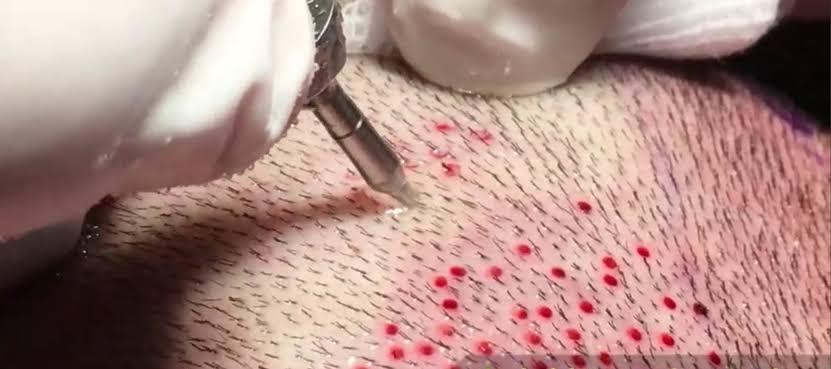
When considering What makes FUE a minimally invasive hair transplant technique?, the main reason is that Follicular Unit Extraction removes individual hair follicles from the donor area rather than removing a strip of scalp tissue. The technique uses small extraction instruments and places individual follicular units into areas affected by hair loss. This approach avoids the long linear incision associated with strip harvesting and can support a relatively straightforward recovery. If you are exploring زراعة الشعر بتقنية FUE في دبي, understanding the technique can help explain why FUE is commonly described as minimally invasive.
What Does Minimally Invasive Mean In FUE?
Minimally invasive generally means that the procedure achieves its purpose while limiting the size and extent of surgical disruption.
FUE still involves surgery because the skin is punctured to extract and implant follicular units. However, instead of removing a strip of scalp, individual grafts are extracted through small openings.
The approach can therefore reduce the amount of tissue disruption compared with techniques that require a linear donor incision.
How Are Hair Follicles Extracted During FUE?
During FUE, individual follicular units are removed from the donor area using a small punch instrument.
The punch is positioned around the selected follicular unit, allowing the graft to be separated from surrounding tissue and extracted.
Because grafts are removed individually, there is no need to excise a continuous strip of scalp from the donor area.
The extraction process does create small wounds, but these are distributed across the donor region rather than forming one long incision.
Why Does FUE Avoid A Linear Scar?
Traditional strip harvesting involves removing a section of scalp tissue from the donor area and closing the resulting wound.
FUE takes a different approach by extracting individual follicular units separately.
As a result, FUE does not create the same continuous linear scar associated with strip harvesting.
However, it is important to understand that FUE is not completely scar-free. Small circular scars or marks may remain where individual grafts were extracted.
Does FUE Require Stitches?
FUE generally does not require stitches in the donor area because there is no long strip incision that needs to be closed.
The small extraction sites are allowed to heal naturally.
This differs from strip harvesting, where the donor incision typically needs to be closed after the scalp strip is removed.
The absence of a linear incision is one reason FUE is considered less invasive in terms of donor-area wound management.
Is FUE Less Painful?
FUE is generally performed using local anesthesia to reduce discomfort during the procedure.
Some patients may experience pressure, sensitivity, swelling, or discomfort during the recovery period.
The level of discomfort varies depending on factors such as the number of grafts harvested, treatment area, individual sensitivity, and healing response.
Minimally invasive does not mean completely painless, and appropriate aftercare remains important.
Can FUE Have A Shorter Recovery?
Because FUE avoids a linear donor incision, recovery can be relatively straightforward for many patients.
The small extraction sites usually heal individually, and visible signs in the donor area may gradually become less noticeable.
Recovery still varies from person to person. The number of grafts, surgical technique, individual healing, and post-treatment care can all influence the recovery experience.
Patients should follow the specific aftercare instructions provided by their treatment professional.
Does FUE Cause Less Tissue Damage?
FUE is designed to minimize the amount of tissue removed from the donor area by extracting individual follicular units.
However, every extraction creates a small opening in the skin, and the surrounding tissue can be affected if the procedure is not performed carefully.
The quality of the extraction technique is therefore important.
Experienced surgical technique can help reduce unnecessary follicular damage and protect the remaining donor hair.
Is FUE Still A Surgical Procedure?
Yes. Despite being described as minimally invasive, FUE remains a surgical hair-restoration procedure.
The skin is intentionally penetrated to remove and implant follicular units.
For this reason, appropriate patient assessment, sterile technique, qualified surgical expertise, and proper postoperative care are important.
The term minimally invasive describes the nature and extent of tissue disruption; it does not mean that the procedure is risk-free or equivalent to a non-surgical cosmetic treatment.
What Happens During FUE Implantation?
After extraction, the harvested follicular units are prepared for transplantation.
Small recipient sites are then created in areas where additional hair density is desired. The prepared grafts are carefully inserted into these sites according to the planned hairline, direction, angle, and density.
This allows individual grafts to be distributed according to the patient's hair-restoration goals.
Careful implantation is important for both graft survival and the natural appearance of the final result.
What Are The Advantages Of The Minimally Invasive Approach?
The FUE approach can offer several practical features.
Individual Graft Extraction:
Follicular units are harvested individually rather than as a strip of scalp tissue.
No Linear Donor Incision:
FUE avoids the long incision required for strip harvesting.
No Linear Donor Scar:
Instead of one continuous scar, FUE produces small extraction sites that may leave tiny marks.
Potentially Straightforward Recovery:
The absence of a large donor incision can make recovery relatively manageable for many patients.
Flexible Graft Placement:
Individual grafts can be strategically placed according to the treatment plan.
What Factors Affect How Minimally Invasive FUE Is?
The experience of the surgical team and the treatment approach can influence tissue trauma.
Other factors include:
- Number of grafts being harvested.
- Size of the extraction punch.
- Donor-area characteristics.
- Graft density.
- Extraction technique.
- Recipient-area preparation.
- Surgical planning.
- Individual healing response.
Excessive harvesting or poor technique can increase trauma and may compromise the donor area.
Is FUE Suitable For Everyone?
No. FUE is not automatically suitable for every person with hair loss.
The practitioner may evaluate the cause of hair loss, donor density, scalp condition, hair characteristics, general health, and expectations.
Future hair loss should also be considered because transplanted follicles do not necessarily prevent untreated native hair from becoming thinner.
A consultation can help determine whether FUE is appropriate and what level of restoration may realistically be achieved.
Frequently Asked Questions:
What makes FUE a minimally invasive hair transplant technique?
FUE removes individual follicular units through small openings instead of removing a strip of scalp tissue. This avoids a long linear donor incision.
Is FUE completely scarless?
No. FUE avoids a linear scar but can leave small circular scars or marks at individual extraction sites.
Does FUE require stitches?
FUE generally does not require stitches in the donor area because individual follicles are extracted rather than a strip of scalp being removed.
Is FUE considered surgery?
Yes. FUE is a surgical hair-restoration procedure even though it is considered minimally invasive.
Does FUE have a shorter recovery than strip harvesting?
Recovery can be relatively straightforward because FUE avoids a linear donor incision, although individual recovery times vary.
Conclusion:
So, What makes FUE a minimally invasive hair transplant technique? FUE is considered minimally invasive because individual follicular units are extracted through small openings rather than removing a strip of scalp tissue. This avoids a long linear donor incision and generally eliminates the need for stitches in the donor area. However, FUE remains a surgical procedure and can leave small extraction marks. Careful graft extraction, appropriate implantation, qualified technique, and proper aftercare are important for supporting a safe and natural-looking hair-restoration result.

 English
 Arabic
 French
 Spanish
 Portuguese
 Deutsch
 Turkish
 Dutch
Dutch
 Russian
 Romaian
 Portuguese (Brazil)
 Greek
Greek