


Why Should Your Business Invest in AI & Machine Learning With High10
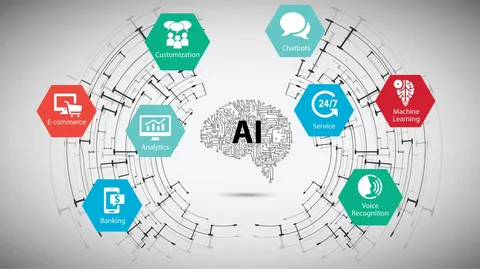
Artificial intelligence and machine learning are changing how businesses analyze information, automate processes, communicate with customers, and make operational decisions. What was once primarily associated with research and large technology companies is now being incorporated into business applications across industries.
For organizations considering AI adoption, the challenge is not simply deciding whether to use artificial intelligence. The more important questions are where AI can provide genuine value, what data is available, how the technology will integrate with existing systems, and how its performance can be measured.
High10 helps businesses explore AI and machine learning solutions based on specific operational requirements. From intelligent automation and predictive analytics to AI-powered applications and customer experiences, a carefully planned implementation can help organizations use emerging technology while maintaining appropriate oversight and security.
What Are Artificial Intelligence and Machine Learning?
Artificial intelligence refers broadly to technologies designed to perform tasks that traditionally require aspects of human intelligence, such as recognizing patterns, processing language, generating content, making predictions, or supporting decisions.
Machine learning is a subset of AI in which systems learn patterns from data and use those patterns to make predictions or classifications without being explicitly programmed with every possible rule.
Common business applications include:
- Predictive analytics
- Recommendation systems
- Customer service assistants
- Document processing
- Fraud detection
- Demand forecasting
- Image and speech recognition
- Marketing personalization
- Intelligent workflow automation
The usefulness of these technologies depends on the quality of the data, the suitability of the model, the business problem, and how the system is implemented.
Why Are Businesses Investing in AI?
Businesses are exploring AI because it can potentially improve efficiency, provide insights from large datasets, and automate selected activities.
For example, an organization receiving thousands of customer inquiries may use an AI-powered assistant to handle routine questions while directing complex cases to human representatives.
A retailer may use machine learning to analyze historical purchasing behavior and improve demand forecasting.
A financial organization may use automated systems to identify unusual transaction patterns for further investigation.
These applications do not eliminate the need for human oversight. Instead, AI can support employees by handling appropriate tasks and helping them process information more efficiently.
High10 can help organizations identify practical use cases where AI aligns with measurable business objectives.
How Can High10 AI Solutions Improve Business Efficiency?
Many businesses still rely on repetitive processes that require employees to review, transfer, classify, or organize information manually.
AI can help automate selected tasks when the process is suitable for machine-assisted decision-making.
Examples include:
- Categorizing customer inquiries
- Extracting information from documents
- Summarizing large amounts of text
- Classifying support tickets
- Identifying patterns in business data
- Generating preliminary reports
- Automating routine communications
- Detecting anomalies for human review
The objective should not be to automate every process. Businesses should determine which activities are repetitive, data-driven, measurable, and suitable for automation.
High10 can help evaluate workflows and identify opportunities where AI could complement existing automation and software systems.
Can AI Help Businesses Make Better Decisions?
One of the most valuable applications of machine learning is extracting patterns from data.
Traditional reporting typically describes what has already happened. Predictive analytics can use historical data to estimate potential future outcomes, although predictions always involve uncertainty.
For example, a business could use historical sales information to estimate future demand. A customer service organization could analyze support data to identify recurring issues. A manufacturer could monitor equipment information to identify patterns associated with potential maintenance requirements.
AI-supported analytics can help businesses investigate questions such as:
- Which products may experience increased demand?
- Which customers may require additional support?
- Which operational processes experience recurring delays?
- Which transactions appear unusual?
- Which factors are associated with customer churn?
These systems should support decision-making rather than automatically determine important business decisions without appropriate review.
How Can AI Improve Customer Experiences?
Customers increasingly interact with businesses through digital channels. AI can help organizations make these interactions more responsive and personalized.
AI-powered customer experiences can include:
- Conversational assistants
- Personalized recommendations
- Automated support responses
- Intelligent search
- Voice-enabled services
- Personalized content
- Automated appointment assistance
For example, an eCommerce website can use recommendation technology to present products related to a customer's browsing or purchasing behavior.
A service provider could use an AI assistant to answer common questions and provide information outside traditional support hours.
The quality of the experience depends on the accuracy of the underlying information. Businesses should provide customers with appropriate ways to reach human support when automated systems cannot adequately address a request.
Can Machine Learning Help With Predictive Analytics?
Machine learning can identify relationships and patterns in historical datasets and use them to generate predictions or classifications.
Depending on the industry, businesses may explore applications such as:
- Sales forecasting
- Demand prediction
- Customer churn analysis
- Inventory forecasting
- Risk assessment
- Anomaly detection
- Lead scoring
- Predictive maintenance
For predictive systems to be useful, businesses need sufficient and relevant historical data. Data quality problems, changing market conditions, biased datasets, and unexpected events can affect model performance.
Therefore, machine learning models should be monitored and periodically evaluated rather than treated as permanently accurate.
How Can High10 Integrate AI With Existing Business Software?
AI does not necessarily need to operate as a separate application. It can sometimes be integrated into existing business systems.
Depending on technical capabilities, AI functionality can be connected with:
- CRM platforms
- ERP systems
- eCommerce platforms
- Mobile applications
- Websites
- Data warehouses
- Customer support platforms
- Business intelligence dashboards
- Internal workflow systems
For example, an AI service could analyze customer support requests and automatically categorize them within an existing CRM.
Integration allows businesses to introduce AI into established workflows rather than requiring employees to switch between unrelated tools.
Before integration, organizations should evaluate APIs, authentication, data access, security, privacy, latency, cost, and maintenance requirements.
What Role Does Data Quality Play in AI Success?
AI and machine learning systems depend heavily on data.
Poor-quality data can produce unreliable outputs regardless of how sophisticated the model is.
Businesses should consider:
- Data accuracy
- Data completeness
- Data consistency
- Data relevance
- Data freshness
- Data governance
- Access controls
- Privacy requirements
Data preparation can sometimes require more effort than the machine learning model itself.
High10 can help businesses consider data architecture and integration requirements as part of an AI implementation strategy rather than treating AI as an isolated technology.
Is AI Secure for Business Use?
AI systems should be implemented with security and privacy considerations appropriate to their use case.
Businesses should evaluate how data is collected, stored, processed, transmitted, and retained.
Important considerations may include:
- Access controls
- Encryption
- Authentication
- Data minimization
- Secure APIs
- Audit logging
- Vendor security
- Model monitoring
- Privacy compliance
- Human oversight
Organizations should also understand how third-party AI services process submitted information and ensure that their use is consistent with contractual and regulatory requirements.
High10 can help businesses incorporate appropriate security considerations into AI-enabled applications and workflows.
How Can High10 Help Businesses Implement AI and Machine Learning?
AI adoption should begin with business requirements rather than technology selection alone.
High10 can help organizations approach AI projects through a structured process.
Business and Technical Assessment
The first stage involves identifying business challenges, available data, existing systems, and measurable objectives.
Use Case Identification
Potential AI applications are evaluated based on feasibility, expected value, data availability, complexity, and implementation requirements.
Solution Architecture
The appropriate models, APIs, databases, integrations, infrastructure, and application components can then be planned.
Development and Integration
The AI functionality is developed and connected with the relevant business systems.
Testing and Validation
Outputs should be tested against appropriate benchmarks and real-world scenarios. Human review can be incorporated where necessary.
Deployment and Monitoring
Once deployed, AI systems should be monitored for performance, reliability, unexpected behavior, and changes in the underlying data.
Continuous Improvement
AI applications may require ongoing updates as business requirements, datasets, models, and technology platforms evolve.
Relevant Case Study: Using AI for Customer Support
Consider a hypothetical eCommerce business receiving approximately 15,000 customer support inquiries each month.
The support team spends substantial time answering repetitive questions about order status, delivery information, returns, and product availability.
The company decides to implement an AI-powered support assistant connected to selected business systems.
The assistant is designed to handle routine questions and transfer more complex cases to human agents.
After implementation, the business tracks several illustrative indicators.
| Performance indicator | Before AI | Illustrative result |
|---|---|---|
| Monthly support inquiries | 15,000 | 15,000 |
| Routine inquiries handled automatically | 0% | 45% |
| Average response time for routine questions | 8 minutes | 1 minute |
| Support staff time spent on repetitive inquiries | 100 hours | 55 hours |
These figures are hypothetical and do not represent verified High10 client results.
The example illustrates how an AI system could potentially reduce repetitive support workload while allowing human representatives to focus on more complex customer issues. Actual results would depend on data quality, system integration, AI accuracy, customer adoption, and the complexity of inquiries.
What Should Businesses Consider Before Investing in AI?
AI can provide significant opportunities, but organizations should avoid adopting technology simply because it is popular.
Before starting an AI project, businesses should ask:
- What specific problem are we trying to solve?
- Is AI actually appropriate for this problem?
- Do we have sufficient and suitable data?
- How will success be measured?
- What systems need to be integrated?
- What privacy and security requirements apply?
- Where is human oversight necessary?
- What will the ongoing infrastructure and maintenance costs be?
Starting with a focused pilot can allow businesses to evaluate feasibility before committing significant resources to a large-scale implementation.
Conclusion
Artificial intelligence and machine learning can help businesses automate appropriate processes, analyze complex datasets, improve customer experiences, and support data-informed decision-making. However, successful AI adoption depends on more than selecting a sophisticated model.
Businesses need clear objectives, reliable data, suitable infrastructure, secure integrations, appropriate human oversight, and measurable performance indicators.
High10 can help organizations explore AI and machine learning solutions designed around their specific business requirements. Whether the objective is intelligent automation, predictive analytics, AI-powered customer support, or integration with existing software, a structured approach can help businesses move from experimentation toward practical implementation.
The most valuable AI strategy is not necessarily the one with the most advanced technology. It is the one that solves a meaningful business problem, produces measurable value, and can be responsibly maintained over time.
Frequently Asked Questions
1. Why should a business invest in AI and machine learning?
Businesses may invest in AI and machine learning to automate suitable processes, analyze large datasets, improve customer experiences, identify patterns, and support decision-making. The value depends on the specific use case and implementation.
2. Is AI suitable for small and medium-sized businesses?
AI can be useful for small and medium-sized businesses when there is a clear problem that can benefit from automation, prediction, or intelligent data processing. Cloud-based AI services and APIs can sometimes reduce the need for extensive infrastructure.
3. How much does AI development cost?
AI project costs vary according to data requirements, model complexity, integrations, infrastructure, application development, security, testing, and ongoing maintenance. A focused assessment is typically needed before establishing an accurate budget.
4. Can AI integrate with existing business systems?
Yes, AI functionality can often be integrated with existing CRM, ERP, eCommerce, customer support, analytics, and other business systems through APIs or other integration technologies. Technical feasibility depends on the systems involved.
5. Does a business need a large amount of data to use AI?
Not every AI application requires a massive proprietary dataset. Some use cases can use established models or third-party AI services. However, machine learning applications that depend on business-specific predictions generally require relevant and sufficiently reliable data.
6. Can AI replace human employees?
AI can automate certain tasks, but whether automation is appropriate depends on the process. Many organizations use AI to support employees by handling routine activities while people manage complex decisions, exceptions, relationships, and responsibilities requiring human judgment.
7. How can businesses measure AI project success?
Businesses can measure AI initiatives using metrics connected to their objectives, such as processing time, automation rate, accuracy, customer response time, operational costs, conversion rates, or employee productivity.
8. How can High10 help with AI and machine learning?
High10 can help businesses assess AI opportunities, design solutions, integrate AI with existing systems, develop AI-enabled applications, and support implementation and optimization. The appropriate approach depends on the organization's data, technology environment, business objectives, and project scope.

 English
 Arabic
 French
 Portuguese
 Deutsch
 Turkish
 Dutch
Dutch
 Italiano
 Russian
 Romaian
 Portuguese (Brazil)
 Greek
Greek