


Best AI Software Development Company
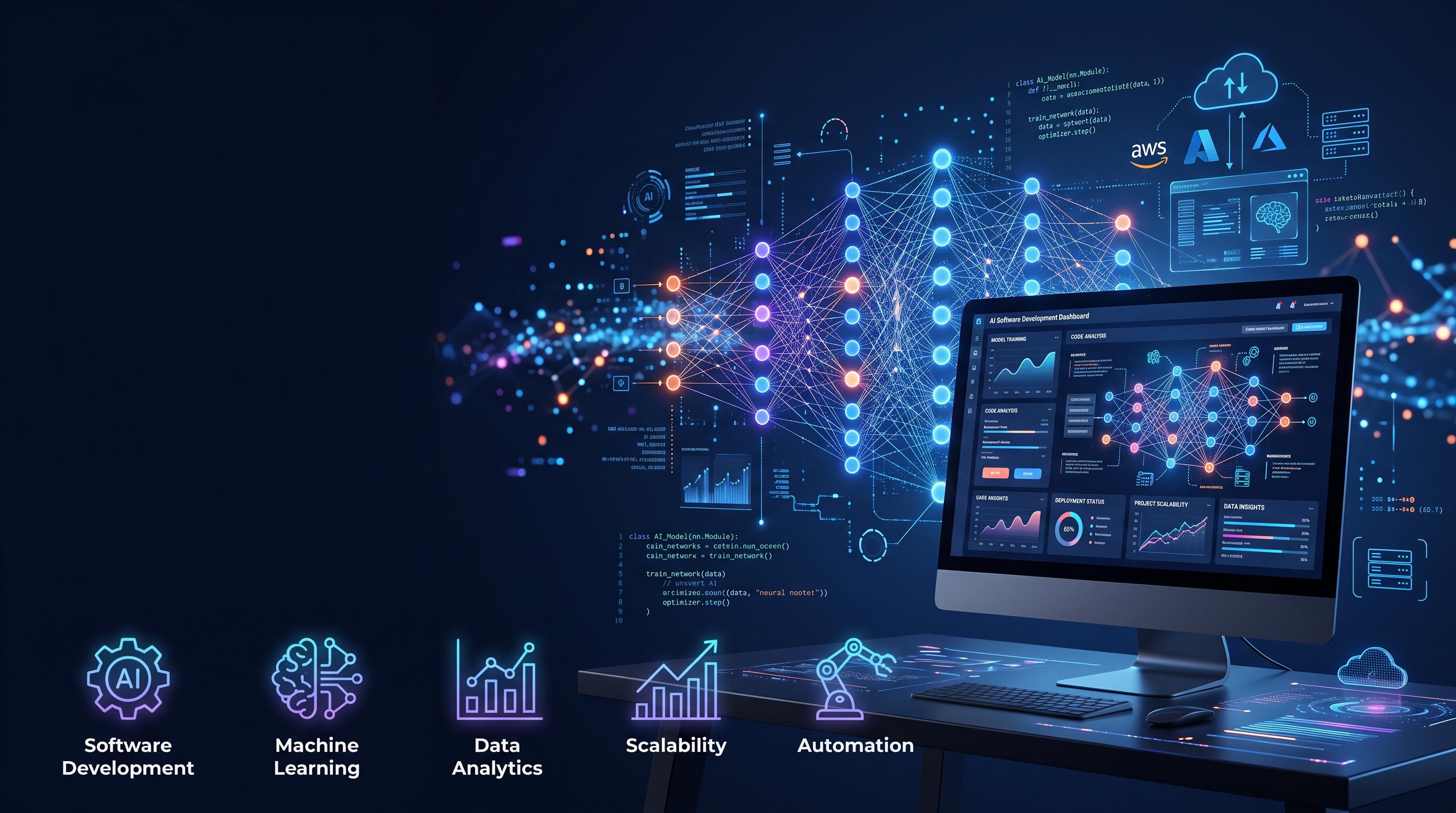
How to Choose an AI Software Development Company for Your Next Project
Businesses across industries are increasingly using artificial intelligence to improve workflows, automate repetitive tasks, analyze data, and create smarter digital products. However, turning an AI idea into reliable software requires more than selecting an AI model or adding a chatbot to an existing application.
Choosing the right AI software development company can help businesses turn an idea into a practical, scalable solution. The right development partner should understand both the technology and the business problem the software is designed to solve.
This guide explains what an AI software development company does, what businesses should look for when choosing a development partner, common AI development challenges, and the steps involved in taking an AI project from an initial idea to deployment.
What Does an AI Software Development Company Do?
An AI software development company designs, develops, integrates, and maintains applications that use artificial intelligence. Depending on the project, this can involve machine learning, natural language processing, generative AI, predictive analytics, computer vision, or AI-powered automation.
A typical AI development process may include:
-
Understanding the business problem and project requirements
-
Identifying an appropriate AI approach
-
Evaluating available data and existing systems
-
Designing the software architecture
-
Developing and integrating AI functionality
-
Testing the application and evaluating AI outputs
-
Deploying the software
-
Monitoring performance and making improvements
The approach depends on the application. A customer-support assistant may require natural language processing and knowledge retrieval, while a forecasting application may rely more heavily on historical data and predictive models.
AI Development vs. Traditional Software Development
Traditional software generally follows explicitly defined rules and instructions. AI-enabled software can identify patterns, generate responses, classify information, and make predictions based on data.
As a result, AI projects require additional attention to data quality, model behavior, testing, evaluation, security, and ongoing monitoring.
However, AI is not automatically the best solution for every software problem. In some cases, traditional automation or rule-based software may be simpler and more predictable. The technology should be selected according to the actual business requirement.
Start With the Problem, Not the Technology
One of the most important steps in an AI project is defining the problem before selecting the technology.
Businesses sometimes begin with a specific AI technology because it is popular or receiving significant attention. A more practical approach is to identify what needs to improve and then determine whether AI can provide meaningful value.
Before contacting an AI development company, consider:
-
What business problem needs to be solved?
-
Who will use the software?
-
What task should the AI perform?
-
What data will the system require?
-
Does the application need real-time processing?
-
What existing software needs to be integrated?
-
What privacy and security requirements apply?
-
How will success be measured?
A clear project definition gives developers a stronger starting point and reduces the risk of unclear requirements later.
Common AI Software Projects
AI can be incorporated into many types of software. The appropriate solution depends on the business process, available data, target users, and desired outcome.
Common AI projects include:
-
AI-powered customer support applications
-
Intelligent search systems
-
Internal knowledge assistants
-
Document processing and information extraction
-
Recommendation systems
-
Predictive analytics applications
-
Workflow automation
-
Text classification and summarization
-
Computer vision applications
-
AI features integrated into existing software
Businesses do not always need to build an entirely new AI product. Existing applications can often be enhanced with AI features such as intelligent search, automated document analysis, text summarization, recommendations, predictive insights, and conversational interfaces.
This approach can allow businesses to improve an existing product while maintaining the functionality users already understand.
How to Evaluate an AI Development Partner
Choosing an AI development partner involves more than checking whether a company mentions artificial intelligence on its website.
A suitable provider should understand the project's requirements and be able to explain its technical approach clearly.
Important areas to evaluate include:
-
Understanding of the business problem
-
Software development capabilities
-
AI and machine learning expertise
-
Integration capabilities
-
Data handling and security
-
Scalability
-
Communication and project management
-
Testing and quality assurance
-
Post-launch maintenance
-
Cost transparency
Potential providers should also be able to explain why a particular technical approach is appropriate for the project rather than simply recommending the latest AI technology.
Questions to Ask an AI Development Company
Before starting a project, businesses can ask:
-
Which AI approach would you recommend for this use case?
-
Why is that approach suitable?
-
How will AI outputs be evaluated?
-
How will inaccurate results be handled?
-
How will the application integrate with existing systems?
-
How will business and user data be protected?
-
How will the system perform as usage increases?
-
What testing will be completed before launch?
-
Who will maintain the software after deployment?
The answers can provide useful insight into how thoroughly the provider has considered the project's technical and business requirements.
In-House Team, Freelancers, or an AI Development Company?
Businesses generally have several options when developing AI-enabled software.
| Factor | In-House Team | Freelancers | AI Development Company |
|---|---|---|---|
| Initial setup | Requires hiring and team building | Usually quick | Usually quick |
| Technical expertise | Depends on internal skills | Often specialized | Can involve multiple disciplines |
| Project management | Managed internally | May require coordination | Often included |
| Scalability | Requires additional hiring | Depends on availability | May provide additional resources |
| Long-term ownership | Strong internal ownership | Depends on agreement | Depends on contract |
| Development control | High | Varies | Depends on project structure |
An in-house team can provide long-term internal ownership, while an external development company can provide access to specialized resources without requiring a business to build an entire team internally.
The appropriate option depends on the organization's existing capabilities, project complexity, budget, timeline, and long-term plans.
Common Challenges in AI Software Development
AI projects can introduce challenges that are less common in conventional software development.
Data Quality
AI systems depend heavily on the information available to them. Incomplete, outdated, inconsistent, or poorly structured data can affect the usefulness of an AI application.
Businesses should evaluate their available data before development begins and determine whether it is suitable for the intended purpose.
Unpredictable Outputs
Some AI systems may produce different outputs for similar inputs. Developers therefore need appropriate evaluation and testing processes.
Testing can examine:
-
Accuracy
-
Relevance
-
Consistency
-
Response time
-
Failure scenarios
-
Security
-
User experience
Integration
AI applications may need to connect with existing databases, websites, customer-management systems, APIs, and internal tools.
Defining integration requirements early can help developers determine the appropriate architecture and project scope.
Security and Privacy
AI applications may process sensitive business or customer information. Businesses should understand how data will be stored, transmitted, accessed, and processed.
Security should be considered during architecture and development rather than added only after the application has been built.
A Practical AI Software Development Process
A structured development process can help businesses move from an initial idea toward a usable solution.
1. Define the Use Case
Identify the specific business problem and desired outcome. Instead of simply deciding to “use AI,” define the task the technology needs to improve or automate.
2. Assess Data and Technical Requirements
Review available data, existing software, APIs, infrastructure, integrations, and security requirements. This helps determine what is technically feasible.
3. Choose the Development Approach
Determine whether the project requires:
-
A new AI application
-
AI functionality added to an existing product
-
Workflow automation
-
An internal AI tool
-
Integration with third-party AI services
The technology should follow the project requirements.
4. Build and Test an Initial Version
For complex projects, developing a smaller initial version can help validate the concept before expanding it. Testing should use realistic scenarios and representative data where appropriate.
5. Deploy, Monitor, and Improve
AI development does not necessarily end at launch. Applications may require ongoing monitoring, updates, performance improvements, security maintenance, and adjustments based on user feedback and system performance.
How Much Should Cost Influence the Decision?
Cost is an important consideration, but businesses should look beyond the initial development quote.
AI development costs can depend on:
-
Application complexity
-
Number of AI features
-
Data preparation
-
Third-party APIs or AI models
-
Infrastructure
-
Software integrations
-
Security requirements
-
Testing
-
Maintenance and support
When comparing proposals, check what is included in the scope, whether third-party services may create additional expenses, and what post-launch support is available.
A detailed proposal makes it easier to compare development providers based on similar requirements.
Red Flags to Watch For
Businesses should ask additional questions if a potential provider:
-
Promises guaranteed AI accuracy without explaining how it will be measured
-
Provides a vague technical proposal
-
Does not ask about the underlying business problem
-
Avoids discussing data security
-
Cannot explain its testing process
-
Leaves source-code ownership unclear
-
Does not clarify post-launch support
-
Excludes important infrastructure or third-party costs
-
Focuses heavily on technology without connecting it to business requirements
These points do not automatically eliminate a provider, but they should be clarified before signing a development agreement.
Working With Devmine on AI Software Projects
Businesses researching development partners should review a provider's capabilities, development approach, and relevant technology offerings before making a decision.
Devmine provides information about its software development services, giving prospective customers a starting point for understanding its offerings.
For organizations specifically researching artificial intelligence development, Devmine also provides information about its AI solutions. Reviewing a provider's service information can help businesses determine whether its capabilities align with their project requirements.
The evaluation should ultimately focus on the individual project's objectives, technical requirements, data, integrations, security, timeline, and expected outcomes.
Final Thoughts
Choosing an AI software development company should begin with the problem the software needs to solve rather than with a particular AI technology.
Businesses should define their objectives, assess available data and technical requirements, understand their development options, and evaluate potential providers based on technical capabilities, communication, security, testing, scalability, cost transparency, and ongoing support.
A well-defined project also makes it easier for a development company to recommend an appropriate solution. Instead of asking only what AI can do, businesses should consider:
How can AI solve this particular problem effectively and reliably?
This approach provides a stronger foundation for planning, developing, deploying, and maintaining AI-enabled software.
FAQs
What is an AI software development company?
An AI software development company builds applications that use technologies such as machine learning, natural language processing, generative AI, predictive analytics, or computer vision.
How do I choose an AI software development company?
Consider the provider's understanding of your business problem, technical capabilities, AI development approach, security practices, testing methods, pricing structure, communication, and post-launch support.
Does every business need AI software?
No. AI is useful for certain types of problems, while conventional software or automation may be more appropriate for others. The technology should be selected according to the project's actual requirements.
How long does AI software development take?
The timeline depends on project complexity, required features, available data, integrations, testing requirements, and whether AI is being added to existing software or developed as part of a new application.
Can AI be added to existing software?
Yes. Depending on the application's architecture and requirements, businesses can integrate AI features such as intelligent search, document analysis, recommendations, summarization, and conversational functionality.
What should an AI development proposal include?
A development proposal should clearly explain the project scope, development approach, technologies, integrations, deliverables, testing, security considerations, estimated timeline, costs, ownership arrangements, and post-launch support.

 English
 Arabic
 French
 Spanish
 Portuguese
 Deutsch
 Turkish
 Italiano
 Russian
 Romaian
 Portuguese (Brazil)
 Greek
Greek