


Hair Fillers Treatment in Dubai vs Hair Transplant
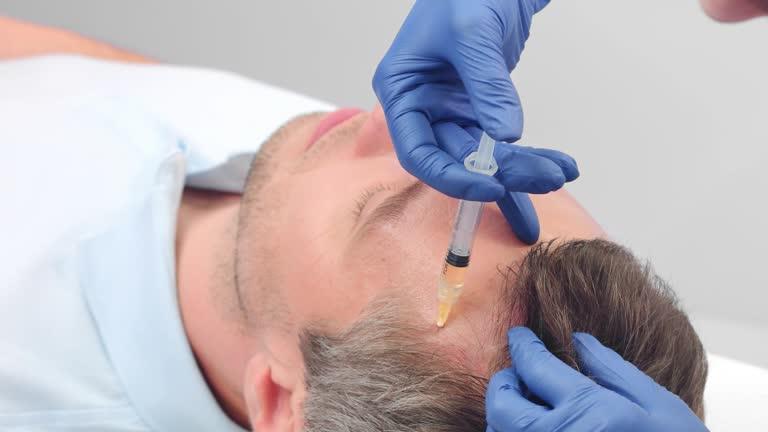
Choosing a hair restoration procedure starts with understanding what type of hair loss you actually have. Hair Fillers Treatment in Dubai and hair transplantation can both be discussed for people concerned about thinning, but they work in fundamentally different ways and are suited to different clinical situations.
One is an injectable, non-surgical approach designed to support existing hair and scalp conditions. The other is a surgical procedure that physically relocates hair follicles from one area of the scalp to another.
The Fundamental Difference Between the Two Treatments
The biggest distinction is what happens to the follicles.
Hair fillers do not move follicles. Instead, a formulated injectable product is introduced into the scalp according to the treatment protocol.
A hair transplant involves harvesting follicles from a donor region and implanting them into areas where additional coverage is required.
This means the two treatments should not be viewed as interchangeable versions of the same procedure.
How Hair Fillers Fit Into Non-Surgical Restoration
Tajmeels Clinic describes its hair filler treatment as a minimally invasive injectable procedure using a formulation containing hyaluronic acid and biomimetic peptides. The clinic states that the treatment is intended to improve hair volume and thickness and support hair growth.
The approach may be considered when a patient has existing hair that appears thin, weak, or reduced in density and wants a non-surgical option.
It should not be described as creating new follicles in areas where follicles are completely absent.
How Hair Transplantation Works
A transplant uses the patient's own hair follicles.
Depending on the selected technique, follicles or follicular units are removed from a donor area and placed into recipient sites. The transplanted follicles can subsequently produce hair as they establish themselves in their new location.
This makes transplantation fundamentally different from injectable scalp treatments.
Tajmeels Clinic offers hair transplantation procedures including FUE and FUT as part of its hair-restoration services.
Comparing the Two Approaches
| Consideration | Hair Fillers | Hair Transplantation |
|---|---|---|
| Procedure type | Injectable, minimally invasive | Surgical |
| Moves follicles | No | Yes |
| Uses donor hair | No | Yes |
| Main focus | Existing hair and scalp support | Follicular redistribution |
| Recovery | Generally shorter than surgery | Surgical recovery required |
| Appropriate for | Selected thinning and density concerns | Selected areas of permanent hair loss |
| Creates transplanted follicles | No | Yes |
| Maintenance | May be recommended | Long-term planning may still be needed |
| Treatment suitability | Depends on diagnosis | Depends on donor supply and hair-loss pattern |
The table describes the general distinction. Individual suitability must be assessed clinically.
The Importance of the Donor Area
A transplant depends on having an adequate donor supply.
The donor area is usually assessed for follicle density, hair characteristics, stability and the amount of hair that can be safely harvested.
If a patient has insufficient donor hair, transplantation may not provide the expected level of coverage.
Hair fillers do not require a donor area because no follicles are transferred.
Why the Degree of Hair Loss Matters
Early thinning and advanced baldness represent different clinical challenges.
A patient with diffuse thinning may still have considerable existing hair. Another patient may have large areas where hair density has significantly declined.
For the first patient, a non-surgical treatment may be part of the discussion. For the second, a dermatologist or hair-restoration surgeon may need to assess whether transplantation or another approach is more suitable.
Hair Fillers Are Not a Replacement for Missing Follicles
This point is essential when setting expectations.
An injectable hair treatment can be designed to support the scalp and existing hair, but it does not transplant a follicle into an empty area.
If a patient has complete or advanced hair loss in a particular region, the expected outcome from an injectable treatment should be discussed realistically.
Clinic note: Tajmeels Clinic describes hair fillers as a minimally invasive option for improving hair volume and thickness, while hair transplantation is a surgical approach involving the movement of hair follicles. The appropriate option depends on the patient's hair-loss pattern and clinical assessment.
Recovery Is Another Important Difference
Because transplantation is surgery, patients should expect a more involved recovery process than with a non-surgical injectable treatment.
Hair fillers generally involve injection-related recovery rather than surgical wound healing. Temporary redness, swelling, itching, puffiness or numbness can occur according to Tajmeels Clinic's published information.
The exact recovery experience varies according to the patient and procedure.
Treatment Longevity Should Be Understood Carefully
The two treatments also differ in how patients should think about longevity.
Tajmeels Clinic reports that hair filler results may last around 16–18 months depending on the formulation and maintenance. This is a clinic-reported timeframe, not a guarantee for every patient.
A hair transplant instead relocates follicles, making the treatment fundamentally different from a temporary injectable intervention.
That does not mean transplanted hair is completely unaffected by future hair loss. The native hair surrounding the transplant can continue to thin, which is why long-term planning remains important.
When Both Approaches May Be Discussed
A patient does not necessarily have to choose between injectable treatment and transplantation immediately.
Depending on the diagnosis, a clinician may discuss non-surgical treatment for existing thinning and transplantation for areas requiring additional follicular coverage.
The sequence and suitability of such approaches depend on the individual's hair-loss pattern and goals.
Why Diagnosis Should Come Before Procedure Selection
Hair loss can have multiple causes.
Pattern hair loss, temporary shedding, traction, inflammatory conditions and other medical factors can present differently. Treating the visible symptom without identifying the cause can make it harder to choose an appropriate long-term strategy.
A consultation can therefore be more valuable than deciding on a procedure based only on photographs or online comparisons.
Questions to Discuss During a Consultation
Patients comparing hair fillers with transplantation can ask:
- What is causing my hair loss?
- How much existing hair do I have in the affected area?
- Is my donor area suitable for transplantation?
- Is my hair loss still progressing?
- What is the realistic objective of an injectable treatment?
- Would transplantation address my current concern more directly?
- Would medical or non-surgical treatment also be appropriate?
- How will future hair loss be managed?
These questions help shift the conversation from procedure names to actual treatment goals.
Frequently Asked Questions About Hair Fillers and Hair Transplants
Can hair fillers replace a hair transplant
No. Hair fillers and transplantation work differently. Hair fillers do not move follicles, while transplantation relocates follicles from a donor area.
Are hair fillers less invasive than transplantation
Hair fillers are minimally invasive injections, while transplantation is a surgical procedure.
Can hair fillers grow hair in a completely bald area
They should not be described as creating new follicles in an area where follicles are absent.
Does a hair transplant require donor hair
Yes. Transplantation requires a suitable donor area from which follicles can be harvested.
Can someone have both treatments
In selected cases, different treatments may form part of a broader hair-restoration strategy, but this should be determined by the treating clinician.
Which treatment is suitable for early thinning
Suitability depends on the cause and pattern of thinning. Early assessment can help determine whether injectable, medical, surgical, or combined treatment is appropriate.
Choose the Procedure Around the Problem
The comparison between hair fillers and transplantation becomes clearer when the patient's actual hair-loss pattern is understood. If you are considering Hair Fillers Treatment in Dubai, Tajmeels Clinic can assess your scalp and discuss whether a non-surgical approach or another restoration strategy better matches your needs.

 English
 French
 Spanish
 Portuguese
 Deutsch
 Turkish
 Dutch
Dutch
 Italiano
 Russian
 Romaian
 Portuguese (Brazil)
 Greek
Greek