


A Simple Guide to Comparing Hawaiian Estate Beans
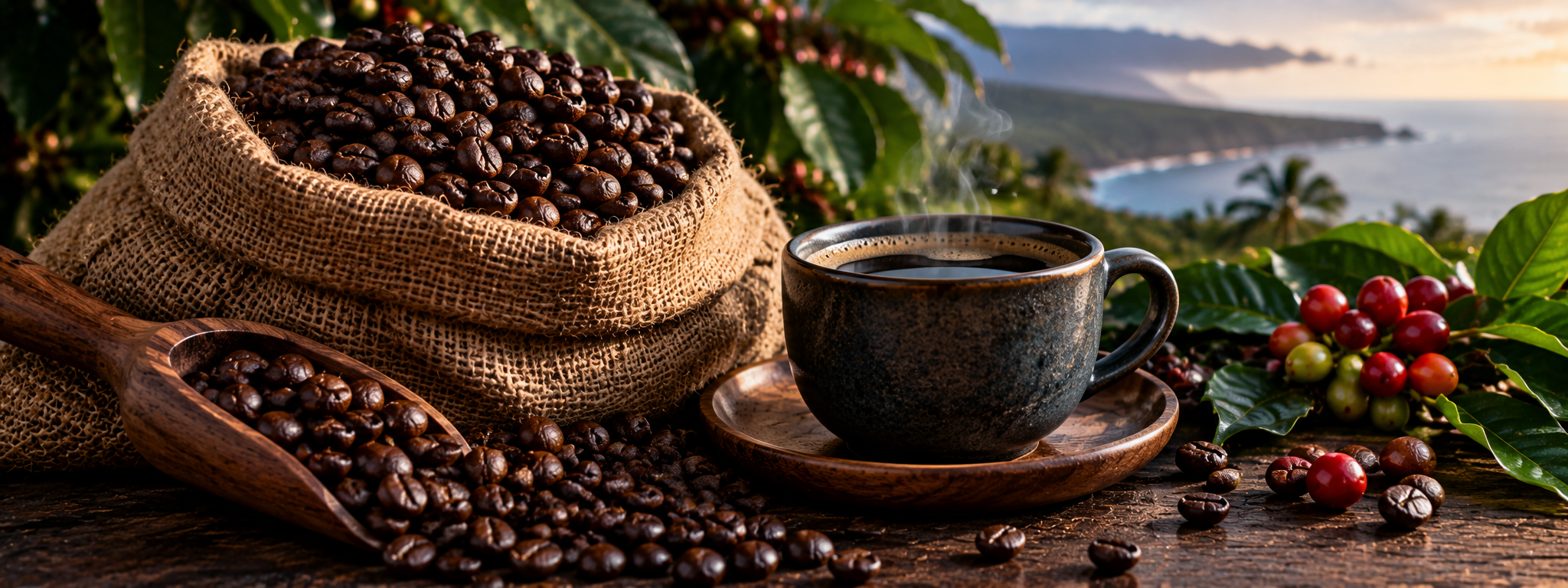
High mountain coffee farming on the volcanic slopes of the Big Island produces some of the most sought after Arabica beans in the world. The unique microclimate of the Kona coffee belt features sunny mornings, mild cloud cover in the afternoon, and mineral rich soil that nourishes coffee trees grown under native forest canopies.
Standard coffee cherries naturally contain two flat sided seeds that face each other inside the fruit. However, in roughly five to ten percent of every coffee harvest, a single oval seed develops inside the cherry without a twin.
The Botany and Genetics Behind Rare Single Seed Coffee Beans
To understand why single seed coffee cherries are so distinct, one must look at the natural development of the coffee tree blossom. Under normal growth conditions, successful double pollination inside the flowering bloom leads to two distinct ovules expanding into a split pair of flat sided seeds.
This rounded botanical form changes how heat transfers through the bean during air roasting or drum roasting. Standard flat beans have sharp edges and uneven surfaces that require careful temperature regulation to prevent tipping or scorching.
Turn Your Daily Cup Into a Small Discovery
Coffee tasting does not have to be formal or intimidating. You do not need specialist vocabulary, expensive equipment, or professional training to notice how one coffee differs from another. A little attention to aroma, sweetness, acidity, body, and aftertaste can help you understand your preferences more clearly.
Hawaiian estate coffees offer a useful way to practise because individual products may differ in their growing conditions, varieties, processing, and roast profiles. Comparing them side by side can reveal differences that are difficult to notice when each coffee is tasted on a different day.
The goal is not to identify every flavour perfectly. It is to develop a repeatable approach that helps you decide which coffees you enjoy and why.
Prepare a Simple Coffee Tasting Session
Choose two coffees that you want to compare. They might have different roast levels, come from different estates, or use different processing methods. If too many variables change at once, it becomes difficult to determine which one influenced your impression.
Use the same brewing method for both coffees and prepare them with similar coffee to water ratios. Clean your equipment between brews if lingering oils or grounds could affect the result. If possible, use a scale and a timer so you can repeat the session later.
Keep a notebook or a short digital record nearby. Write down your first impressions without trying to make them sound sophisticated. Words such as sweet, nutty, bright, heavy, smooth, or bitter are perfectly useful when they describe what you actually experience.
Learn the Five Basic Elements of Taste
A structured tasting begins with a few broad characteristics. Aroma describes what you smell before and during drinking. Sweetness refers to the pleasant impression that can resemble caramel, ripe fruit, or chocolate, even when no sugar has been added.
Acidity is the lively or bright quality that can make a coffee seem crisp. It is not identical to sourness, although under extracted coffee can taste sharply sour. Body describes the drink's weight or texture in the mouth, ranging from light and tea like to rich and full.
Aftertaste is what remains once you swallow. A coffee might finish with a clean sweetness, a lingering roasted note, or an unpleasant bitterness. Considering all five elements provides a fuller picture than simply deciding whether a coffee tastes strong.
Why Estate and Origin Details Matter
Coffee origin offers context for the flavours you may encounter. Growing conditions, variety, harvesting, and processing influence the raw coffee, while roasting shapes the aromas that develop later.
Kona coffee comes from a defined growing region on Hawaii Island, but not every farm or harvest produces an identical flavour. Estate information can help you understand the product's background and compare coffees with more specific provenance.
Buddha's Cup describes multiple Hawaiian coffee estates, each with its own growing environment and published flavour notes. Those descriptions can help you choose coffees for a tasting session, but treat them as guides rather than guaranteed results. Your brewing recipe and individual perception will also affect what you notice.
Choose Beans That Fit Your Routine
A coffee that tastes fascinating during a formal tasting might not be the one you prefer every morning. Some drinkers want a dependable, balanced cup, while others enjoy exploring unusual flavour profiles on weekends.
Consider how you normally prepare coffee, how much time you have, and whether you drink it black or with milk. A coffee's performance in one method does not always predict how it will taste in another.
For anyone comparing Hawaiian Kona coffee beans, reviewing estate information and roast descriptions can make the selection process more informative. Choose two products with a clear difference, taste them under similar conditions, and let the results guide your next purchase.
A Side by Side Tasting Method
Start by smelling each coffee while it is freshly brewed. Notice whether one seems more floral, roasted, fruity, nutty, or chocolate like. Do not rush to identify exact ingredients; broad categories are enough for a useful first comparison.
Take a small sip from each cup while the coffee is warm. Compare the body, sweetness, acidity, and finish. Then taste again as the drinks cool slightly, because aroma and flavour can become easier to distinguish at a lower temperature.
Try asking yourself three simple questions:
- Which coffee feels lighter or fuller in the mouth?
- Which one has a more pleasant balance of sweetness, acidity, and bitterness?
- Which coffee would you most enjoy drinking as part of your normal routine?
These questions focus on personal preference rather than trying to declare one coffee universally better than another.
Understanding Roast Differences
Roasting changes the flavour balance of coffee. Lighter roasts may preserve more delicate characteristics, while medium roasts can offer a combination of origin detail and roasted sweetness. Darker roasts often have more prominent toasted, smoky, or bittersweet flavours.
To understand roast differences, compare coffees prepared with the same brewing method and similar recipes. If one coffee is much darker than the other, note that difference rather than assuming the growing region is responsible for every change.
Also remember that colour alone is not a perfect indicator of taste. Two roasters can produce different results from beans with similar appearances, and roast development influences flavour in ways that are not always obvious from the outside.
Adjusting Brewing Variables During a Tasting
Once you have completed an initial comparison, use the results to guide a small experiment. If a coffee tastes harsh or drying, try a slightly coarser grind or reduce the extraction time. If it tastes weak, increase the coffee dose modestly or adjust the grind.
Change only one variable at a time. Altering the dose, grind, temperature, and brewing time together makes it difficult to know which change helped.
Keep notes on each adjustment. A simple record of the coffee, grind setting, dose, water amount, and brewing time can become a practical reference for future cups. Over time, you may find that particular coffees perform better with specific methods.
Build a Personal Flavour Vocabulary
You do not need a professional tasting wheel to describe coffee. Start with familiar categories, such as fruit, flowers, nuts, chocolate, caramel, spices, and roasted flavours. Add texture words like silky, light, creamy, or full when they describe the drink.
Be specific about your own experience. If a coffee reminds you of toasted nuts, write that down without assuming everyone else will perceive the same note. Flavour descriptions are influenced by memory, sensitivity, and expectations.
Avoid treating tasting notes as ingredients. A coffee described as chocolate like does not necessarily contain chocolate, and a floral aroma does not mean flowers were added. These phrases describe sensory similarities that can help buyers understand a product.
Conclusion
Coffee tasting is a practical skill that grows through repetition. By paying attention to aroma, sweetness, acidity, body, and aftertaste, you can understand your preferences without relying on complicated terminology. Comparing estate coffees side by side also makes origin and roast information more meaningful.
Keep the method simple, record what you notice, and experiment with one brewing variable at a time. The result is a more thoughtful coffee routine and a clearer idea of which Hawaiian coffees deserve a place in your cupboard.

 English
 Arabic
 French
 Spanish
 Portuguese
 Deutsch
 Dutch
Dutch
 Italiano
 Russian
 Romaian
 Portuguese (Brazil)
 Greek
Greek